English
 中文简体
中文简体
 русский
 Español
[Auto Accessories][email protected]
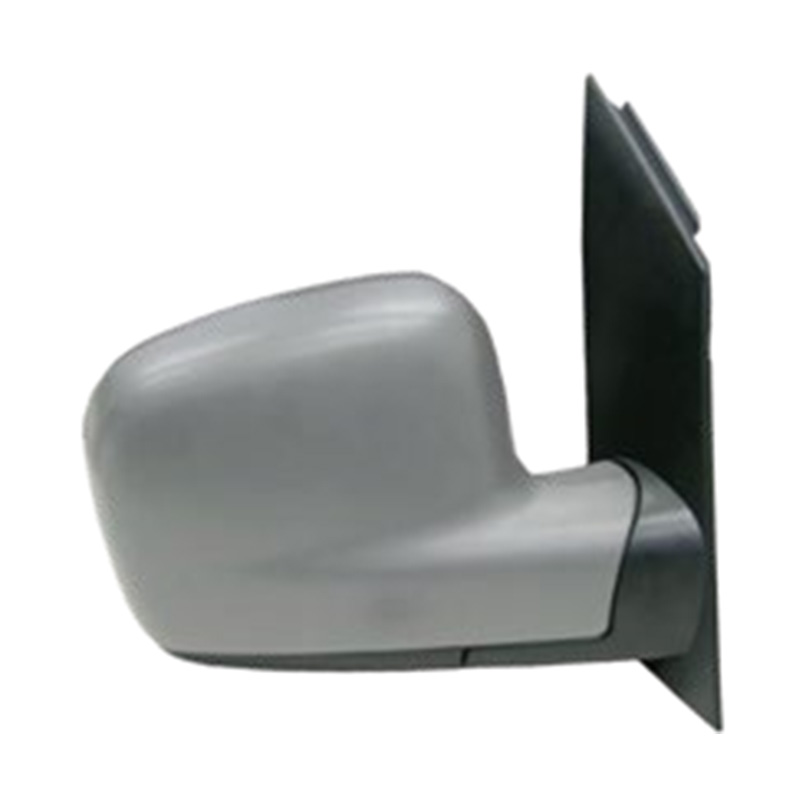 how do you replace a rear view mirror: Practical Applications, Selection, Performance

Oct 26, 2026
A mirror that buzzes at highway speed, a mounting button that let go on a hot afternoon, or a cracked housing after a light knock in a parking lot: these are the three situations that send most people looking for a replacement. Here is the short answer before the details. Replacing a rear view mirror is usually a 20 to 90 minute job, but the method splits into two completely different workflows. An interior mirror hangs on a small steel button bonded to the windshield. An exterior side mirror bolts to the door shell and often carries heating, power folding, memory and camera wiring. Identify which one you are dealing with first, because the tools, the fasteners and the failure risks share almost nothing in common.
The word "rear view mirror" covers both parts in everyday speech, and parts sellers use the same phrase loosely. Before you order anything, confirm the mounting style. Getting this wrong is the most common reason a replacement sits unused in its box.
| Factor | Interior rear view mirror | Exterior side mirror |
|---|---|---|
| Mounting point | Steel button bonded to the windshield glass, or an overhead bracket | Door skin or sail panel, usually three bolts |
| Typical fasteners | Torx T20 or 3 mm Allen set screw | 10 mm bolts, plastic clips, one or two harness connectors |
| Wiring | Optional: auto-dim, rain sensor, forward camera | Common: heating, power fold, turn signal, memory, camera |
| Working time | 20 to 30 minutes | 45 to 90 minutes per side |
| Main risk | Cracking the windshield or snapping the button | Breaking trim clips, scratching paint, camera recalibration |
If your mirror is the small rectangular unit at the top center of the glass, read the interior section. If it is the unit on the door, jump to the exterior section.
Do a dry fit first. Slide the new mirror down onto the button until the set screw lines up, then snug the screw to roughly 1.5 to 2 Nm. That is barely more than finger tight plus a quarter turn. Over-tightening is a known cause of cracked buttons and cracked mirror castings, and it is far more common than under-tightening.
Reconnect the harness, then tuck the wire so it cannot chafe against the headliner or pull tight when the mirror is adjusted. If you fitted a new button with adhesive, respect the cure time on the packet, typically 24 hours at room temperature before hanging the mirror. Adhesive applied below about 10 degrees Celsius or above 30 degrees Celsius often fails within weeks, so move the car into a garage or wait for milder weather.
You can replace just the glass or the whole assembly. Glass-only replacement makes sense when the housing, motor and wiring are healthy. Whole-assembly replacement is the better call when the folding mechanism is loose, the housing is cracked, or the connector is corroded.
Tilt the glass fully down to expose the top edge, slide a plastic wedge behind it, and release the retaining clips working around the perimeter. Unclip the two heating spade connectors on the back of the glass before pulling it clear. When fitting the new glass, press the center until the clips click, then reconnect the heaters. If the car has a camera-based driver assistance system, a mirror assembly swap usually requires a static or dynamic recalibration, so budget for a scan tool session or a workshop visit.
Once the new mirror is mounted, take five minutes to reset the view properly; the correct procedure for setting the field of view is set out in this guide to adjusting auto side mirrors for optimal visibility. A correctly mounted mirror that is badly aimed still leaves a blind spot.
Match the part to the vehicle rather than to a photo. Use the VIN or the exact model, year and trim, then confirm four things: the mounting style, the connector pin count, the feature list and the housing finish. Textured black, primed and painted caps are not interchangeable without extra paint work. For interior mirrors, confirm whether the car uses a wedge button or a bayonet-style base, and whether the original unit carries a rain sensor or camera that must move across to the new part.
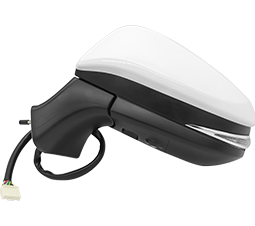 QXP Auto Side Mirror Range for Multiple Vehicle BrandsBrowse brand-organized side mirror options for Toyota, Lexus, Honda, Nissan, Mazda and others, with OEM-matching and aftermarket choices for exterior replacement.View Product →
For exterior replacements, a catalog organized by vehicle brand shortens the search considerably, because mirror housings, glass curvature and connector layouts are shared across model families rather than across years alone. Checking the brand-specific listing first avoids the usual guesswork about folding type and heater wiring.
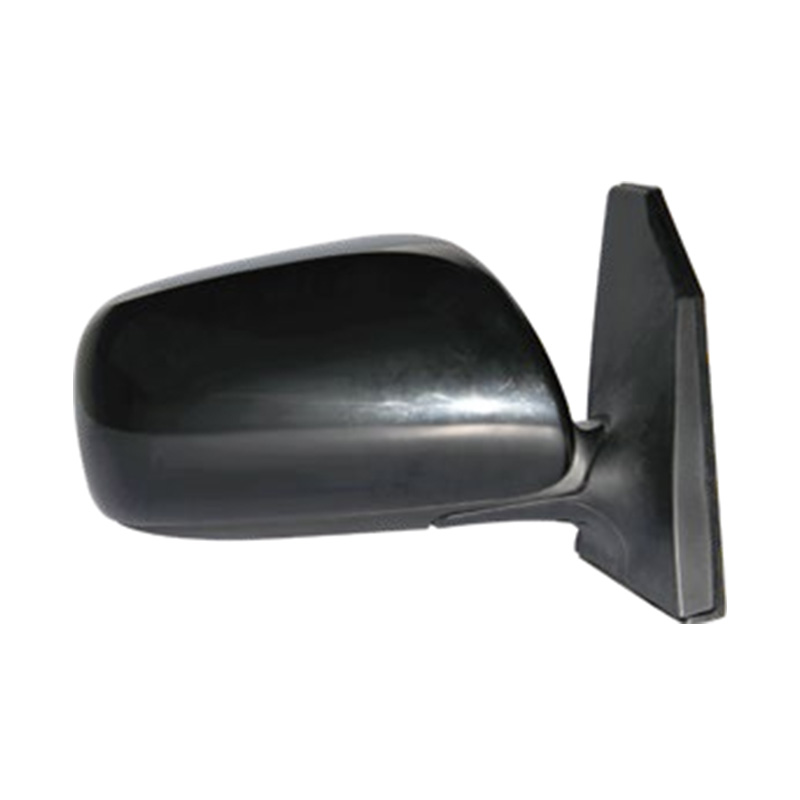 Toyota QXP Side Mirror Assemblies by Model and YearBrowse Toyota Corolla, Camry and Levin side mirror assemblies with varied pin counts, fitment sides and OE references for precise replacement selection.View Product →
Buy from a supplier who lists the features explicitly, and keep the old unit until the new one is fitted and tested. A mirror that physically bolts on but leaves the heating or folding circuit dead is a return, not a repair, and the cost of that mistake is your time plus a second round of trim removal.
Replacement itself is rarely the hard part. The hard part is buying the right variant in the first place and applying the correct torque and adhesive discipline once the part is in hand. Confirm the mount, confirm the connector, work with plastic tools near glass, and test every electrical function before the trim goes back on. Do those four things and a mirror swap stays a straightforward afternoon job rather than a trip to the glass shop.
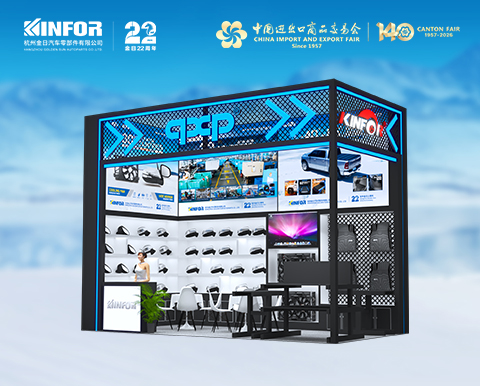 Canton Fair Concludes | Hangzhou Golden Sun Gains Recognition from Global Buyers
Oct 20, 2026
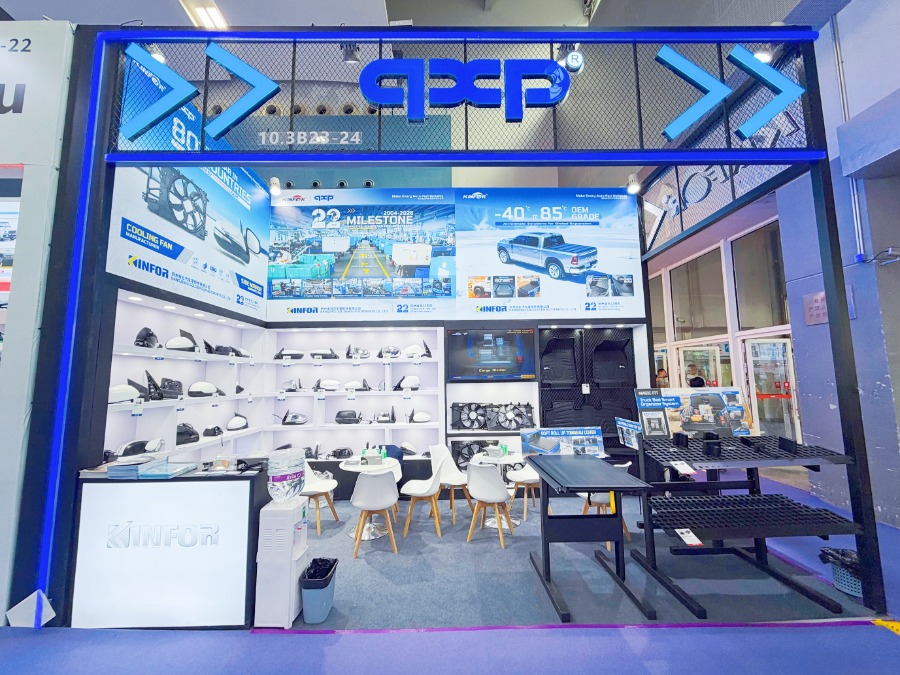
The 140th Canton Fair (Autumn Session) concluded successfully on October 19, 2026. For Hangzhou Golden Sun, this event was more than a product exhibition. It provided a valuable chance for face-to-face communication, on-site experience, in-depth discussion and order signing with global customers. Thanks to busy booth visits, active business talks, returning clients and well-received new products, “Golden Sun Intelligent Manufacturing” has been seen and recognized by more international customers through our professionalism and reliable service.

Side Mirrors: Winning Trust with Proven Reputation
A large number of global buyers visited Hangzhou Golden Sun’s booth during the fair. Many regular customers came for QXP brand side mirror mirrors. With around 80% market share in China’s side mirror mirror industry and OEM-grade interchangeable performance, QXP side mirror mirrors enjoy stable recognition among overseas clients. Some returning customers brought vehicle model lists to check matching products, while others discussed contract renewal and long-term supply directly. The Golden Sun team offered professional introductions and thoughtful service for every visitor, answering questions about product features, compatible vehicle models, practical cases and delivery capacity. The negotiation area was fully occupied. Buyers compared products, took notes and carried out further business discussions.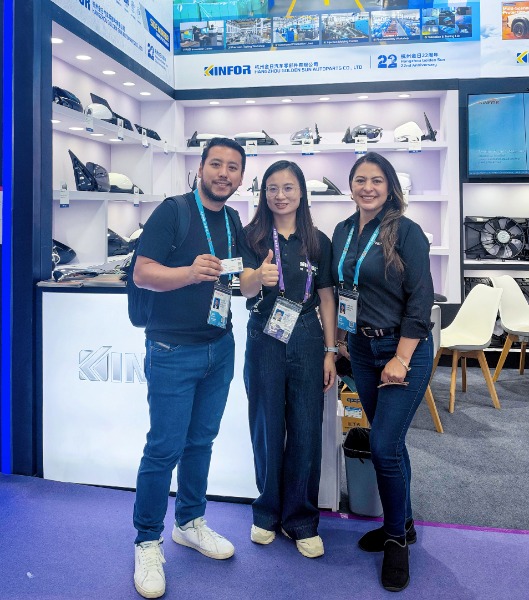

Cargo-box Storage Systems: Popular New Products
The display area for cargo-box storage systems drew large crowds. Buyers kept coming for inquiries, product trials and business talks. The Golden Sun team demonstrated storage solutions for different application scenarios, and more customers expressed their willingness for long-term cooperation.

Pickup Tonneau Covers: Reliable Heavy-duty Protection
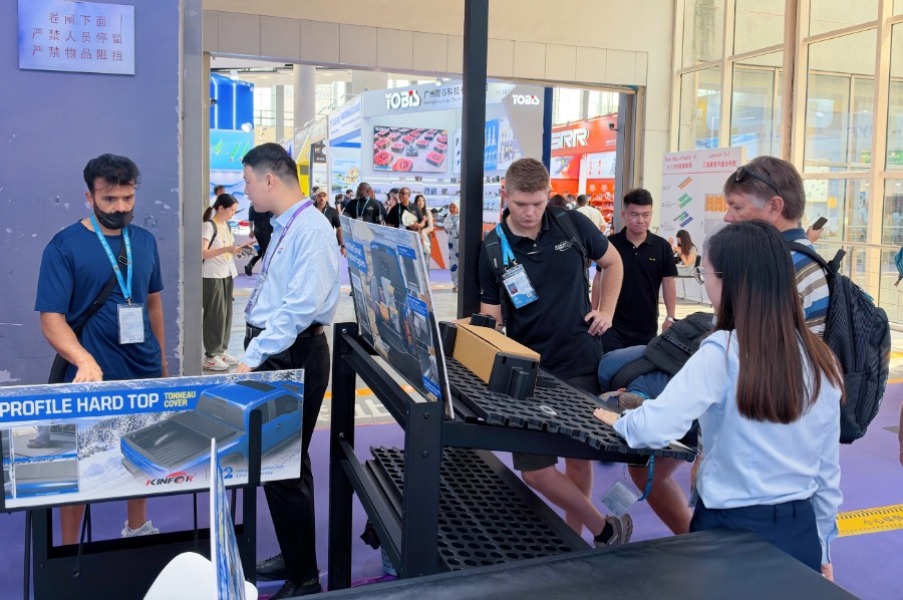
Hangzhou Golden Sun pickup tonneau covers are approved by many leading overseas brands with stable long-term supply. Many pickup owners and modification dealers tested the integrated closing system. They paid close attention to its anti-theft, waterproof and dust-proof functions, as well as practical advantages including scratch and corrosion resistance for original cargo boxes, lower wind resistance and quieter driving at high speed. The team introduced full-range storage solutions and applicable vehicle models for urban daily use, outdoor activities, commercial transport and engineering work. Many purchasers held detailed discussions and signed agreements on specific pickup models, customization requirements and delivery cycles.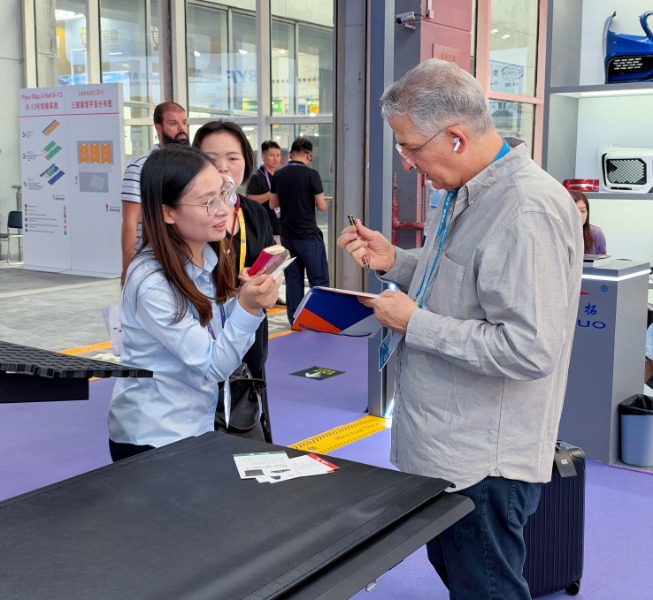
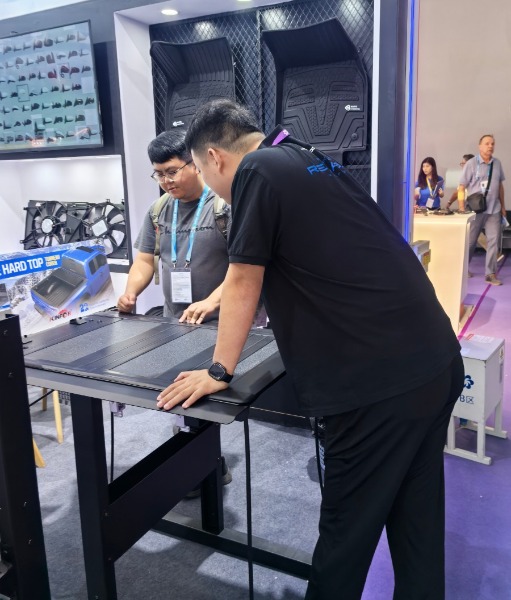
TPE Floor Mats: Attracting Buyers with Eco-friendly Features
Overseas customers attach great importance to environmental performance and interior quality. They experienced the texture of one-piece injection-molded products, and learned about Golden Sun TPE floor mats’ environmental certificates, odor control, temperature resistance and quality control standards. Multiple customers discussed sample testing and customization in detail.

Electric Cooling Fans: Effective Heat Dissipation
Golden Sun electric cooling fans are sold in over 80 countries and regions. Based on real vehicle working conditions, our team explained product compatibility, heat dissipation performance and product durability. Customers highly appreciated Golden Sun’s global market reputation and stable product quality.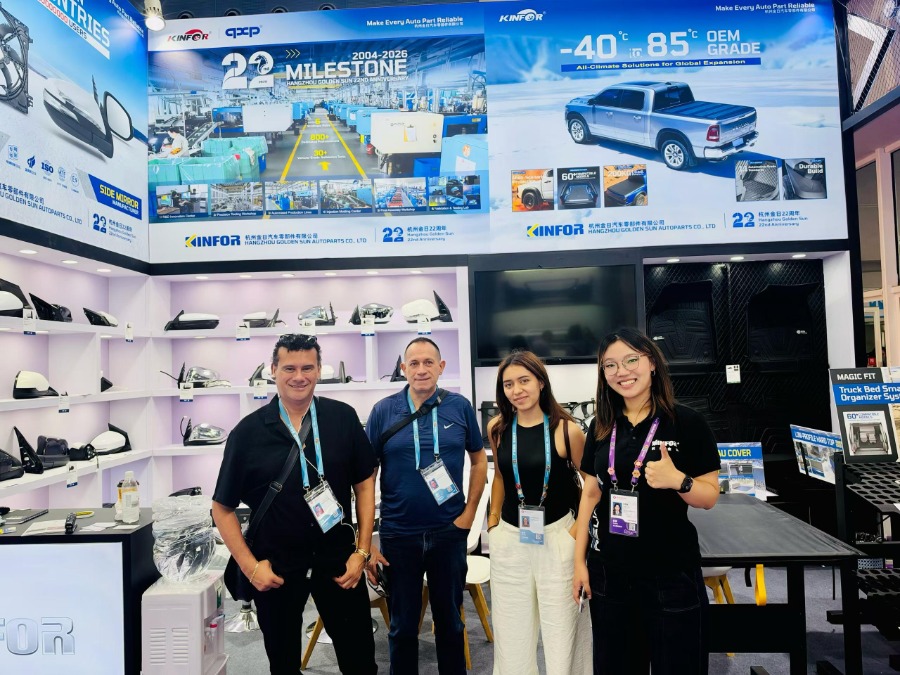
Active On-site Negotiations and Order Signing
The negotiation area stayed busy throughout the exhibition. Old customers renewed contracts and new customers placed their first orders. Many cooperation intentions and formal deals were confirmed on site. Our signing partners came from Europe, the Middle East, Southeast Asia, Africa, South America and other regions.
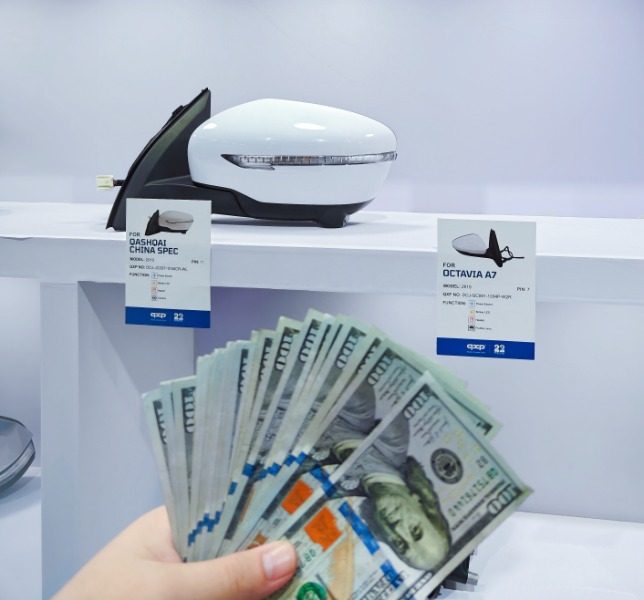
Joint Efforts for Common Development
Apart from orders, Hangzhou Golden Sun has won trust for “Golden Sun Intelligent Manufacturing” at this Canton Fair. In future, Hangzhou Golden Sun will increase investment in new-product research and development, and further expand the global sales network. With better-quality products and more efficient services, we will cooperate with global partners to create new opportunities for the automotive aftermarket.


 How to Get Rid of Fog on Windshield Fast: Settings, Causes, and Long-Term Fixes
Oct 20, 2026
Two minutes into a cold morning commute the inside of the windshield turns milky, and wiping it with your sleeve only smears the haze into streaks that catch every oncoming headlight. The fastest way to get rid of that fog is not heat. Switch the air conditioning on, select the front defrost vent, move the system from recirculated air to fresh outside air, and raise the blower speed. In most cars the glass starts clearing within 20 to 60 seconds. The heater matters for comfort and for keeping the glass warm once it is clear, but it is the dehumidified air, not the temperature, that removes the water film in the first place.
Windshield fog is condensation, and condensation needs one condition: a surface cooler than the dew point of the air touching it. In a car that surface is almost always the glass. Cabin air collects water vapor from the people breathing in it, from damp coats, from snow or rain tracked in on shoes, and from the ventilation system itself. Glass sheds heat to the outside air quickly, so on a cold morning the inner surface can drop several degrees below the surrounding cabin air within minutes. The vapor then condenses into microscopic droplets, and those droplets scatter light in every direction. That scattering is the white haze you see.
Fog appears inside rather than outside because the cabin is the humid side of the glass. A dirty windshield fogs faster and holds fog longer, because a film of dust, plasticizer, and skin oil gives water something to cling to. On greasy glass, droplets bead up into a dense, light-scattering layer. On a properly cleaned surface, water tends to spread into a thin, almost invisible sheet.
Order matters more than any single setting. Work through these steps in sequence:
If the windshield is still hazy after five minutes of this routine, the settings are not the problem. Something in the cabin is releasing water faster than the system can remove it.
The defroster is a combination of functions, and each one does something different. The table below separates the settings that remove water from the ones that only redistribute air.
| Setting | What it actually does | Best used when |
|---|---|---|
| AC on with defrost mode | Condenses water out of the air before it reaches the glass | Every time the glass fogs, including winter |
| Fresh air intake | Replaces humid cabin air with drier outside air | Heavy fog, or three or more people in the car |
| Recirculation | Traps exhaled moisture inside the cabin | Only briefly, in traffic fumes or dust |
| Heat | Raises glass temperature above the dew point | After the first minute, to keep glass clear |
| High blower speed | Increases air volume across the glass surface | First minute, then lower it to reduce noise |
| Cracked window | Vents humid air quickly, admits road noise | Very heavy fog, or after soaked passengers get in |
Water does not disappear when the glass clears. It moves. If the cabin holds a reservoir of moisture in carpet, padding, or mats, that water keeps evaporating into the air and eventually lands back on the coldest surface available. Common reservoirs include meltwater in floor mats, a blocked AC condensate drain that lets water pool in the HVAC housing, a leaking sunroof or door seal, and soaked carpet padding under a footwell.
Floor mats are the easiest reservoir to control. Deep-tray or rubber-backed mats shaped to the footwell catch meltwater instead of letting it soak into the jute padding beneath, and lifting them out to shake dry once a week during winter removes a meaningful amount of water from the cabin.
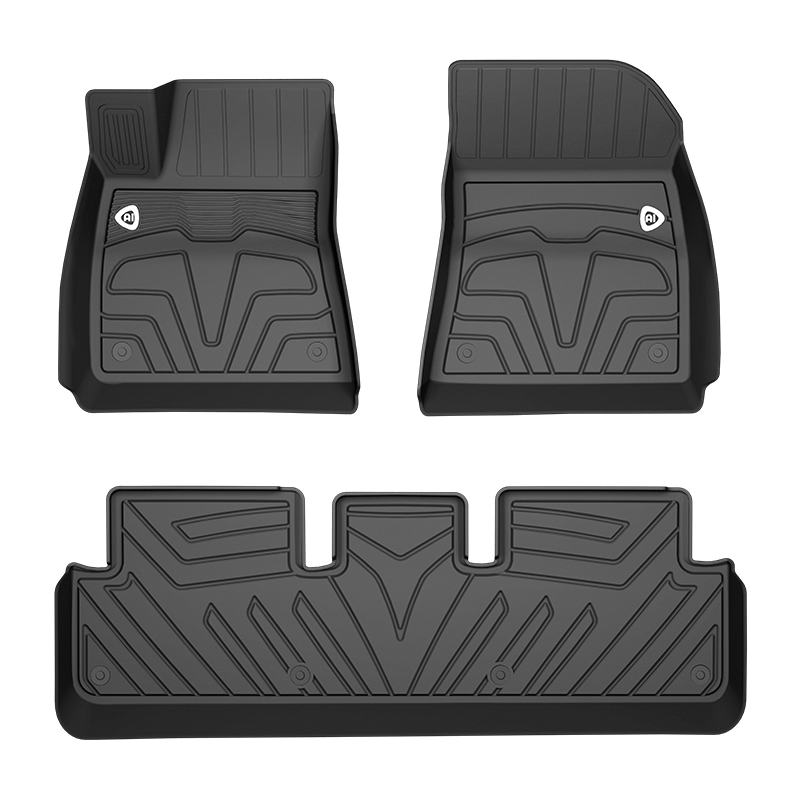 Custom TPE Car Floor Mats with 1:1 FitThese custom-fit TPE floor mats are shaped to the footwell and can be lifted out to remove trapped meltwater during winter.View Product →
A damp, musty smell that returns every time the heater runs points the same direction. That smell usually means water sitting where it should not be, and the fog on the glass is that same moisture showing up a second time.
Once the routine above is followed correctly, the remaining causes are mechanical. Two areas are worth checking, and they fail in different ways.
Hold your hand over the defrost vent with the blower on high. If you can barely feel air movement, no combination of buttons will help. A blower motor that only works on the highest speed, squeals on start-up, or smells hot is usually a worn motor or a failed resistor pack. Reduced airflow also comes from a clogged cabin air filter, which is the cheapest part to check first.
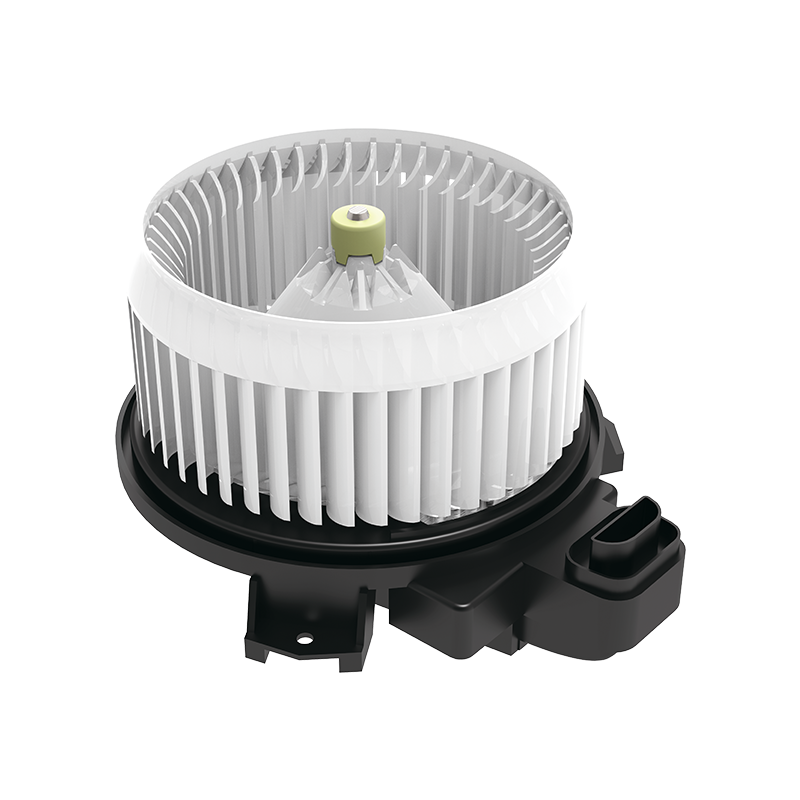 Custom HVAC Heater Blower Motor for Cabin AirflowThis variable-speed blower motor moves air through the heater core and evaporator to support cabin heating, cooling, and ventilation.View Product →
Dehumidification depends on the air conditioning circuit working properly. A condenser with bent or clogged fins, a slow refrigerant leak, or a compressor that cycles too briefly all reduce the amount of water the system can pull out of the cabin air. The practical symptom is a windshield that fogs up even with the AC button lit. Understanding how HVAC systems manage cabin temperature and humidity explains why a tired compressor shows up first as fogged glass, long before it shows up as an uncomfortable cabin in summer.
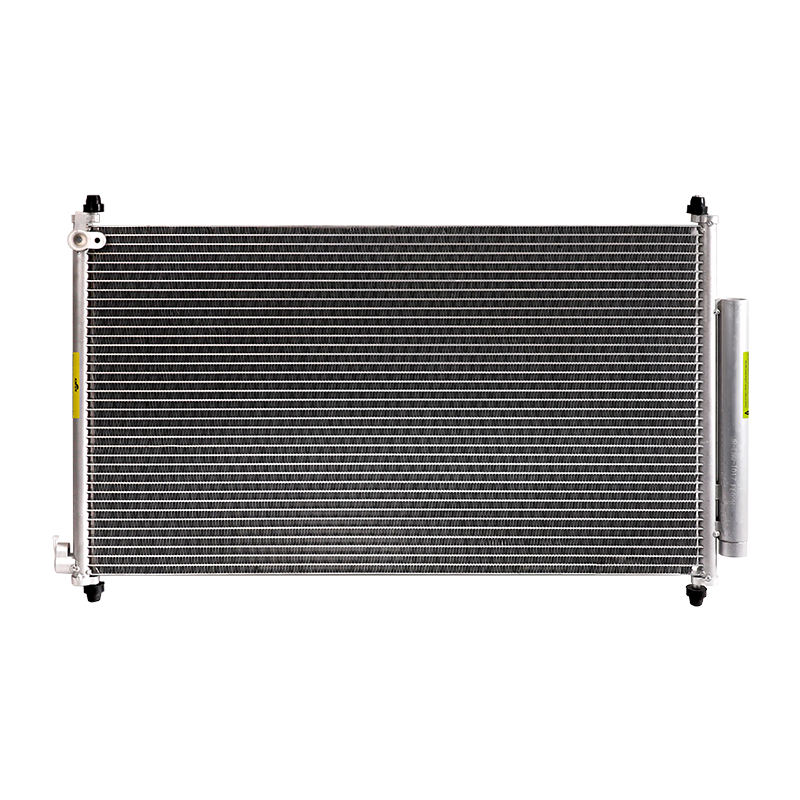 Custom HVAC Auto Condenser for Vehicle Air ConditioningThis front-mounted condenser cools refrigerant vapor into liquid, a key part of the AC circuit that manages cabin humidity and defogging.View Product →
Anti-fog products work on the same principle: they leave a surfactant film that lowers surface tension, so water spreads as a transparent sheet instead of beading into scattering droplets. Purpose-made interior anti-fog sprays typically last one to four weeks, depending on the product and how aggressively you clean the glass afterward. The widely circulated shaving cream trick does work, but expect a few days of protection, occasional streaking, and a halo around lights at night if you apply too much.
Two mistakes shorten the life of any coating. The first is applying it over a dirty windshield, because the film bonds to the grease rather than the glass. The second is using a silicone-based dashboard dressing, whose volatiles deposit on interior glass and build the very film that makes fog cling. Clean the inside of the windshield with an ammonia-free glass cleaner and two microfiber cloths, one to lift the residue and one to buff it dry, before applying anything.
Fog on a windshield is a moisture problem wearing a temperature disguise, and treating it that way changes what you do. Dehumidify with the AC, move air across the glass, keep the glass warm, and keep water out of the cabin in the first place. When those basics are in place and fog still wins, the answer is usually a component that has quietly stopped doing its job: a tired blower motor moving too little air, a condenser that no longer sheds heat, or a cabin that has been storing water under the mats for weeks.
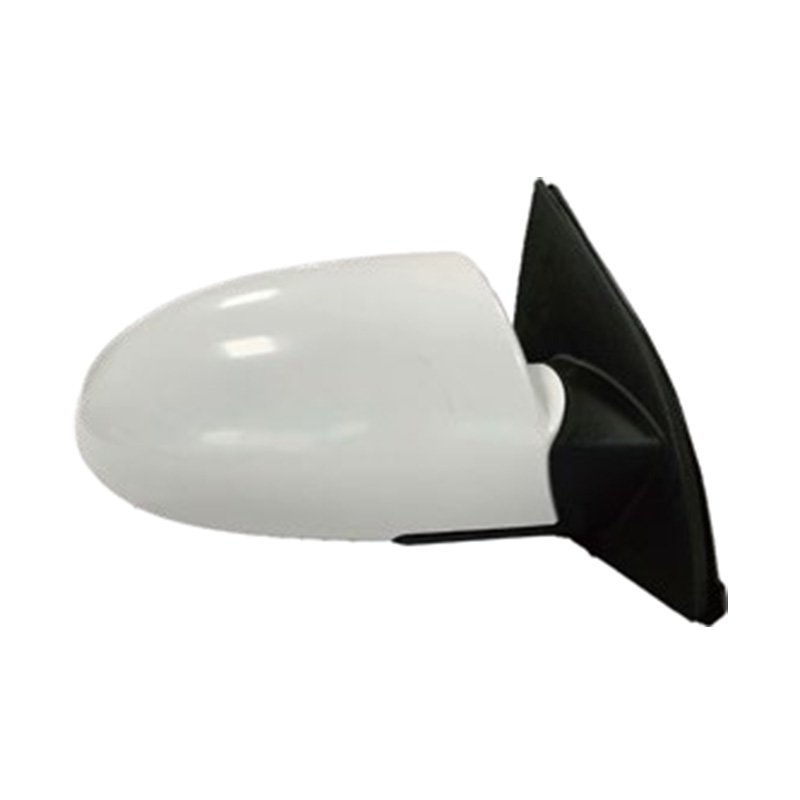 Ford F-150 Rear View Mirror: Fitment, Adjustment, and Replacement Guide
Oct 12, 2026
A mirror that blurs at highway speed, a heated glass that stopped clearing frost, or a housing snapped by a parking-lot pillar: those are the three reasons most owners start shopping for a Ford F-150 rear view mirror. The practical answer is that on most trucks built after 2009, you are not buying a single part. You are choosing between a complete assembly, a replacement glass, and occasionally a power-fold motor, and every one of those choices has to match the connector and the features already on the truck.
Get that match wrong and the part can bolt on perfectly and still be useless: no heating, no power fold, no blind-spot indicator. What follows covers what the mirror contains, which model years share parts, how to verify fit before you pay, and what actually fails over the life of a truck.
Search language is loose here, so decide first which unit you need. The outside mirror, often called the wing or side mirror, is what most people mean, because it is the part that takes hits, folds, heats, and carries electronics. It mounts to the door with a base plate and two or three fasteners behind the door trim.
The interior mirror is a different animal. It mounts to a button bonded to the windshield, and on higher trims it is an auto-dimming unit that darkens when headlights approach from behind. Some late-model trucks can also be ordered with a camera-based interior mirror. The two share a name and nothing else: no shared glass, no shared connectors, no fitment overlap.
If your complaint is "the glass is cracked but everything else works," replacement glass may be enough. If the mirror will not fold, will not heat, or hangs loose on its base, you are in assembly territory.
Fitment follows the door, the base plate, and the harness, not the badge on the tailgate. The table below shows where the major breaks fall across F-150 generations.
| Generation | Model years | Typical mirror features | Fitment caution |
|---|---|---|---|
| 11th | 2004-2008 | Manual or power glass, heated glass on higher trims, rectangular housing | Mounting base and fastener pattern differ from later trucks, so a 2009 and newer unit will not bolt to the door |
| 12th | 2009-2014 | Power fold on many trims, heated glass, integrated turn signal, puddle lamp | Memory and non-memory harnesses differ, so connector position count and keyway must match |
| 13th | 2015-2020 | Aluminum body, power fold, heated glass, LED spot lamp on some versions, blind-spot indicator in the glass, tow mirror option | Indicator glass is not interchangeable between trims, and camera-equipped versions differ from plain housings |
| 14th | 2021 and later | Power fold and power telescope tow mirrors, mirror-housing cameras for 360-degree views, LED lighting, heated glass | A camera housing and a non-camera housing are not substitutes for one another |
Within a single generation, two trucks can still use different mirrors. A base work truck and a loaded crew cab from the same model year may look alike from ten feet away and use completely different wiring.
Two listings can show the same silhouette and differ in every one of these points. The connector may carry anywhere from a handful of circuits to more than a dozen, depending on feature content, and that is the detail that decides whether a mirror works or only fits.
Mirrors fail in a fairly predictable order, and knowing which part is tired tells you what to buy.
Because these failures live in different parts of the same assembly, the cheapest path is not always the smallest purchase. If the fold motor and the heater have both quit, a glass-only swap leaves you with the same problem and a second invoice.
For Ford applications, side mirror assemblies are catalogued by generation and feature content rather than by one universal part number.
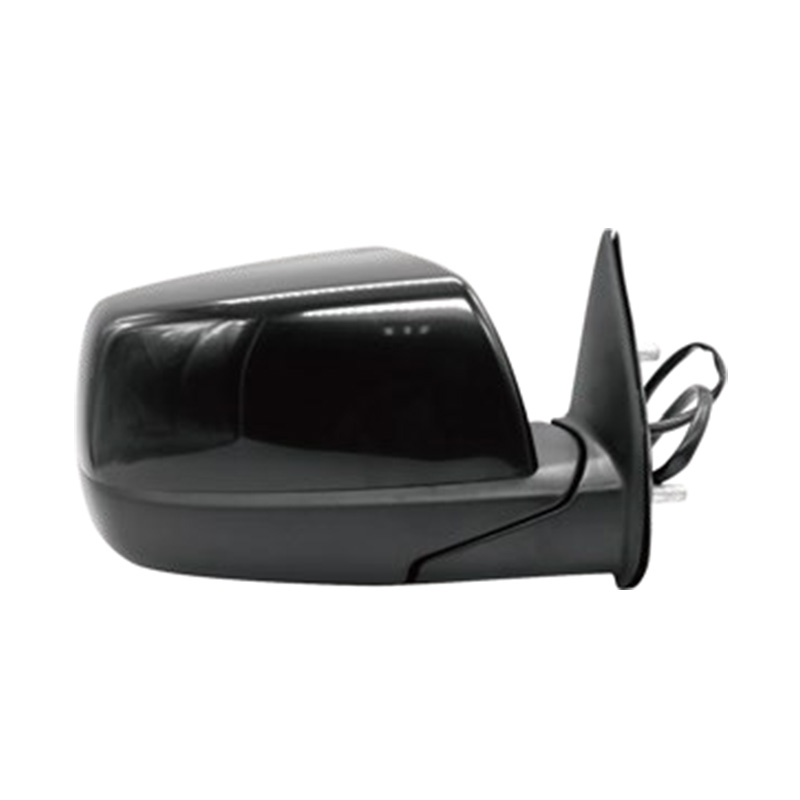 Ford Side Mirror Assemblies for Ranger GenerationsBrowse Ford-specific side mirror assemblies for Ranger 2006-2011 and 2016-2021, with multiple feature variants for generation-based fitment and field-of-view needs.View Product →
A correctly installed mirror can still be set badly. Federal Motor Vehicle Safety Standard 111 sets the minimum field of view an outside mirror must provide, and on a truck as wide as an F-150, the gap between a useful mirror and a decorative one is only a few degrees of angle.
Start with the driver's seat in your normal driving position, then set the outside mirror so a sliver of your own truck body is visible along the inner edge. That reference line tells you where your vehicle ends and the next lane begins. The passenger mirror usually needs more outward angle because of the viewing distance.
When towing, extend the mirror so the trailer edge sits in the inner third of the glass with the lane beside you filling the rest. A step-by-step method appears in this guide to adjusting auto side mirrors for optimal visibility, which also explains why convex and flat glass are set differently.
Five minutes of checking beats a return shipment. Work through these steps in order.
Replacement mirrors arrive through two main routes: used units from salvage, and newly manufactured assemblies. Used units match feature content exactly because they came off the same trim, but supply is unpredictable and the pivot has already seen miles. Newly manufactured assemblies are consistent and available in volume, which is why most repair shops and parts distributors buy them.
Feature content decides the outcome, not the logo on the box. A new mirror with power fold, heated glass, and an integrated turn signal needs the same connector and the same control logic as the factory part, or the truck's switches will not drive it. Ask for the connector map and the feature list before ordering.
Hangzhou Golden Sun AutoParts, founded in 2004, manufactures auto side mirrors under its qxp brand and builds to model-specific fitment rather than a one-size housing. Applications are catalogued by vehicle brand so that feature content and connector type can be matched to the truck in front of you.
QXP Auto Side Mirror for OEM Matching and Aftermarket ReplacementWholesale exterior side mirrors for many global makes, with in-house production and options such as heated glass, turn signals, cameras, and blind-spot monitoring.View Product →
Design, production, and quality control are handled in house, which matters when a distributor needs the same mirror to be repeatable across shipments rather than a one-off match.
The decision comes down to three questions: which features your truck actually has, whether the fault sits in the glass or deeper in the assembly, and whether the connector on the replacement matches the harness inside the door. Answer those first, and a Ford F-150 rear view mirror becomes an ordinary parts purchase instead of a gamble.
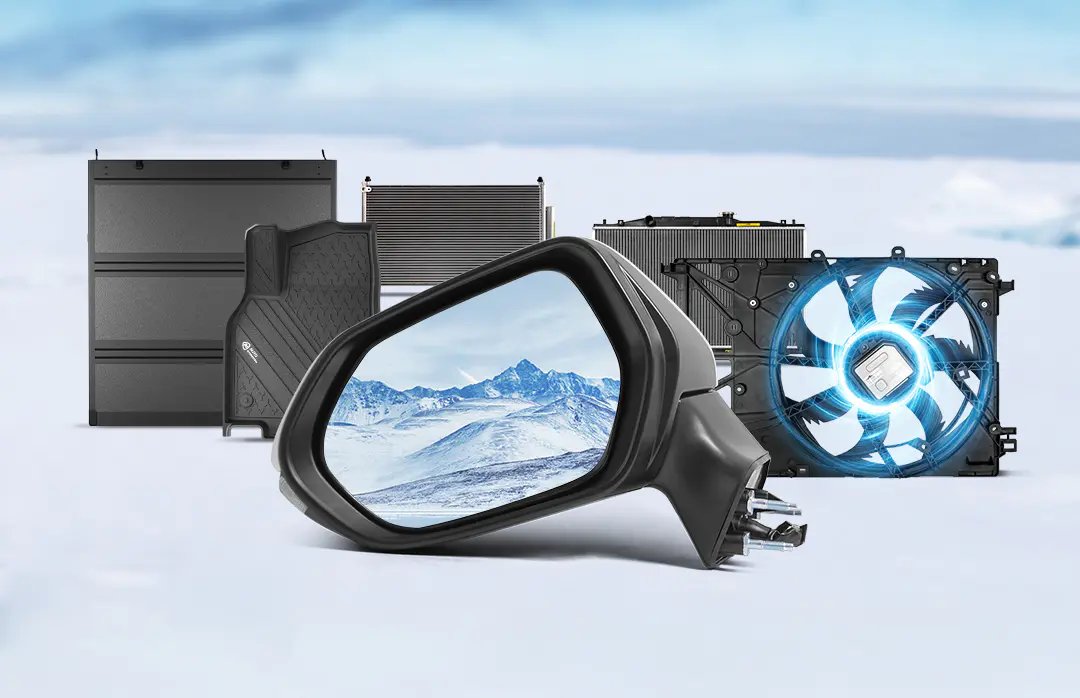 Changing Mirrors on a Chevy Silverado: Fitment, Wiring, and Install Steps
Oct 10, 2026
A 2016 Silverado 1500 owner orders a pair of tow mirrors online, spends Saturday pulling both door panels, bolts them on, then finds the turn signal plugs have nowhere to go. The truck was built with DL8 mirrors (heated, power, manual fold) and the new mirrors expect a DL3 harness. The mirror fits the door perfectly. It just does not work.
Conclusion first: on nearly every Chevy Silverado, one side mirror comes off and goes back on in 30 to 60 minutes with ordinary 7 mm and 10 mm hand tools. What decides whether that is one hour or one weekend is matching three things before you order: the truck's generation, its cab and trim level, and the mirror option code printed on the glovebox sticker.
GM kept the three-stud mounting pattern fairly consistent for years, which is exactly why so many wrong mirrors get sold. The housing looks right; the harness is not. Narrow your truck down with the table below before you shop.
| Generation | 1500 model years | How the mirror attaches | Check before ordering |
|---|---|---|---|
| GMT800 | 1999-2006 | Three studs through the door skin, nuts from inside | Manual or power glass; door clips are brittle with age |
| GMT900 | 2007-2013 | Three studs; a few trims use a hook plus bolts | First generation with common power fold and turn signal |
| K2XX | 2014-2018 | Hook plus two or three bolts, depending on trim | Heat, turn signal, puddle lamp and power fold each change the harness |
| T1XX | 2019 and newer | Bolt-on bracket at the door | Higher trims may add cameras or sensors; verify the option code first |
Then read the SPID label inside the glove box. Codes such as DL8, DL3, DPN and DQS each describe a different mix of power glass, heat, turn signal, puddle lamp and power folding. Order by that code and by year range, not by the photo in a listing.
The sequence below covers the 2007-2018 trucks and follows the same logic on newer ones; the exact number of panel screws varies by trim.
Feature count, not housing shape, is what a connector carries. A basic power mirror uses two or three pins. Add heated glass and you gain dedicated heater wires. Add a turn signal, a puddle lamp or power folding, and the pin count climbs further. A mirror with more features than the truck supports will bolt on and leave dead functions; a mirror with fewer features leaves unused wires in the door, which is harmless but means you paid for nothing.
Two details catch people out. On many Silverado trucks the outside temperature sensor lives in the passenger-side mirror, so if the dash goes blank after the swap, check that sensor and its wiring before blaming the cluster. And retrofitting power folding to a truck that left the factory without it usually needs the door switch and, on some builds, module programming, so buy power fold only when the wiring already exists.
Tow mirrors are taller, wider and often telescoping, and they give a far better view down the side of a trailer. If you tow more than a few times a month, that extra glass earns its keep. The trade-off is real, though: wider housings add wind noise, sit closer to garage pillars, and on some trucks take a slice out of the view past the A-pillar. A tow mirror with a weak detent can also fold back at highway speed, which is a safety problem rather than an annoyance.
For a daily driver that rarely sees a trailer, a standard-width replacement keeps the factory look, the quieter cabin and often a lower price for the same quality of glass and motor.
When you inspect a replacement, run the glass through its full range by hand and listen to the motor. A firm, quiet gear train and evenly coated glass are what separate a mirror that lasts from one that whistles and shakes within a year.
Because Silverado mirrors change so much between generations, the safer suppliers are the ones running separate tooling for each year range instead of one housing with adapter brackets. When comparing listings, ask for the application list, the connector pin count, and whether the mirror includes heat, turn signal, puddle lamp and power fold. A supplier who can answer in those terms is usually the one whose mirrors come back fitting correctly.
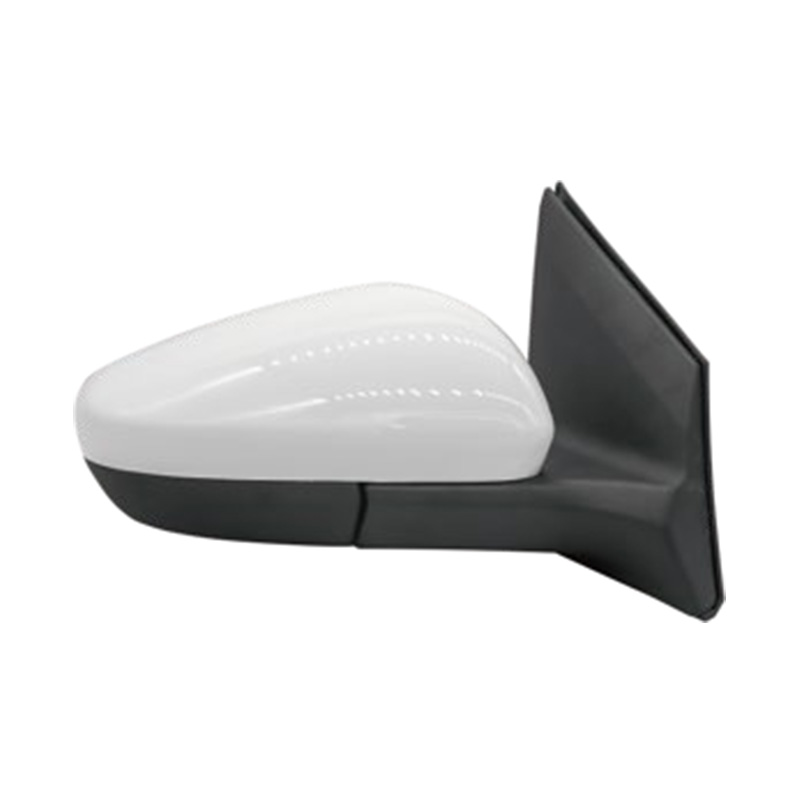 Chevrolet Side Mirror Category by Model and YearThis Chevrolet side mirror category lists custom mirrors by vehicle application, model codes, left/right side, and OE references for comparing fitments across multiple models.View Product →
For Chevrolet applications in particular, the qxp auto side mirror line is organized by brand and model year, so a 2007-2013 truck and a 2014-2018 truck can each be matched without guessing at the housing.
Once the mirror is on and working, spend five minutes on alignment instead of two seconds. Set the glass so a thin sliver of your own truck's body is just visible along the inner edge; that reference makes it obvious when the mirror has been bumped or folded. If you want the full procedure, this guide on adjusting side mirrors for optimal visibility walks through the horizon line and blind-spot overlap on both sides.
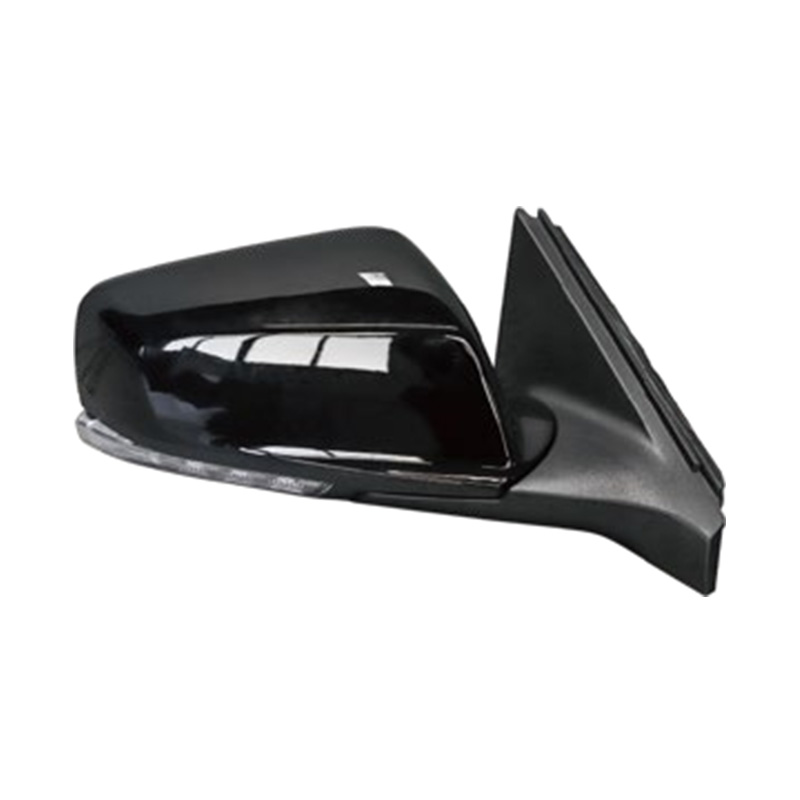 The Best Blind Spot Mirror Placement: Where to Put Them for Maximum Safety
Sep 28, 2026
You are merging onto a busy interstate. The signal is on, you have checked the center mirror and the left side mirror, and the lane looks clear. You begin to move. A horn sounds. A sedan that was invisible a second ago is now beside your rear wheel, swerving to avoid you. This sequence plays out thousands of times every day, and it is the reason stick-on blind spot mirrors remain one of the most affordable safety accessories on the market. But their performance rests entirely on one detail that many drivers get wrong: placement.
The rule is straightforward, and it is consistent across driving instructor advice and automotive community consensus: mount the blind spot mirror on the outer edge of the side mirror, as far from the vehicle body as possible. Both outer corners are acceptable. The inner half of the mirror, by contrast, shows mostly your own car and adds almost nothing to your awareness of the adjacent lane.
A stick-on blind spot mirror uses a convex curve to compress a wide angle of the road into a small glass surface. That wide angle is useful only if it aims sideways and rearward into the neighboring lane. On the outer edge, the convex lens points diagonally backward, capturing the zone where a car disappears just before it enters the main mirror's view. On the inner edge, the lens points along the side of your own vehicle, duplicating what the factory mirror already shows and leaving the actual blind spot uncovered.
The effect is measurable. Outer-edge placement typically adds 10 to 20 degrees of horizontal coverage, depending on the curvature of the stick-on mirror. That extra margin is often exactly what separates a comfortable lane change from a close call. Inner-edge placement adds only a few degrees of redundant view, and in some cases it creates a confusing secondary image that forces an extra glance at the wrong moment.
Once you accept the outer-edge rule, the remaining question is vertical position. Both the top and bottom outer corners work, and the right choice depends on your vehicle, your seat height, and the conditions you drive in.
Top outer placement keeps the blind spot mirror near your natural eye line. For most car drivers, that means a minimal head shift when checking the mirror. It also sits above the main splash line, so it stays cleaner in rain and on wet roads.
Bottom outer placement is favored by many truck and SUV owners. The lower part of a mirror housing is often flatter, which lets the adhesive seat more evenly. Some drivers also find that a lower mirror interferes less with their view of the rear fender while parking. The drawback is exposure: the bottom corner collects more road spray, mud, and frost, and in cold weather it may be the first part of the glass to ice over.
| Position | View Covered | Ideal For | Main Drawback |
|---|---|---|---|
| Top outer corner | Adjacent lane, rearward zone | Cars, hatchbacks, daily commuting | May be shadowed by the mirror housing rim on some models |
| Bottom outer corner | Adjacent lane, lower side zone | SUVs, pickups, towing setups | Collects road spray, mud, and frost more easily |
| Inner edge | Mostly your own vehicle side | Not recommended | Duplicates the factory mirror view and leaves the blind spot uncovered |
Follow this sequence and you will avoid most installation failures.
Not every vehicle has the same mirror geometry, and placement should follow the housing you actually have. Many cars have relatively flat mirror faces, so either outer corner works well. Tall SUVs and pickups often have large mirrors with a distinctive lower blind zone, which is why many owners choose the bottom outer position for those vehicles.
Towing changes the picture further. A trailer extends the blind zone and shifts it with the trailer width. In that case, place the blind spot mirror on the outer edge of the mirror on the trailer side, and check it with a helper before you rely on it.
A related point: if the mirror glass is pitted, hazy, or loose, a stick-on auxiliary mirror will not correct the problem. Replacing the side mirror assembly first gives the auxiliary mirror a proper surface and restores the original field of view.
 QXP Auto Side Mirror for Japanese and German CarsThis QXP side mirror replacement is designed for models from Lexus, Toyota, Honda, Nissan, Mazda, Audi, and more, ensuring a proper surface for adding an auxiliary blind-spot mirror after replacing a worn original.View Product →
The last step is a test with a helper or a parked car. Pull into an empty parking lot and position a second vehicle in the blind spot of the side you want to check, roughly one lane width away. Sit in the driver's seat and look at the blind spot mirror. You should see the front half of the helper vehicle from the B-pillar forward. Then ask the helper to accelerate slowly past you while you follow the transition: the blind spot mirror should hand the image to the main mirror without a gap.
If you see a gap, move the blind spot mirror outward or change its vertical tilt rather than accepting it. A few millimeters of adjustment usually makes the difference between a hidden vehicle and a visible one.
Blind spot mirror placement is a matter of geometry, not preference. The outer edge of the side mirror is the only position that extends your vision into the adjacent lane, and the choice between the top and bottom corner comes down to your own driving environment. Installed correctly, a stick-on blind spot mirror costs little and removes a danger that every driver faces, regardless of experience.
Used together with correctly adjusted main mirrors, it gives you a visibility system that works without guesswork. When the factory mirror itself is worn or damaged, replace it before adding an auxiliary lens, and match the replacement to your specific model to keep the original curvature and adjustment range.
 Toyota Corolla and Altis QXP Side Mirror OptionsSelect the correct QXP mirror for your Corolla or Altis model year from 2000 to 2020, preserving the original curvature and adjustment range before installing a blind-spot mirror.View Product →
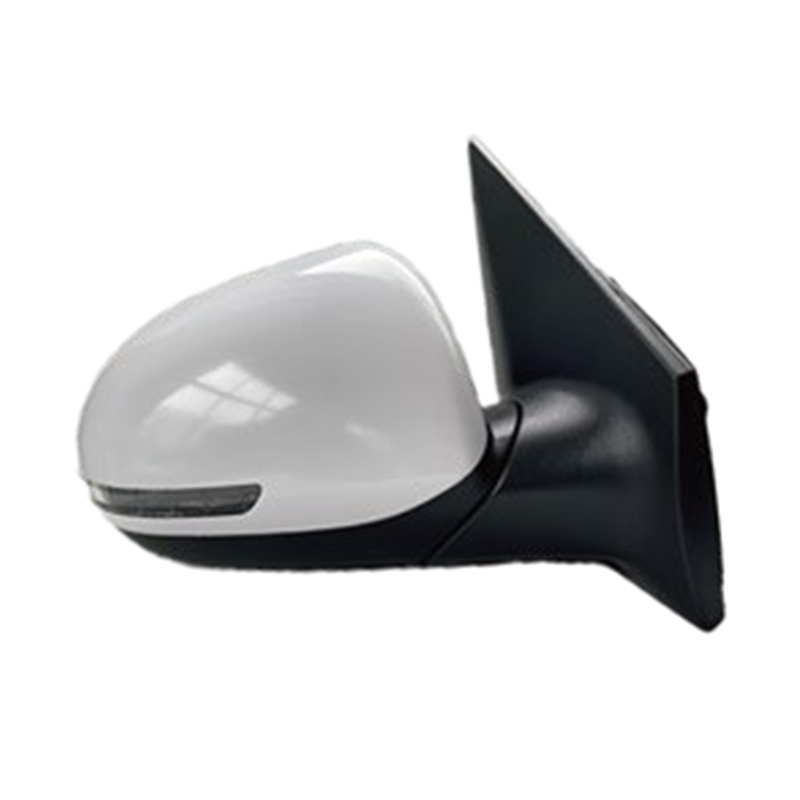 Best Placement for Blind Spot Mirrors: Optimal Location and Adjustment Tips
Sep 21, 2026
A car drifts into the lane next to you, and the driver was staring straight at their side mirror the entire time. That is the classic blind spot failure: the mirror showed the side of their own car, not the vehicle approaching in the next lane. A stick-on blind spot mirror can close that gap for a few dollars, but only if you place it correctly. The best position for a blind spot mirror is the outer bottom corner of your side mirror. That location gives you the widest possible view of the adjacent lane while hiding the smallest useful part of your normal mirror view. The rest of this article explains why that spot wins, which mistakes ruin it, and how to install and adjust everything properly.
Your factory side mirror is designed to show what is behind and slightly beside the car. The outermost portion of the glass is the only section pointed far enough outward to catch vehicles running in the next lane. When you attach a blind spot mirror to that outer edge, you add a wide-angle view of exactly the zone your main mirror cannot cover. The vertical position matters just as much: the lower half of the side mirror is the area you use least while scanning traffic, so covering it with a small convex mirror costs very little in normal visibility.
This is not a random habit. Driver education content, automotive safety handouts, and owner forum discussions consistently recommend the outer lower portion of the side mirror. A mirror mounted in the inner half, whether top or bottom, mostly duplicates what you already see. A mirror mounted in the upper outer corner blocks the zone where you look for fast-moving traffic approaching from behind.
| Placement | Adjacent-lane coverage | Normal-view obstruction | Recommendation |
|---|---|---|---|
| Outer bottom | Best | Minimal | Recommended for most vehicles |
| Outer top | Good | Moderate | Only when the mirror is very tall |
| Inner bottom | Limited | Minimal | Useful for curb views, not lane changes |
| Inner top | Poor | High | Not recommended |
A blind spot mirror fails in predictable ways. Each of these mistakes cuts its effective coverage or blocks the rest of the mirror.
Avoiding these four mistakes is the difference between a mirror that catches a car entering your blind spot and one that only reflects the pavement beside you.
Installation takes less than five minutes, but how you position the mirror during those five minutes determines whether it works.
If the side mirror glass itself is cracked, pitted, or separated from the backing plate, a stick-on mirror will not adhere reliably. Fix the base before adding the accessory. A clean, stable side mirror surface is the first condition for an effective blind spot mirror.
QXP Auto Side Mirror for Japanese and German VehiclesThis replacement side mirror is designed for a wide range of Japanese and German models, offering a stable base for adding a blind spot mirror when your original glass is damaged.View Product →Blind spot mirrors are supplements, not replacements. To get the full benefit, set your main mirrors correctly first. Sit in your normal driving position, lean your head toward the driver window until it almost touches the glass, and adjust the driver-side mirror outward until the side of your car just disappears from view. On the passenger side, lean to the right toward the center console and do the same sequence. This method pushes your visible area farther outward and shrinks the blind spot dramatically.
Once the main mirrors are aimed outward, the small convex mirror at the outer bottom corner fills the remaining gap. The result is a continuous visual chain from your rear window to the lane beside you. Our guide to adjusting side mirrors for optimal visibility walks through the exact procedure if you want to confirm your mirror angles before your next drive.
Every vehicle without a factory blind spot monitoring system benefits from a stick-on blind spot mirror. That includes most cars built before 2018, many base trims of newer models, and every truck towing a trailer that makes the rear corner impossible to see. Factory systems help, but they do not replace a direct visual check; a passive mirror never fails electronically and costs a fraction of an OEM sensor upgrade.
Vehicle body style changes the details, not the rule. In a pickup towing a trailer, angle the blind spot mirror slightly lower to catch the trailer side and the next lane. In a tall van with a long mirror housing, a larger 2.5-inch mirror is easier to read because the distance from your eyes to the glass is greater. In a compact car, the outer bottom corner is the only practical spot because the side mirror surface itself is small.
Trucks and some SUVs have a factory convex lower section on the driver-side mirror. When that is present, mount the stick-on mirror above the convex zone, still at the outer edge, so the two wide-angle views do not stack on top of each other.
A foggy, delaminated, or cracked side mirror glass ruins the benefit of any auxiliary mirror. If your mirror assembly needs replacement, choose a unit built for your exact model so the base geometry matches what the vehicle manufacturer intended. OE-style replacement side mirrors for mainstream makes like Toyota are readily available, and the installation can be combined with adding a blind spot mirror in the same afternoon.
Toyota-Compatible QXP Side Mirror Replacement OptionsThese OE-style replacement side mirrors cover multiple Corolla and Altis generations, ensuring correct base geometry. Pairing one with a blind spot mirror makes for an efficient upgrade.View Product →To sum it up: clean the glass, stick the blind spot mirror on the outer bottom corner of the side mirror, and take two minutes to aim your main mirrors outward. The whole job takes less than ten minutes and costs very little, and it eliminates most of the gap that forces drivers to crane their necks at every lane change. Skip the inner edge, skip the tiny mirrors, and skip the temptation to treat the accessory as a substitute for correct main mirror adjustment. Get these three decisions right, and the blind spot mirror will be one of the most useful additions you can make to your car.
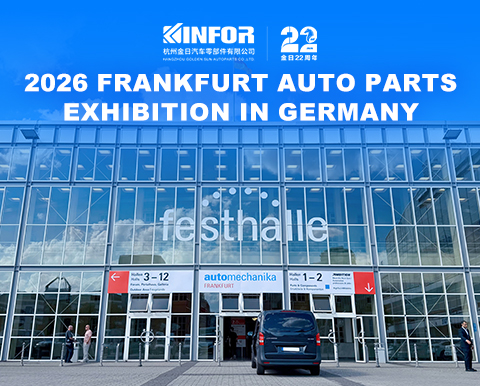 Hangzhou Golden Sun | 2026 Frankfurt Auto Parts Exhibition in Germany · Successfully Concluded!
Sep 14, 2026
Hangzhou Golden Sun | 2026 Frankfurt Auto Parts Exhibition in Germany · Successfully Concluded!

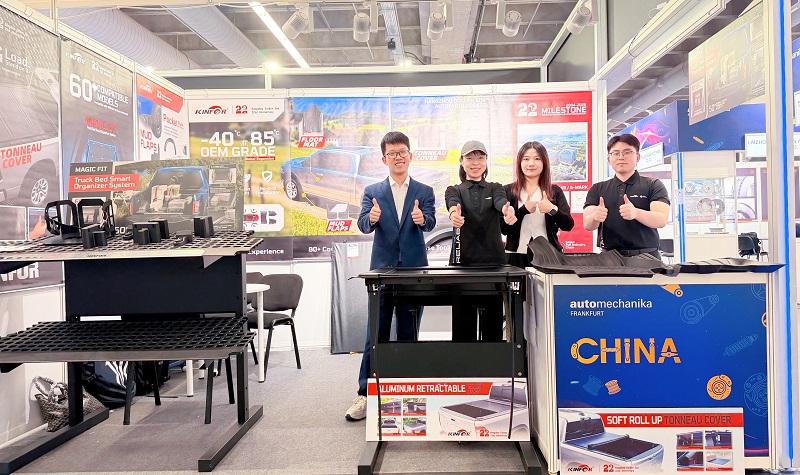
On September 12, 2026, the Frankfurt Auto Parts Exhibition in Germany successfully concluded. Hangzhou Golden Sun Autoparts Co., Ltd. (hereinafter referred to as Golden Sun),positioned at this international trade hub, showcased its auto parts products (rear-view mirrors) and modification products (pickup truck tonneau covers, truck bed storage systems, floor mats, fender flares, and mud flaps) to explore premium markets in Europe and overseas.
With a cutting-edge product matrix, a comprehensive auto parts and modification ecosystem, and a well-established partner enablement system, Golden Sun helps global automotive aftermarket professionals respond to industry changes, improve quality and efficiency, and seize new opportunities in the auto parts sector.
I、Auto Parts Products · Highly Acclaimed
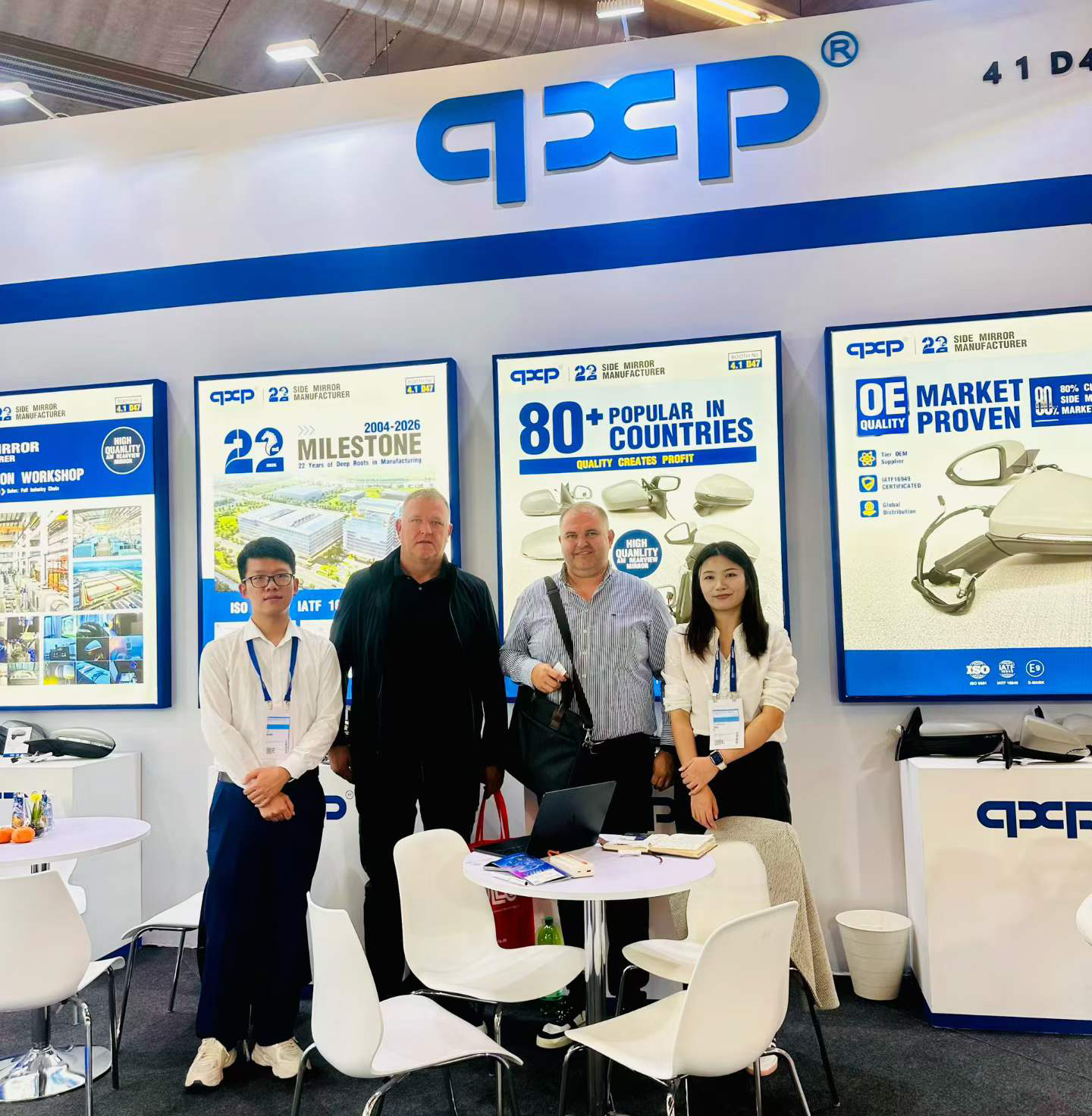
Golden Sun's flagship product — the QXP brand rear-view mirror — holds an 80% market share in China's rear-view mirror aftermarket, firmly ranking at the top of the industry. Leveraging strong R&D capabilities and strict technical standards, Golden Sun has built a product matrix covering mainstream vehicle models. The products feature OE-level interchangeability and have passed rigorous environmental testing, ensuring precise compatibility with various vehicle brands.
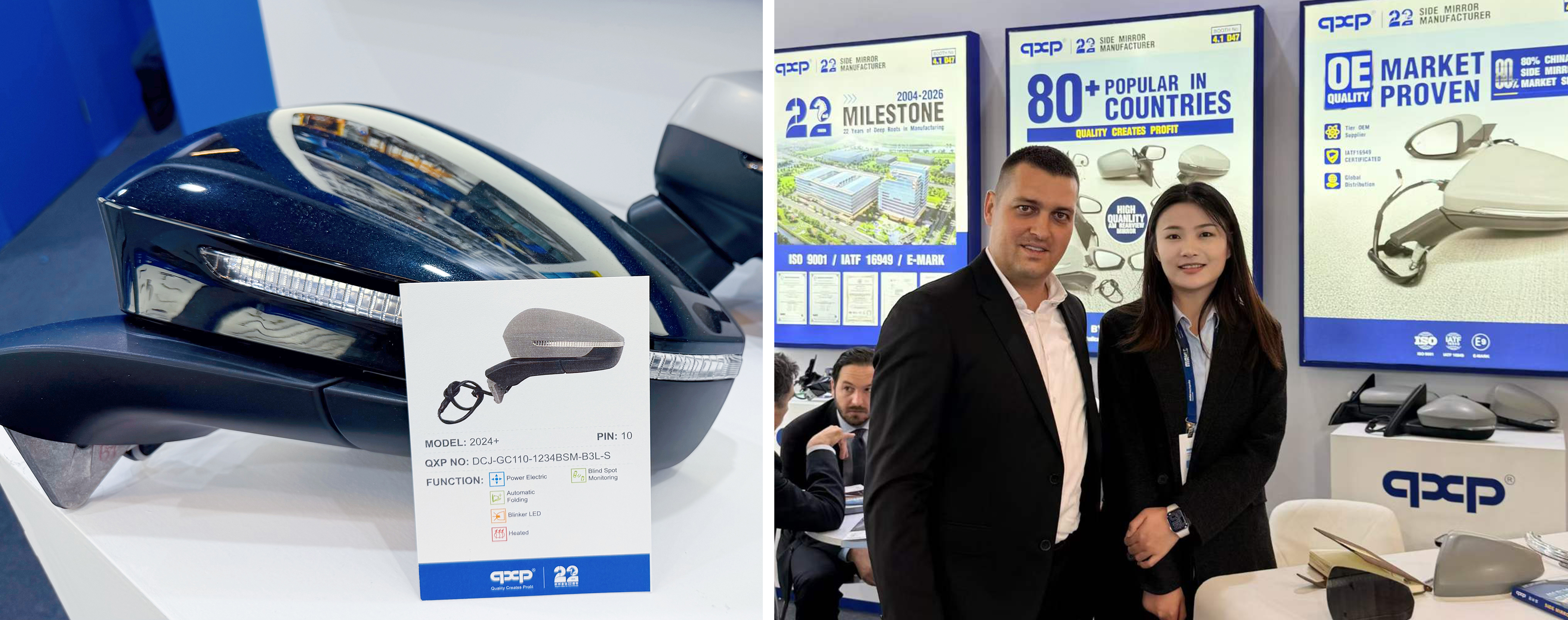
II、Modification Products · Dazzling Highlights
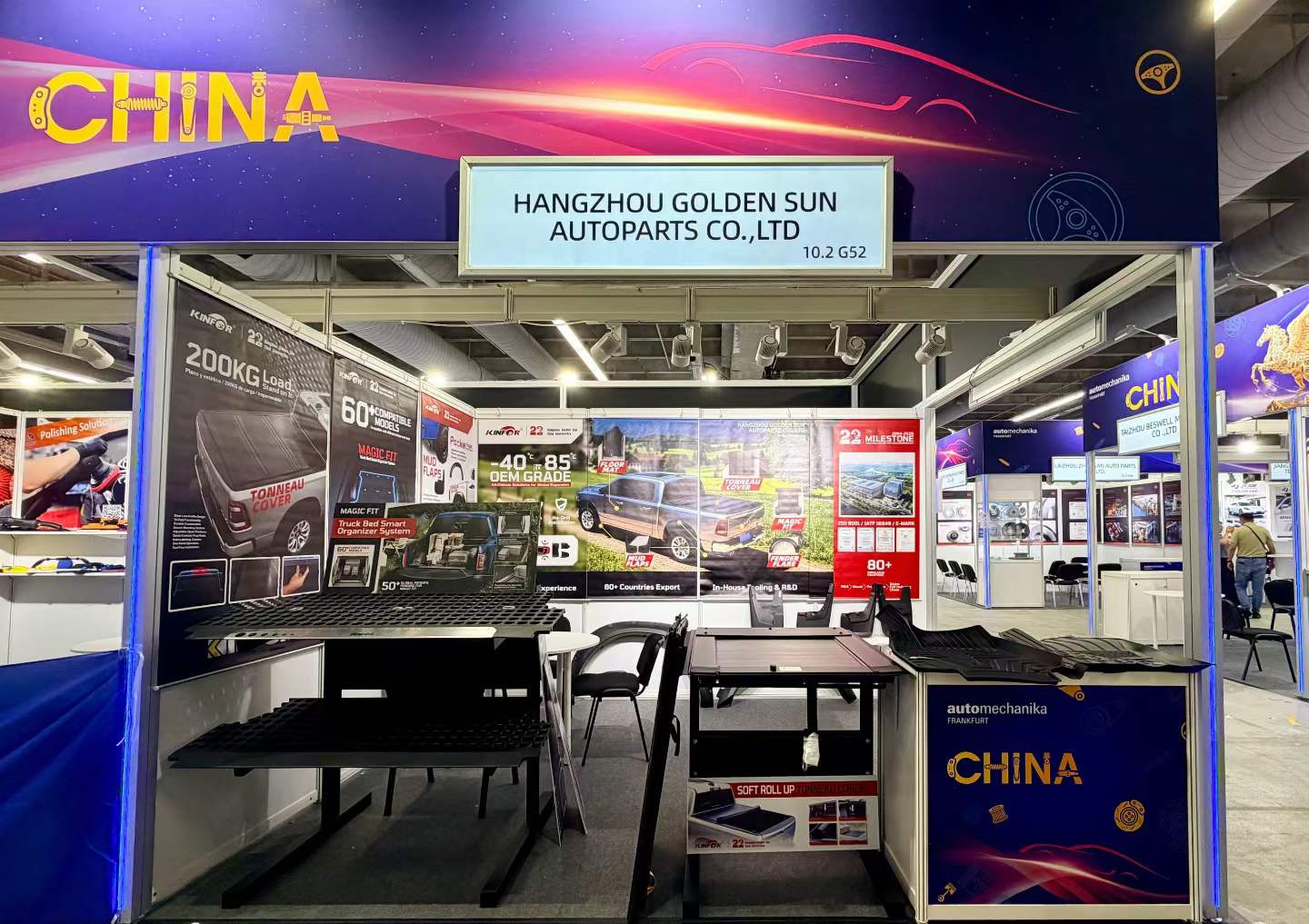
1. Pickup Truck Tonneau Cover: The KINFOR tonneau cover Redefining tonneau cover performance with uncompromising engineering. The integrated sealing system creates an all-weather secure chamber — theft-proof, waterproof, and dustproof — keeping cargo firmly in place. Sleek contours sculpt a modern aesthetic, delivering both privacy and style. The factory bed stays shielded from scratches and corrosion, driving down ownership costs — reduced drag coefficient and elevated highway cabin quietness. From daily city driving and outdoor adventures to commercial hauling and job-site work, this all-scenario storage solution empowers every pickup to handle whatever the road throws at it with confidence.
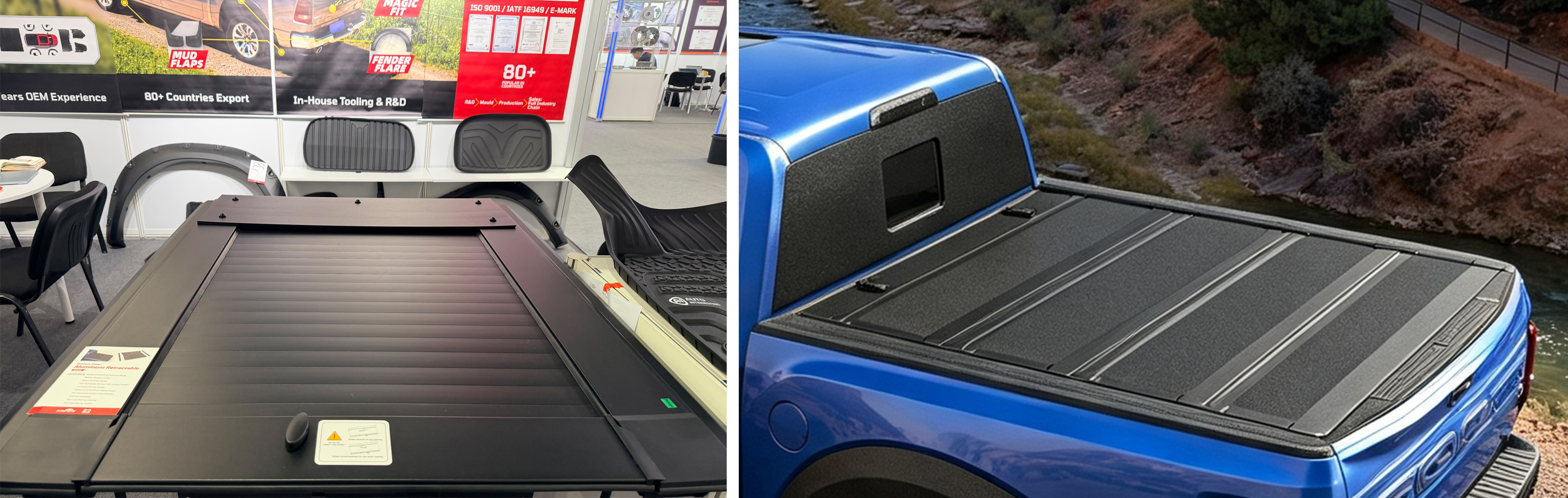
2.Truck Bed Storage System: Modular design enables serialized expansion across multiple vehicle models and product lines, adapting to various truck bed specifications. It supports stable storage for vehicle owners in all road conditions while helping retailers reduce inventory SKUs. expand customer base, and increase repurchase rates. The product holds multiple global invention patents and utility model patents, covering product form and structural innovation, building a complete intellectual property system. It features built-in drainage, organized storage compartments, loading ramps, and various DIY organizing accessories, effectively solving bed clutter and rattling noise. It is widely used in work, camping, off-road driving, fishing, and more. Compatible with mainstream pickup trucks and trucks worldwide, supported by comprehensive testing and standardized validation systems, it meets real-world driving conditions and commercial quality control requirements. Flexible ODM customization services respond rapidly to new vehicle launches and iteration demands, providing long-term, reliable supply and service to leading brands.

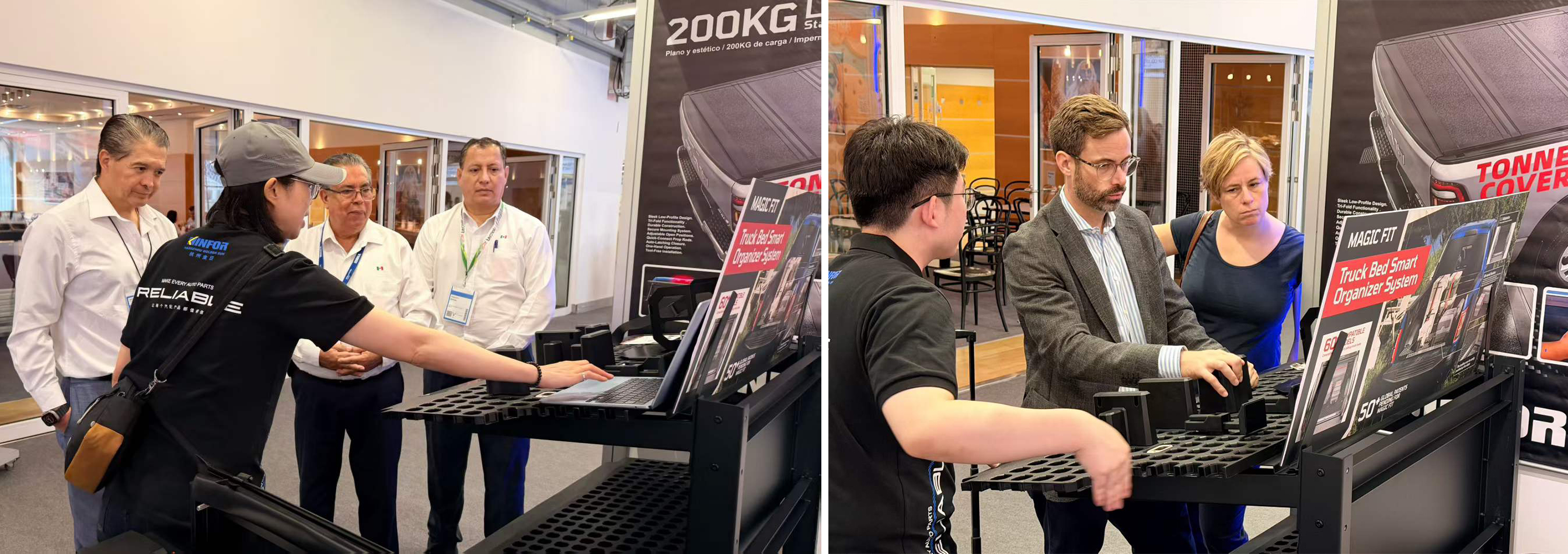
3.Automotive TPE Injection-Molded Floor Mats: In response to the transformation trends of new energy, digitalization, and low-carbon development in the automotive industry, Golden Sun applies automotive-grade R&D standards, infant-grade eco-friendly materials, and one-piece injection molding to produce TPE injection-molded floor mats, trunk mats, storage boxes, door sill plates, and more, building a healthy automotive interior ecosystem.Working with global partners to build an efficient, eco-friendly, and win-win cabin ecosystem, continuously leading the industry toward high-quality development.
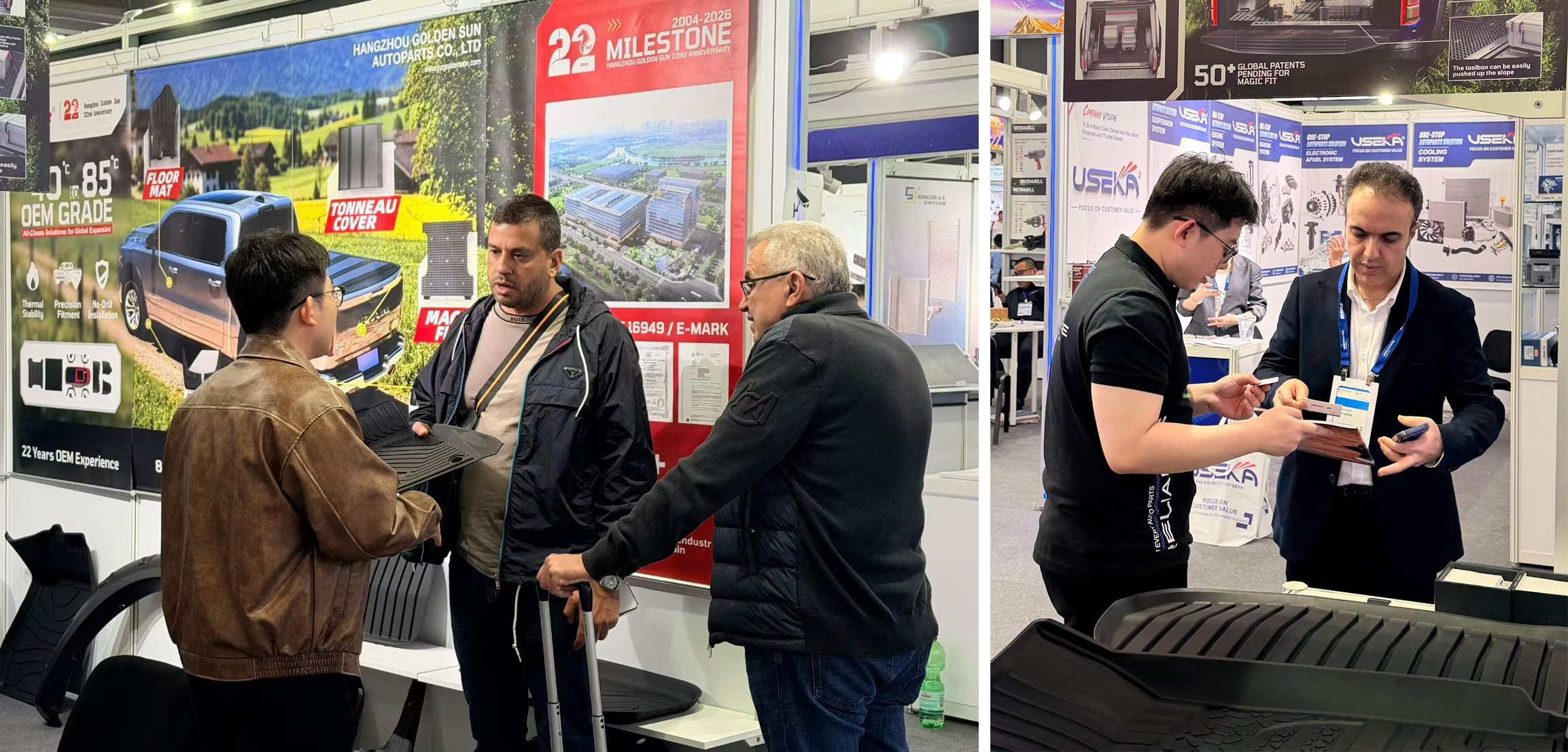
4.Automotive Fender Flares: Vehicle-specific one-piece injection-molded kits, balancing superior protection, durability, and aesthetics, with large-scale stable delivery supported by our own factory. Products cover two styles: Rivet Off-Road Mecha Style and OE Refined Style. Vehicle-specific design reuses factory mounting points, seamlessly fitting the body without damaging the original structure — drill-free, non-destructive installation. High-strength PP material effectively blocks mud, water, and gravel, protecting paint, chassis, and wheel arches, delaying corrosion, and withstanding temperatures from -40°C to 85°C — tough, crack-resistant, and deformation-free. High-precision injection molding meets IATF16949 and ISO9001 quality management system requirements.
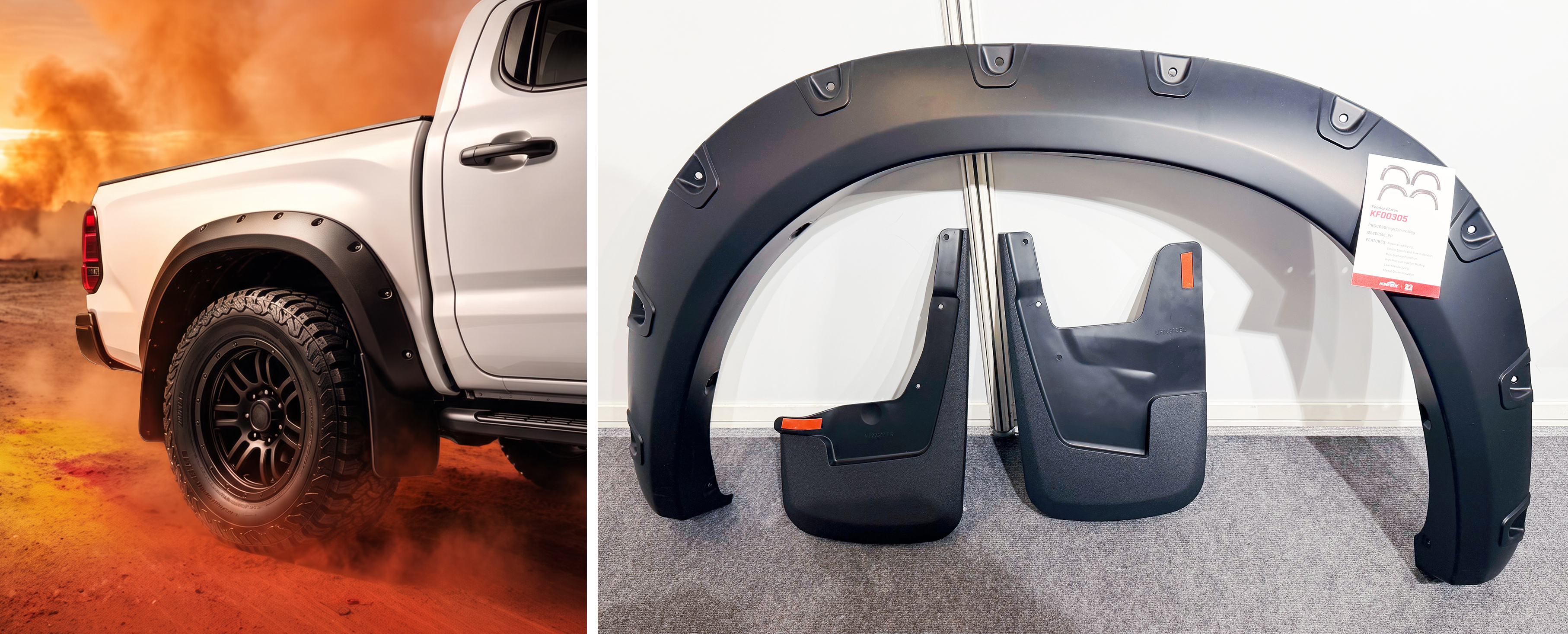
5.Automotive Mud Flaps: Injection molding process with 1:1 precision mold making according to vehicle models, fitting the body contour like an OE standard part. Resistant to extreme cold and sun exposure, with scientific curvature and thickened structure, effectively intercepting mud, water, and gravel, protecting doors, fenders, and chassis from scratches and corrosion. Uses factory pre-drilled holes — ready to install, rinses clean with water, easy to maintain.
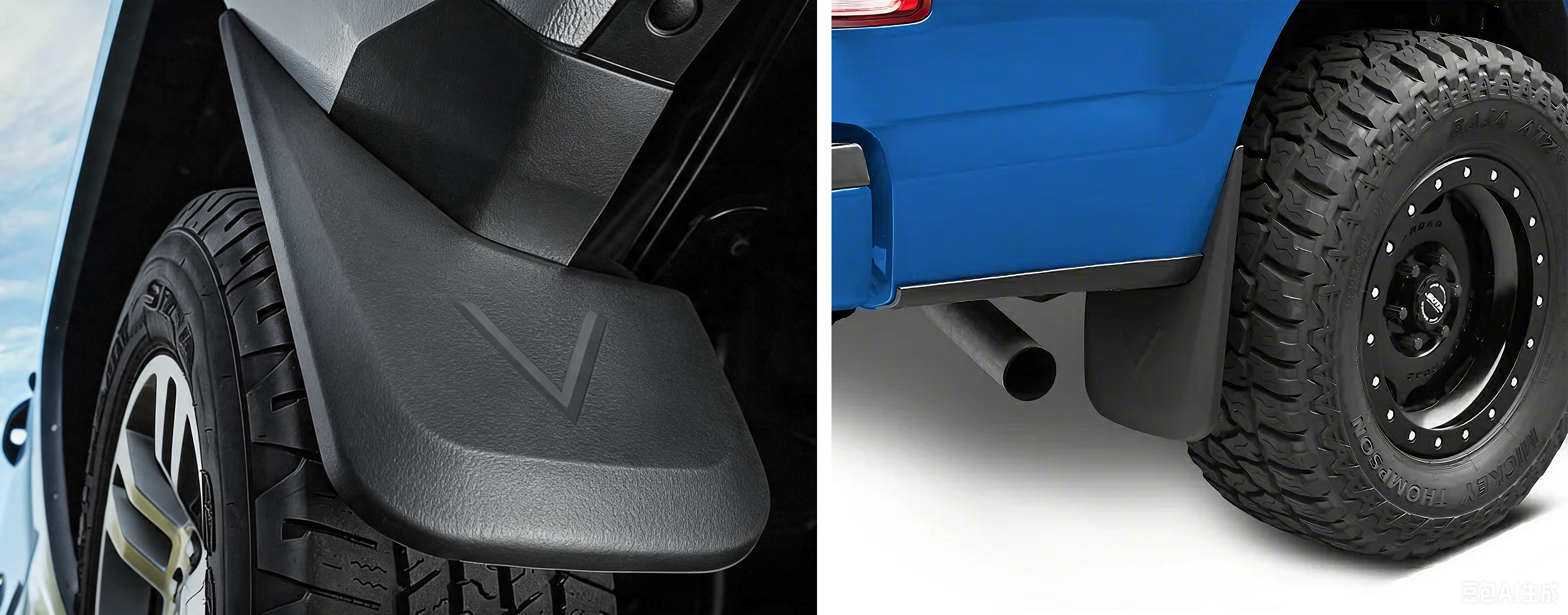
III、Crowded Booth, Warm Reception
At the exhibition, Golden Sun's booth attracted a continuous stream of professional buyers and distributors from Germany and across Europe. The team presented product highlights and successful cases with professional explanations and sincere service, engaging in in-depth exchanges on industry trends and cooperation opportunities, earning wide acclaim from international clients.
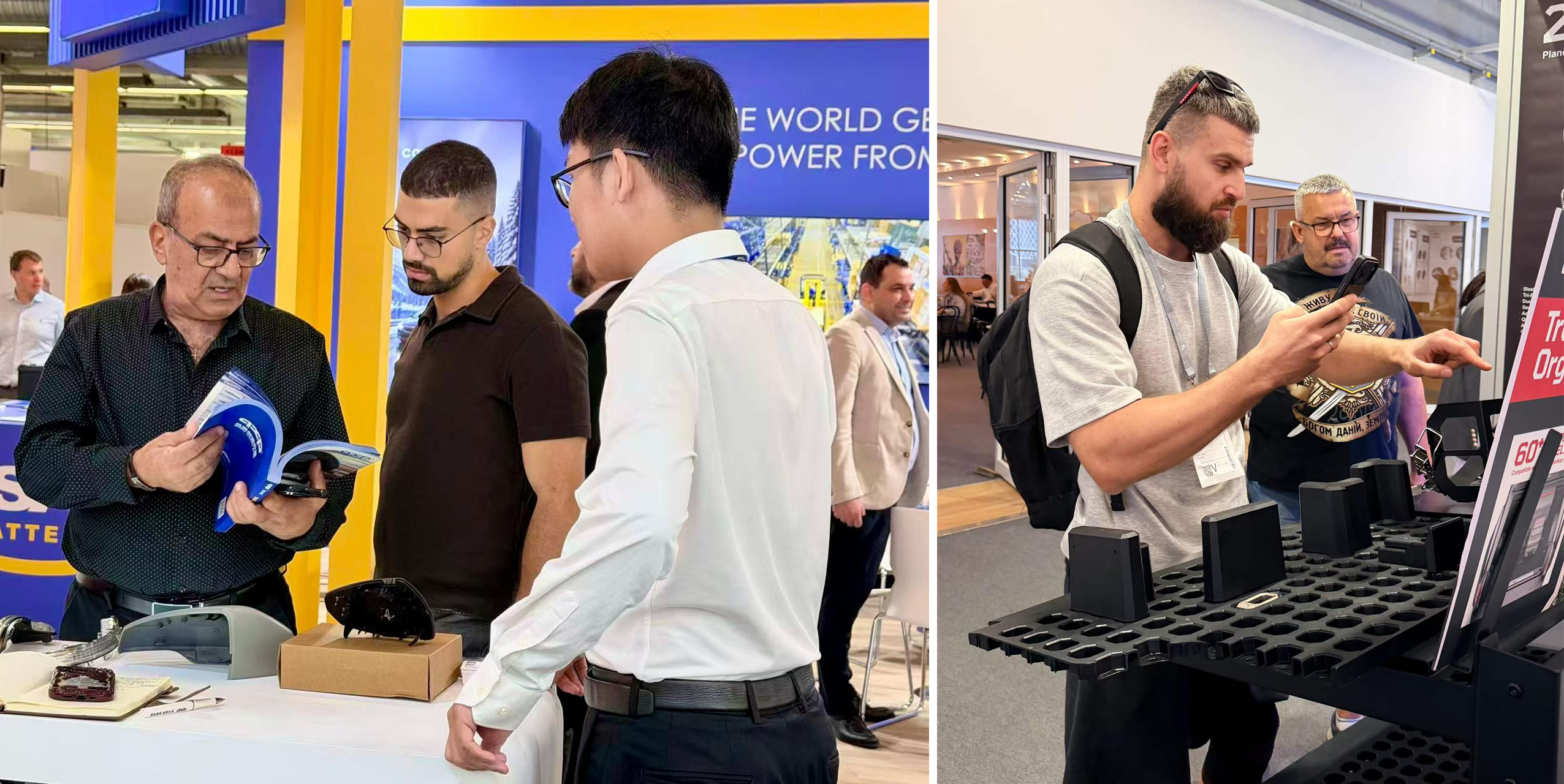
IV、Win-Win Cooperation · Creating the Future Together
In the future, Hangzhou Golden Sun will continue to increase investment in new product R&D, continuously improve its global marketing network, and work hand in hand with global partners to create a new future for the automotive aftermarket.

 Auto Defroster Repair: Diagnose and Fix Front and Rear Defroster Problems
Sep 14, 2026
You start the car on a cold morning, the windshield fogs over, and the defroster barely clears a palm-sized patch. That pattern is almost never a mystery: the defroster is a chain of separate components, and a repair usually comes down to one weak link in the front HVAC system or a damaged electrical grid on the rear glass. With a small set of tests and a few common parts, most of these jobs are within reach of a careful home mechanic.
The front defroster works by directing warm, dry air onto the windshield. The heat source is the heater core, a small radiator mounted in the dash. Engine coolant flows through it, and the blower motor pushes cabin air across it. In most vehicles, a series of electronically controlled doors and actuators routes that air to the defroster vents when you select the defrost mode.
Three conditions must be present for the front defroster to work: enough hot coolant reaching the heater core, a blower motor that moves enough air, and a functioning door that actually sends that air to the windshield. The thermostat plays a supporting role here. If the thermostat sticks open, the engine never reaches operating temperature, the coolant stays cool, and the heater core cannot produce warm air even though every other component works.
Work backward from what you see. The table below covers the most frequent front defroster complaints, the parts most likely to be responsible, and the repair that usually resolves them.
| Symptom | Likely cause | Typical repair |
|---|---|---|
| Defroster blows weakly on all settings | Blower motor, blower motor resistor, or clogged cabin air filter | Replace the motor or resistor; replace the filter |
| Air flows but stays cool | Low coolant, air pocket in the heater core, or thermostat stuck open | Top up coolant and bleed the system; replace the thermostat |
| No airflow at all on any mode | Blown fuse, failed blower motor, or faulty switch | Test power at the motor; replace the failed part |
| Air comes out of floor or panel vents instead of the windshield | Broken mode door actuator or vacuum control line | Replace the actuator; inspect vacuum lines |
| Defroster only works on the highest fan setting | Failed blower motor resistor | Replace the resistor pack |
The blower motor is the most frequently replaced front-defroster component. It runs every time the HVAC is on and sits in a dirty, humid location behind the dash. Worn brushes or bearings reduce airflow gradually, so the defroster appears weaker over months rather than failing all at once.
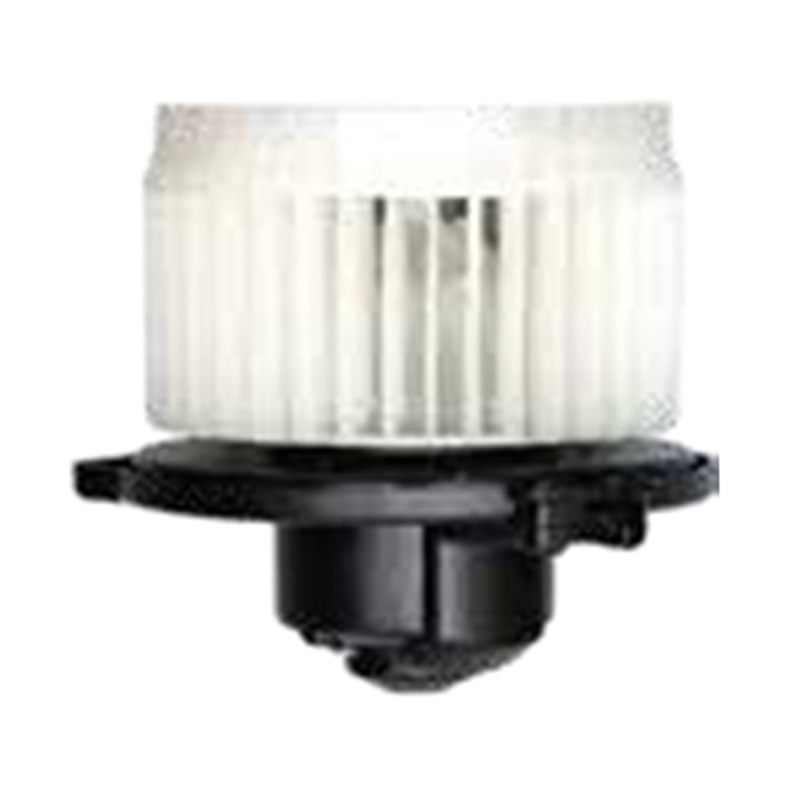
 HVAC Heater Blower Motor for Climate Control SystemsThis component circulates air through the heater core and evaporator, directly affecting defroster airflow. Worth checking if interior ventilation seems weak, as it is a common cause of gradual defroster decline.View Product →
Coolant level is the second most common cause. The heater core sits above the engine in most layouts, which means a small leak or an air pocket in the cooling circuit starves the core before the temperature gauge shows any problem. Check the coolant when the engine is cold, and bleed the system according to the vehicle service procedure.
The rear defroster is a different system entirely. A grid of thin conductive lines, baked onto the inside surface of the rear glass, carries electrical current and produces heat. Frost or fog disappears band by band as the lines warm. The grid is fragile, and it is the most common point of failure in the system.
One broken grid line shows up as a straight mark across the glass where the fog never clears. Conductive silver paint or a specialized rear defogger repair compound fixes small breaks. Clean the damaged area thoroughly, mask off both sides of the line to keep the repair narrow, apply the compound in a thin, even coat, and allow it to cure completely before testing. A break up to about 2 mm wide can be bridged this way.
When an entire band of lines stays fogged, the fault is usually a loose tab at the edge of the glass where the wiring connects. Do not use regular glue; the joint needs to carry current. Apply the same silver-loaded compound, or solder the tab with a low-temperature iron designed for glass contacts. The surface must be dry and free of oil for the bond to conduct.
If no lines warm up, check from the source down: the fuse, the relay, and the switch or timer. Use a multimeter to confirm voltage at the glass tabs. If voltage is present but the grid stays cold, inspect all the lines for multiple breaks; a grid circuit can fail completely when several lines are interrupted and the current has no complete path.
A conductive repair kit is the right call for a single small break or a detached tab. It is not the right call for a large delaminated section, a grid with multiple breaks, or glass that is cracked across the lines. In those cases replacement glass is the reliable option, because the repair compound will not restore the original current capacity over a large area.
For the front system, the same judgment applies. A heater core that leaks or is severely clogged is a major dashboard job on many models, so verify the diagnosis first with a coolant pressure test and a flush. A blower motor, by contrast, is usually accessible and quick to replace, and it is almost always cheaper to install a new motor than to attempt rebuilding the old one.
When buying replacement parts for an HVAC circuit, match the original specifications rather than chasing the lowest price. A condenser and blower motor selected for the vehicle's connector layout, voltage range, and mounting dimensions install cleanly and avoid the electrical issues that come from generic cross-reference parts. For cooling-system components, OE-style construction matters because the heater circuit shares its coolant with the radiator:
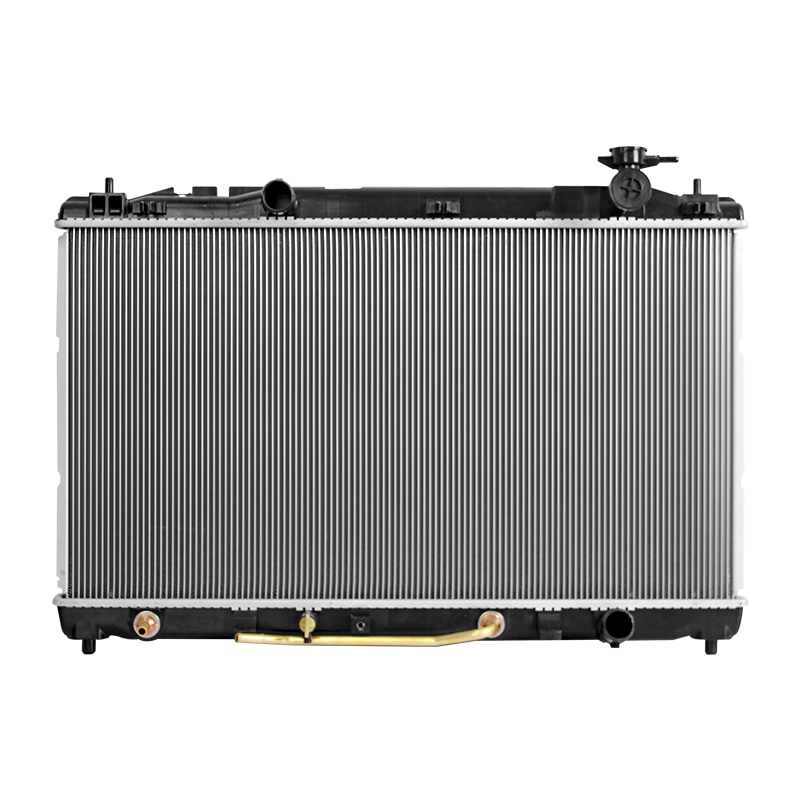 HVAC Auto Radiator for Engine Cooling SystemsSuitable when replacing cooling-system parts, this radiator regulates engine temperature and shares coolant with the heater circuit. OE-style construction matters for proper fit and preventing repeated failures.View Product →
A defroster repair is a good excuse to check related components that fail quietly. While the blower motor is out, inspect the cabin air filter and the blower resistor pack, since both wear at similar rates. While the coolant system is open, inspect hoses and clamps for age cracks. These checks cost a few minutes and prevent the same repair from being repeated a month later.
The condenser also plays a direct role in how quickly the windshield clears. Running the A/C compressor during defrost mode removes humidity from the air before it hits the glass, which is why most cars engage the compressor automatically in defrost. A condenser that is blocked or leaking reduces that dehumidifying effect. See how engine cooling fans operate for a closer look at the fan that keeps the cooling system stable in winter too.
 HVAC Auto Condenser for Air Conditioning and DefrostingThe condenser cools refrigerant vapor and supports defrost mode dehumidification. A blocked or leaking condenser reduces windshield clearing performance, making it relevant when addressing defroster issues.View Product →
Keep a multimeter, a bottle of conductive rear-defogger repair compound, and a copy of the vehicle wiring diagram handy, and most defroster repairs become predictable afternoon jobs. For a broader look at how the wider HVAC system supports cabin comfort and driving safety, see this overview of HVAC systems in modern vehicles. And if you are replacing rather than repairing, choose quality parts that match the original specifications; reliable defrosting starts with the right hardware.
 How to Replace a Wing Mirror: Complete DIY Guide for a Perfect Fit and Save Money
Sep 09, 2026
You back into a low post at the exit of a parking garage, and the driver's side wing mirror folds back with a loud crack. The housing is shattered, the glass is loose, and you have no idea how much a repair shop will charge. The hard part is deciding whether to replace just the glass, the cover, or the whole unit. In most cases, a wing mirror replacement is a manageable weekend job if you have the right tools, a correct new part, and a few hours of patience. The steering voice quickly returns: once you know what is damaged, you can avoid paying labor fees and get back on the road with a clear view.
Wing mirror damage rarely falls into just one category. The glass can break from an impact while the housing stays intact, or the housing can crack while the glass remains functional. More often than not, both suffer together. Ordering the wrong part costs time and money, so inspect the mirror under good lighting before you buy.
| Damage | Likely replacement | Skill level |
|---|---|---|
| Glass is cracked or shattered | Mirror glass | Beginner |
| Cover is scratched or cracked | Mirror cover | Beginner |
| Housing broken at the base or folding joint | Complete mirror unit | Intermediate |
| Electrical failure in power adjust or heater | Complete mirror unit or motor | Intermediate |
If the base is broken or the internal mechanism no longer holds the glass firmly, a complete unit is the safest choice. Replacing only the glass on a broken housing can leave it loose and prone to vibration, while a missing cover looks bad and exposes the glass to weather.
Wing mirrors are not interchangeable across trim levels. A base model might have a manual mirror with a simple cable, while a top trim can include power adjust, heating, auto-dimming, folding, puddle lamps, and integrated turn signals. If your original mirror had heated glass and you install a non-heated unit, you lose a feature and may face a wiring mismatch.
QXP Auto Side Mirror Replacement for Various Car ModelsThis side mirror from QXP is built to OE specifications, ensuring proper fit for many Japanese and German vehicles. It offers a reliable replacement option with features matching factory units.View Product →
When you order a complete unit, always match the connector type, the number of wires, and the mounting points on the door. As a manufacturer of automatic side mirrors, we build qxp-branded units to OE-style specifications, which means the contours and mounting holes match factory panels. This cuts down on the risk of buying a part that needs modifying to fit.
For example, if you drive a Toyota, choosing a model-specific mirror is faster than trying to adapt a universal part. The same applies to other common brands such as Honda, Nissan, or Volkswagen.
QXP Side Mirrors for Toyota Corolla Model YearsThese QXP side mirrors are designed for specific Toyota Corolla generations, offering direct fit for various trims and regions, simplifying replacement without modifications.View Product →
A direct-fit replacement tends to be easier to install, reduce the chance of water ingress, and provide a cleaner look. Check your trim level and the exact mirror functions before you place an order.
Replacing a complete wing mirror usually requires removing the door trim panel. You will need several basic tools:
Always disconnect the negative battery terminal before working near wiring or the airbag system. This is especially important on vehicles with power-adjusted mirrors because a short circuit can blow a fuse or trigger a fault code. Wait ten minutes after disconnecting the battery if your car has a memory seat or sensor that needs to recalibrate.
The process varies slightly by vehicle, but the general sequence is consistent. Follow these steps to replace a complete wing mirror.
Use the trim lever to pop out the plastic fasteners around the door panel. Look for hidden screws near the door handle, under a small cap, or near the armrest. Gently pull the panel away from the door by starting at the bottom and working upward. Keep the wires connected if they are still attached, and set the panel aside on a soft surface.
Find the connector behind the door panel that runs to the mirror. Depress the release tab and separate the plug. If the mirror has a puddle lamp or a camera, there may be more than one connector. Take a photo before disconnecting anything to avoid mixing up the wires later.
With the door panel off, you will see the mirror mounting plate attached to the door frame. Remove the two or three bolts that hold the mirror in place. Use a 10 mm socket or the recommended Torx bit. Hold the mirror with your other hand so it does not fall once the last bolt is loose.
Position the new mirror over the mounting holes and tighten the bolts by hand first. Do not overtighten them, as this can strip the threads or crack the door frame. Attach the wiring harness and make sure the connector clicks into place. If the new unit has a different connector, stop and verify that you ordered the correct trim level.
Reconnect the battery negative terminal. Test the mirror functions: power adjust up and down, left and right, heat if applicable, folding action, and turn signals. Then reassemble the door panel by pressing the trim clips back in. It is normal for some plastic clips to feel stiff on the first reinstall.
Once the mirror is in place, proper adjustment is as important as the installation itself. A correctly adjusted mirror eliminates blind spots and gives you a full view of your lane. The correct way to adjust auto side mirrors includes setting the glass so the side of your vehicle is barely visible on the inner edge. Do this before you drive, and do not rely on the memory of the old mirror position.
After adjustment, verify that the glass stays in place at highway speed. A loose mirror will vibrate and blur the image, hurting your ability to judge distance. If your replacement unit includes heating elements, turn them on and confirm the glass warms evenly.
Not every wing mirror replacement is a DIY success. If your mirror houses a blind spot camera, a lane departure camera, or a memory function that is linked to the vehicle's software, the simple bolt-in process can turn into a calibration job. Some modern vehicles require a diagnostic tool to reset fault codes after a mirror with sensors is replaced.
Also avoid DIY if the mounting area has significant rust or if the door frame is bent from an accident. In those cases, the new mirror may not sit flush, and air noise or water leaks can develop. A professional shop has the equipment to pull the dent or repair the mounting plate properly.
Finally, if the mirror cover needs to be painted to match your car body color, painting is best left to an experienced sprayer to avoid obvious color mismatch.
The price difference between an imitation mirror and a well-made unit is small compared to the work involved. A low-quality part often uses thin glass, plastic that turns brittle in cold weather, or a motor that stalls after a few months. These failures can be more dangerous than the original damage because they fail while you are driving.
Manufacturers like Hangzhou Golden Sun AutoParts build side mirrors to strict production standards, with clear glass, stable housings, and reliable electrical connections. For instance, a Honda owner can choose a specifically designed qxp mirror that matches the original look and fits the existing hardware without drilling.
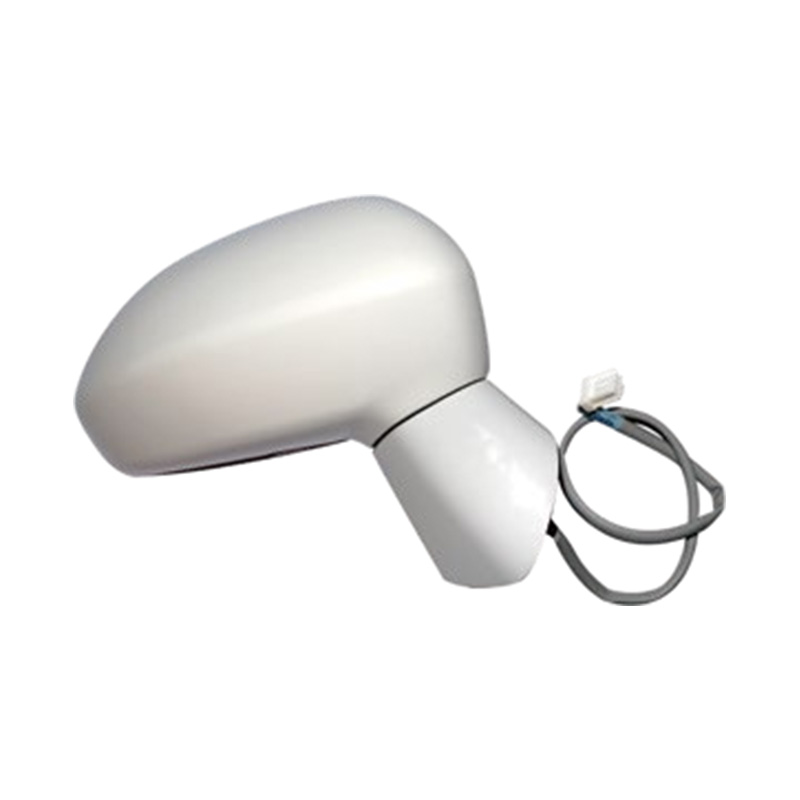 QXP Side Mirrors for Honda Fit and Civic ModelsThese QXP side mirrors are tailored for Honda Fit, Jazz, and Civic models, providing a direct fit that matches original wiring and mounting, ensuring easy installation.View Product →
When you compare parts, focus on fitment details such as plug type and the exact number of wires. A good supplier will list the compatible model years and trim levels so you do not end up with a part that needs extra connectors or resistors.
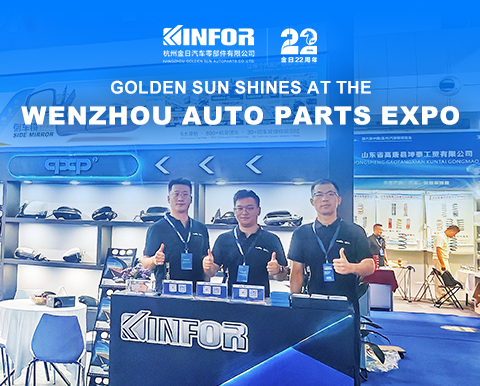 Golden Sun SHINES at the Wenzhou Auto Parts Expo, Showcasing Advanced Smart Manufacturing Capabilities
Sep 08, 2026
From September 3 to 5, 2026, the 2026 China (Wenzhou) Auto & Motorcycle Parts Expo was held at the Wenzhou International Convention and Exhibition Center.
Covering an exhibition area of 50,000 m² and bringing together 1,600 automotive parts companies, this year’s expo centered on the theme of “China Auto Parts · Specialty Factory Exhibition,” showcasing the outstanding strengths of specialized, innovative, and high quality manufacturers across the industry.
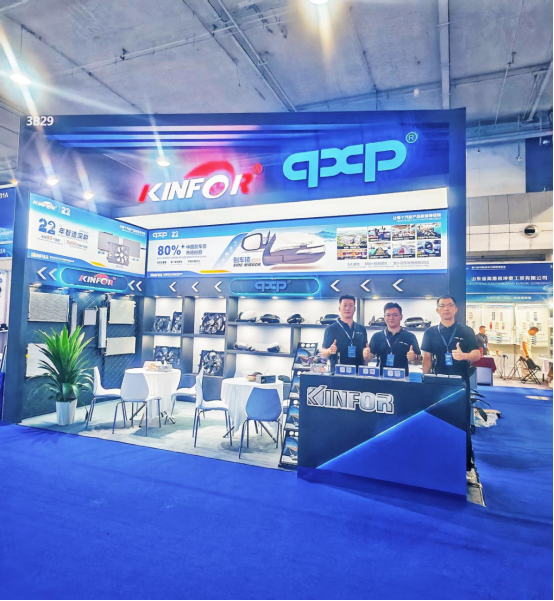
As a trusted automotive parts manufacturer with 22 years of industry experience, Golden Sun Autoparts Co., Ltd. made a strong appearance at the expo with two flagship product lines: qxp side mirrors and KINFOR cooling parts. Backed by solid market share and a strong industry reputation, Golden Sun quickly became one of the most closely watched exhibitors at the event.
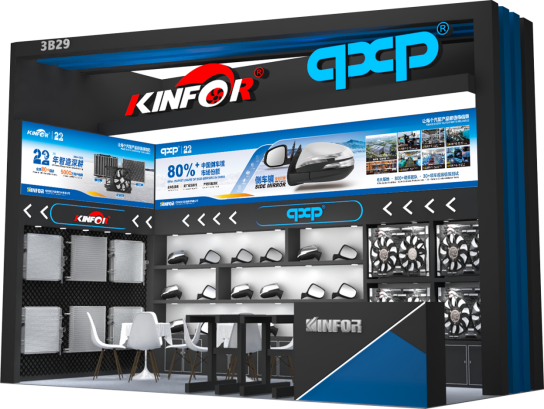
qxp side mirrors command an impressive 80% share of the Chinese auto parts market, covering mainstream vehicle models with a comprehensive product portfolio designed to provide precise fitment across a wide range of automotive brands.
Behind this remarkable market presence lies Golden Sun’s years of continuous investment in product development, tooling and molds, and rigorous quality control standards.

KINFOR cooling parts are sold in more than 80 countries and regions worldwide, with a strong presence in markets including the United States, Germany, the United Kingdom, France, Russia, Southeast Asia, the Middle East, and Africa.
Featuring high power, high rotational speed, and powerful cooling performance, KINFOR products deliver stable heat dissipation even under high temperature operating conditions, earning broad recognition from customers in international markets.

This year, Golden Sun placed a strong emphasis on strengthening its connections with the domestic market.
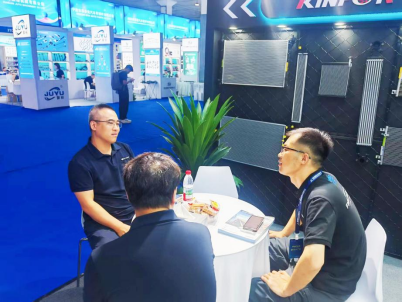
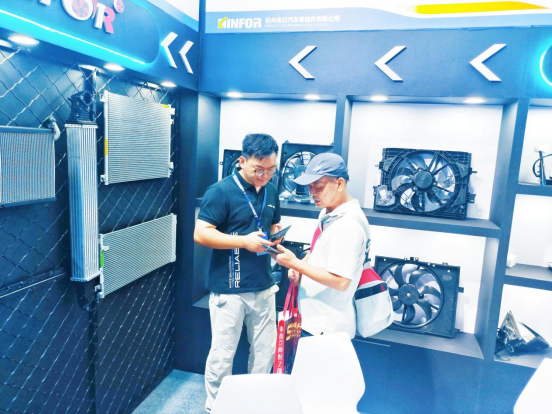
Throughout the exhibition, the company’s booth attracted a steady stream of visitors. Buyers, distributors, and representatives from vehicle manufacturers across China stopped by to explore potential cooperation.
Our team conducted on site product demonstrations, provided detailed fitment solutions, and engaged in in depth discussions with customers, resulting in preliminary cooperation intentions with a number of potential partners.
China’s vehicle parc has now surpassed 440 million units, while the penetration rate of EVs continues to rise. As vehicle maintenance and replacement needs grow, the enormous existing vehicle base, together with the rapid evolution of new energy models, is creating unprecedented structural opportunities in the automotive aftermarket.
With a well established supply chain and strong production capacity reserves, Golden Sun is fully prepared to ride this new wave.

Golden Sun’s impressive performance at the expo was anything but an overnight success.
Since its founding in 2004, Golden Sun has remained committed to the philosophy of “Global Vision, Ingenious Manufacturing.” Today, the company has grown into a modern integrated manufacturing group covering 230,000 square meters, with more than 800 employees and a product portfolio exceeding 80,000 SKUs.
With Hangzhou serving as its strategic headquarters, the manufacturer has established six smart manufacturing bases in Taizhou, Huzhou, Changzhou, Jinan, and other locations, creating an integrated industry ecosystem spanning R&D, manufacturing, and sales.
This comprehensive network enables Golden Sun to provide precise solutions for mainstream vehicle models worldwide, serving both OEM applications and the automotive aftermarket.
From Wenzhou to the world, and from the domestic market to the international stage, every step Golden Sun takes is grounded in solid expertise and unwavering determination.

Looking ahead, Golden Sun will continue to build high quality products with craftsmanship and drive growth through innovation. The company will remain committed to the automotive parts industry, accelerate product upgrades, and expand our global brand presence.
Our goal is clear: to make “Golden Sun Autoparts” a trusted and gold standard brand in the global automotive parts industry.
 【Hangzhou Golden Sun】2026 Russia Exhibition — A Successful Wrap-Up!
Sep 02, 2026
Making Every Auto Parts Reliable
Hangzhou Golden Sun Autoparts Co., Ltd.
— 2026 HANGZHOU GOLDEN SUN
From August 25 to 28, 2026, MIMS Automobility Saint Petersburg, a major international exhibition for automotive parts and aftermarket services, was held at the Expoforum Exhibition Centre in Saint Petersburg, Russia. As one of the leading professional automotive aftermarket exhibitions in Russia and Eastern Europe, the event brought together nearly 2,000 companies from the global automotive parts industry, with an exhibition area of more than 73,000 square metres.
Hangzhou Golden Sun Autoparts Co., Ltd. made a strong appearance with its core products — qxp side mirrors and KINFOR cooling fans — showcasing the strength of Chinese manufacturing at this international automotive aftermarket event.

01 Flagship Products · In the Spotlight
At this year’s exhibition, Golden Sun presented two of its key product lines: qxp side mirrors and KINFOR automotive cooling fans.
1 qxp side mirrors — With an 80% share of China’s automotive aftermarket, qxp remains a leading brand in the segment. Backed by strong R&D capabilities and rigorous technical standards, Golden Sun has developed a comprehensive product range covering mainstream vehicle models and offering precise fitment across a wide range of automotive brands.

2 KINFOR cooling fans — High power, high speed and strong cooling performance make KINFOR cooling fans one of the standout products in Golden Sun’s thermal management portfolio. Built around a high-output design and enhanced cooling technology, KINFOR provides efficient thermal management solutions that perform reliably under high-temperature conditions, helping maintain stable operating temperatures for vehicle power systems. KINFOR products are currently sold in more than 80 countries, including the United States, Germany, the United Kingdom, France and Russia, with a strong presence across Southeast Asia, Africa, the Middle East and Europe. Their consistent quality has earned broad recognition in international markets.

02 At the Exhibition
Throughout the four-day event, the Golden Sun booth attracted a steady stream of professional buyers and distributors from Russia and neighbouring countries. Our team introduced the product features, technical specifications and application examples in detail, while engaging with visitors on market trends and potential cooperation opportunities.


03 A Productive Exhibition · Looking Ahead
At the close of the four-day international exhibition, Hangzhou Golden Sun not only presented its core products and technical capabilities to customers from around the world, but also reached preliminary cooperation agreements with a number of international customers, further expanding its business presence in Russia and Eastern Europe. With a large vehicle population, strong demand for maintenance and repair, and the growing market share of Chinese automotive brands in Russia, the Russian market continues to offer significant opportunities for automotive parts exporters.
This strong performance in the international market is backed by 22 years of experience and development. Founded in 2004, Golden Sun has grown under the philosophy of “Global Vision, Premium Craftsmanship” into an integrated manufacturing group with 230,000 square metres of facilities, more than 800 employees and 80,000 SKUs. With its Hangzhou headquarters serving as the strategic hub, the company operates six smart manufacturing bases across Taizhou and Huzhou in Zhejiang, Changzhou in Jiangsu, and Jinan in Shandong, building an integrated ecosystem covering R&D, manufacturing and sales to serve mainstream vehicle models in both the OEM and aftermarket sectors.
Golden Sun keeps moving forward and expanding into new markets. Looking ahead, Hangzhou Golden Sun will continue to build on quality, innovation and manufacturing expertise, deepen its presence in international markets, and strengthen both its product exports and brand development. Together with partners around the world, we look forward to creating new opportunities and a stronger future for the global automotive parts industry.




[Auto Accessories][email protected]
[Auto Parts][email protected]

+86-0571-26238568

Kangxin Road, Tangqi Town, Linping District, Hangzhou , Zhejiang , China