English
 中文简体
中文简体
 русский
 Español
[Auto Accessories][email protected]
2026-03-04
Content
The correct side view mirror position points outward far enough that your own vehicle is barely visible — or not visible at all — at the inner edge of the mirror. This is the Society of Automotive Engineers (SAE) recommended setting, validated by research showing it reduces blind spot coverage by up to 90% compared to the traditional inward-angled position most drivers use. Most people angle their side mirrors too far inward, showing a large portion of their own car's flank — a redundant view that adds no safety information while leaving the adjacent lanes underrepresented.
The conventional wisdom that you should see about a quarter of your own car in the side mirror comes from an era when mirrors were small and drivers needed a reference point for depth perception. Modern mirrors are larger, and the BGE (Blind Spot Glare Elimination) method developed by the SAE demonstrates that positioning mirrors to cover the adjacent lane — rather than your own vehicle — provides substantially more useful visual information with no loss of spatial awareness once drivers adapt to the setting.
Proper mirror adjustment takes less than two minutes and should be done every time a different driver uses the vehicle, after any seat position change, or whenever the mirrors are moved accidentally. The adjustment sequence matters — always set the seat and steering column first, then adjust mirrors to that seated position.
Vertical positioning is equally important and often neglected. The horizon line — where the road surface meets the background — should fall approximately in the middle of the mirror vertically. The upper half of the mirror should show the area behind and beside the vehicle at traffic height; the lower half should show the road surface. A mirror angled too high shows only sky and distant background; too low shows only road and misses vehicles in adjacent lanes at normal ride height.
For the right mirror specifically, many drivers angle it slightly lower than the left — far enough down to see the curb or lane marking when reversing or parking. Some vehicles have a function that automatically tilts the right mirror downward when reverse gear is engaged; if this is available, the normal driving position for the right mirror can be set at the standard horizon-centered height without compromise.
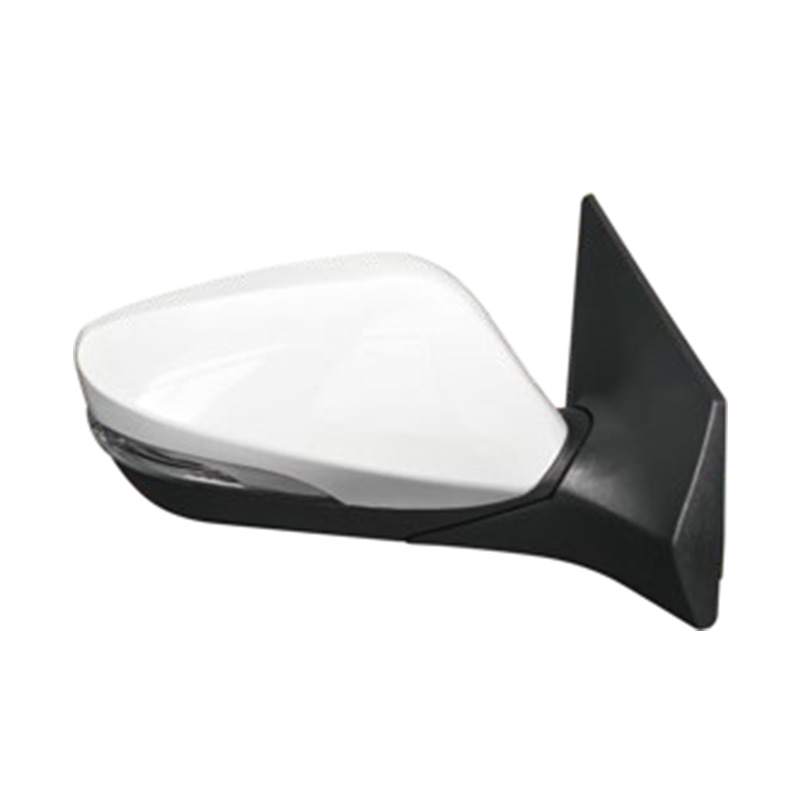
A blind spot is any area around the vehicle that is not visible in any mirror and cannot be seen without physically turning to look. The size and location of blind spots are directly determined by mirror position. The commonly cited statistic that approximately 840,000 blind spot-related accidents occur annually in the United States (NHTSA data) underscores why mirror position is a genuine safety matter, not merely a preference.
In the traditional inward-angled position — where the driver can see a significant portion of their own vehicle in both side mirrors — the side mirrors overlap significantly with the rearview mirror's field of view. The area directly behind the vehicle is covered multiple times, while the zones in the adjacent lanes beside the rear quarters of the vehicle are covered by nothing. These uncovered zones are the classic blind spots.
A vehicle traveling in the adjacent lane will typically disappear from the rearview mirror before it appears in an inward-angled side mirror, creating a window of invisibility that can last 1–2 seconds at highway speeds — enough time for the vehicle to be directly alongside before the driver is aware of it.
With mirrors adjusted outward using the BGE method, the side mirrors pick up coverage precisely where the rearview mirror ends. As a vehicle overtaking from behind moves out of the rearview mirror's field, it immediately appears in the side mirror. As it moves forward past the side mirror's field, it becomes visible in the driver's peripheral vision. The result is a nearly continuous handoff of visual coverage from rearview mirror to side mirror to peripheral vision with minimal gap.
The SAE study that established this method found that with correctly positioned mirrors, a vehicle in an adjacent lane remains visible continuously from the moment it pulls alongside from behind until it is far enough forward to be seen directly — effectively eliminating the traditional blind spot for most passenger vehicles in most traffic scenarios.
The difference between the two main mirror positioning approaches is significant in practice. The table below summarizes the key differences to help drivers understand what each method provides and gives up.
| Aspect | Traditional Position (Car Visible) | BGE / Outward Position (Car Not Visible) |
|---|---|---|
| Blind spot coverage | Large blind spot beside rear quarter | Minimal to no traditional blind spot |
| Overlap with rearview mirror | Significant overlap (redundant coverage) | Minimal overlap (maximum total coverage) |
| View of own vehicle | 25–40% of mirror shows own car | 0–5% of mirror shows own car |
| Adjacent lane visibility | Limited; only vehicles well behind visible | Full adjacent lane visible from beside rear to well forward |
| Adaptation required | Familiar to most drivers | 1–2 weeks to feel natural for experienced drivers |
| Useful for parking / reversing | Good spatial reference for car position | Requires more use of cameras or head check for tight maneuvering |
| Recommended by | Traditional driving instruction | SAE, Consumer Reports, many advanced driving programs |
Drivers who switch from the traditional position to the BGE outward setting almost universally report an initial period of disorientation — the mirrors look "wrong" because they no longer show the familiar reference of the car's own bodywork. This feeling typically passes within one to two weeks of regular driving, after which the outward position becomes equally intuitive while providing substantially better blind spot coverage.
During the adaptation period, the most important adjustment is changing the habit of checking for blind spots. With traditional mirror positioning, a shoulder check is always required before changing lanes because the mirror does not show the adjacent lane adequately. With correctly positioned BGE mirrors, a vehicle appearing in the mirror as you signal and check provides confirmation before the shoulder check, and the shoulder check confirms what the mirror has already shown. The head check does not become unnecessary — but it becomes a confirmation rather than the primary source of information.
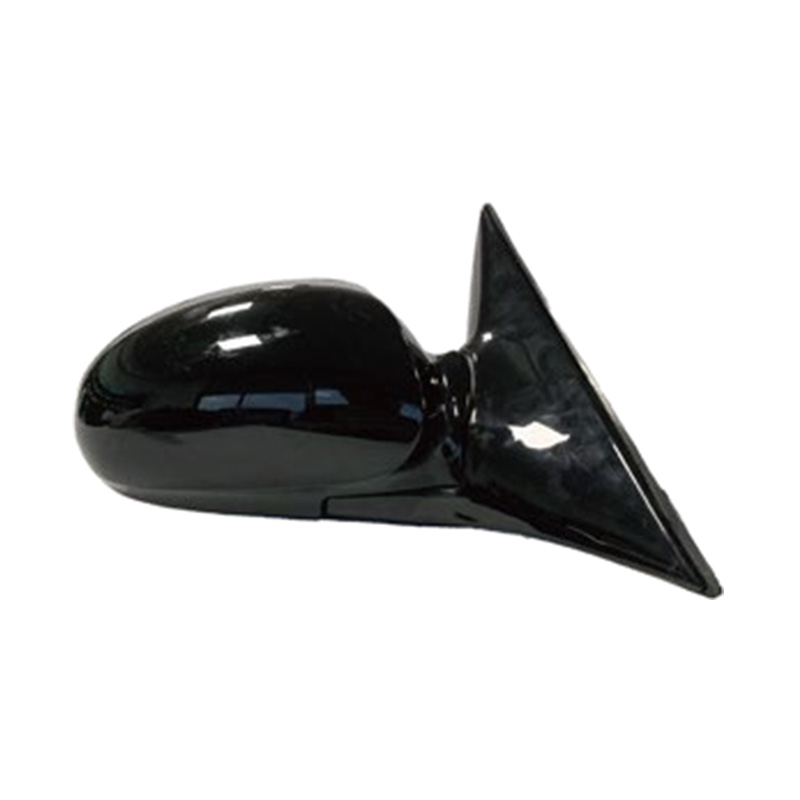
The principles of correct mirror positioning apply across all vehicle types, but the specific adjustments differ based on vehicle height, width, and intended use.
Taller vehicles with higher seating positions have a naturally better rearward sightline than sedans, but their greater width means the adjacent lane is further from the driver's eye position. This makes the outward mirror adjustment even more critical for SUVs and trucks than for lower vehicles. The vertical adjustment is also more important — the horizon line should still bisect the mirror vertically, which at a higher seating position means tilting the mirror slightly downward relative to the truck's body to ensure the road surface at adjacent lane height is visible rather than just the upper portion of the scene.
When towing, the mirrors must cover both the adjacent lane and the trailer sides. Many trucks and SUVs have extended tow mirrors that fold out further than standard mirrors — these should always be deployed when towing, as standard mirrors typically cannot see past a trailer of normal width. With tow mirrors extended, the same BGE outward positioning principle applies: angle them to show the adjacent lane beside the trailer, not the trailer surface itself. The trailer sides should be just barely visible at the inner mirror edge as a reference, with the majority of the mirror showing the lane beside the trailer.
Full-size vans without rear windows rely entirely on side mirrors for rearward visibility, making correct positioning especially critical. Many vans have two mirrors on each side — a flat upper mirror for distance and a convex lower mirror for close-range coverage. The flat mirror should be set using the same outward BGE principle as a standard passenger vehicle. The convex mirror below it should be angled to show the area immediately beside and behind the van — the zone where cyclists, pedestrians, and low vehicles are most likely to be invisible to the primary flat mirror.
Motorcycle mirrors are smaller and positioned differently from car mirrors, but the same principle applies: angle them outward to maximize adjacent lane coverage rather than showing the rider's own arms or body. The mirrors should show the lane to the rear and side with minimal view of the motorcycle itself. Because motorcycle mirrors vibrate at speed and are mounted on handlebars that change angle with steering, checking mirror position after acceleration to highway speed — rather than only at rest — ensures the adjustment is correct under actual riding conditions.
Even optimally positioned mirrors have physical limits. Certain zones around any vehicle — particularly the near-side front quarter and the area immediately behind large vehicles — cannot be covered by standard mirrors regardless of adjustment. The following measures address coverage gaps that mirror position alone cannot solve.


[Auto Accessories][email protected]
[Auto Parts][email protected]

+86-0571-26238568

Kangxin Road, Tangqi Town, Linping District, Hangzhou , Zhejiang , China