English
 中文简体
中文简体
 русский
 Español
[Auto Accessories][email protected]
2026-04-09
Content
A modern automotive mirror is not a single material — it is a precisely engineered assembly of multiple layers, each serving a distinct function. From the outermost housing to the innermost reflective surface, every component contributes to the clarity, durability, and safety of what drivers rely on every time they change lanes or reverse. Understanding this layered structure helps explain why material quality directly determines mirror performance on the road.
At its most basic, a car mirror consists of four functional layers: a glass substrate that provides the optical foundation, a metallic reflective coating that creates the image, a protective layer that shields the coating from moisture and corrosion, and an exterior housing that holds everything in place under real-world driving conditions. Each layer involves specific material choices that manufacturers balance against cost, safety standards, and performance targets. For a deeper overview of how these components come together in different configurations, see our guide on auto side mirror types.
The glass substrate is the starting point of every automotive mirror. It must be flat, uniform, and optically clear — any imperfection in the base will be magnified by the reflective coating and distort the driver's view. Three types of glass are used across the automotive industry, each with different performance characteristics.
Soda-lime glass is the most widely used, accounting for roughly 90% of automotive mirror glass. Its composition — approximately 70% silica (silicon dioxide), 15% sodium oxide, and 10% calcium oxide — delivers a reliable balance of clarity, workability, and cost. Standard soda-lime glass is typically used in rear-view and interior mirrors where the risk of high-speed impact is lower.
Tempered glass is produced by heating standard glass to around 620°C and then rapidly cooling it. This process compresses the surface layers, increasing impact resistance by 400–500% compared to untreated annealed glass. Tempered glass is standard for exterior side mirrors, which must survive road debris, minor collisions, and pressure washing without shattering into dangerous shards. When tempered glass does break, it fractures into small, blunt-edged pieces — a critical safety characteristic for a component mounted at door height.
Borosilicate glass is used in premium and performance vehicles, particularly for heated mirrors. Its superior thermal shock resistance — withstanding temperature differentials up to 330°F without cracking, compared to 200°F for soda-lime — makes it well-suited to heated mirror elements that rapidly warm in cold conditions. The added cost limits its use to higher-specification vehicles.
Regardless of glass type, thickness matters. Automotive mirror glass is typically 2–4 mm thick. Thinner glass reduces weight but increases the risk of flexing under vibration, which degrades image quality. Precision flatness across the full surface — measured in fractions of a wavelength of light — is essential: even a slight warp produces the kind of distortion that makes objects appear closer or farther than they are.
Glass alone reflects only about 4% of incoming light — far too little to function as a mirror. The reflective coating is what transforms optical-grade glass into a functional mirror surface. Three metals dominate automotive applications, each with distinct trade-offs.
| Coating Material | Reflectivity | Corrosion Resistance | Typical Application |
|---|---|---|---|
| Silver | 95–98% | Moderate (requires copper barrier) | Premium OEM mirrors, low-light performance |
| Aluminum | 85–90% | Good (oxidizes to stable layer) | Standard OEM and aftermarket mirrors |
| Chromium | 60–70% | Excellent | Specialty and decorative mirrors |
Silver has historically been the preferred coating material because of its exceptionally high reflectivity across the visible spectrum. It provides notably better image brightness in low-light conditions, making it the choice for premium vehicles where nighttime visibility is prioritized. The drawback is cost and susceptibility to oxidation: silver reacts with sulfur compounds in air to form dark silver sulfide, which is why a thin copper barrier layer is typically applied between the silver and the backing paint to seal the coating from moisture and contaminants.
Aluminum is the most common coating in modern automotive mirrors because it offers strong reflectivity at significantly lower cost. Applied through physical vapor deposition — a process that evaporates aluminum in a vacuum chamber and deposits it onto the glass at thicknesses of 50–100 nanometers — aluminum coatings are uniform, fast to apply, and relatively resistant to oxidation. When aluminum oxidizes, it forms a thin, stable aluminum oxide layer that actually protects the metal beneath rather than degrading it. This makes aluminum-coated mirrors well-suited to the humid and variable conditions cars encounter daily.
Chromium offers excellent corrosion resistance but lower reflectivity, making it a less common choice for primary reflective surfaces. It is more frequently found in decorative trim elements or used as an additional protective layer over aluminum or silver coatings in high-moisture environments. For a detailed technical comparison of silver and aluminum mirror coatings, see our article on what auto side mirrors are made of.
A reflective metal coating applied directly to glass — with no further protection — would degrade within months under normal driving conditions. Moisture, temperature cycling, road chemicals, and cleaning agents would all attack the metal surface, causing tarnishing, delamination, and the dark edge blotches that appear on poorly sealed mirrors. The protective layer system solves this problem through two distinct components: a chemical barrier and a mechanical backing.
For silver-coated mirrors, a thin layer of copper is electrochemically deposited over the silver before the backing paint is applied. Copper acts as a moisture barrier, preventing water from reaching the silver and triggering the oxidative reaction that produces dark, non-reflective silver sulfide. This copper-free silver mirror design — now widely adopted in OEM production — eliminates the copper barrier entirely by using advanced paint formulations that are sufficiently impermeable on their own, reducing environmental impact while maintaining corrosion resistance.
The backing paint itself is a multi-layer system. A primer coat adheres directly to the copper or metal coating, followed by one or two layers of waterproof paint. Together, these layers must remain flexible enough to accommodate the thermal expansion and contraction the mirror experiences across seasonal temperature ranges, while remaining rigid enough to resist chipping from stone strikes. High-quality backing paint is what separates a mirror that lasts five years from one that develops edge corrosion within twelve months, particularly in vehicles exposed to road salt in winter conditions.
Some mirrors, particularly those intended for bathroom or marine environments, also receive a front-surface protective coating — a hard, transparent film that resists scratching and chemical attack. In automotive applications, a similar approach is sometimes used on heated mirrors, where the heating element requires electrical insulation between the conductive layer and the reflective surface.
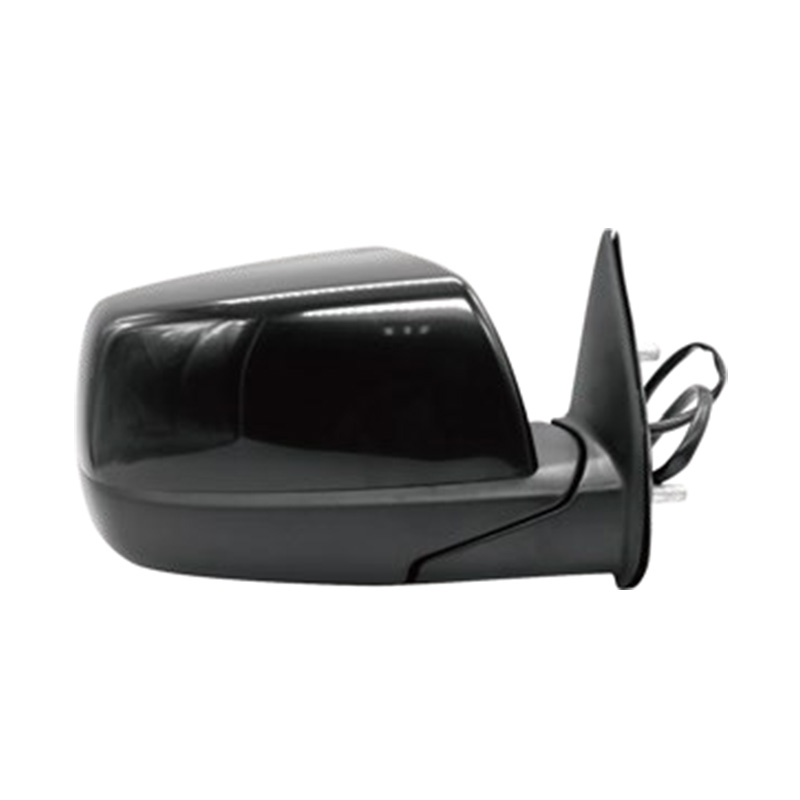
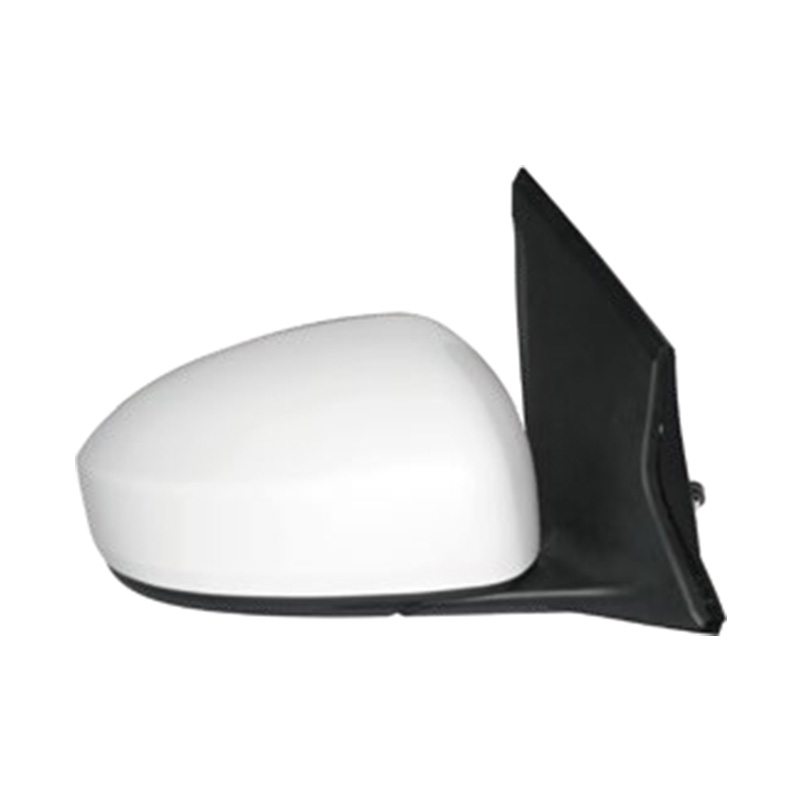
The mirror housing — the outer shell that contains and protects the glass assembly, adjustment mechanism, and any electronics — is as important to overall mirror durability as the glass and coatings inside it. Housing materials must absorb impacts, resist UV degradation, withstand temperature extremes from -40°C to over 80°C, and maintain dimensional stability so the internal components stay properly aligned.
The majority of modern automotive mirror housings — approximately 80–85% — are made from engineering-grade thermoplastics, primarily polypropylene (PP) and acrylonitrile butadiene styrene (ABS). These materials offer several advantages over metal: they are 40–60% lighter, they do not corrode, they can be injection-molded into complex shapes in a single operation, and they can be painted to match body color with excellent adhesion. ABS is particularly valued for its impact resistance at low temperatures, where brittle fracture is a risk in colder climates.
Metal alloy housings — typically die-cast aluminum or steel — are used in commercial vehicles, heavy trucks, and some high-performance applications where structural strength takes priority over weight. Stainless steel mirrors, while significantly more expensive, are found in industrial and fleet vehicles because they resist the corrosion that eventually degrades painted plastic housings. The internal bracket structure, regardless of the outer housing material, typically uses stamped steel or aluminum to provide the rigid mounting point that keeps the mirror stable at highway speeds.
For powered mirrors, the housing must also accommodate motorized actuators, wiring harnesses, heating elements, and in some cases cameras, indicators, or blind-spot sensors. This integration requirement has pushed housing design toward larger, more complex structures with pre-formed cable routing channels and reinforced mounting bosses — all of which demand materials that can be molded to tight dimensional tolerances.
Mirror materials are not merely a matter of product longevity — they have a direct and measurable effect on driving safety. Every material deficiency in a mirror system creates a corresponding degradation in the driver's ability to perceive what is happening around the vehicle.
Glass flatness is the most critical variable. A mirror substrate with even minor warping — common in low-grade float glass — distorts the reflected image, making vehicles in adjacent lanes appear to be at incorrect distances or angles. The same mechanism that makes carnival mirrors amusing makes a warped side mirror genuinely hazardous at highway speeds. OEM-standard glass is produced to flatness tolerances that keep image distortion below the threshold of perceptible error for a driver at normal road distances.
Reflective coating uniformity matters for the same reason. If the aluminum or silver layer is thinner in some areas than others — a result of inconsistent vacuum deposition processes — reflectivity varies across the mirror surface. Bright spots and dim patches interfere with the driver's ability to accurately judge the size and speed of approaching vehicles. A reflectivity variation of as little as 5–10% across the mirror surface has been shown to affect depth perception in low-light conditions.
Housing integrity is equally important. A housing that cracks or deforms after a minor impact can alter the mirror's alignment, introducing a systematic blind spot the driver may not immediately notice. OEM-quality housings are tested to withstand impacts up to defined thresholds without changing the mirror's angular position — a standard that many low-cost aftermarket parts do not meet. Choosing mirrors built to OEM material standards protects not just the component, but the driver's field of vision. Browse our full range of OEM-matched auto side mirrors to find the right fit for your vehicle.
Every layer of a car mirror — from the tempered glass base to the reflective aluminum coating, the waterproof backing paint, and the impact-resistant ABS housing — is a material decision that shapes how reliably and safely the mirror performs over its service life. Understanding these materials helps drivers and fleet managers make better purchasing decisions, and helps identify when a mirror's performance has degraded to the point where replacement is necessary.
For mirrors that remain optically correct, corrosion-free, and structurally stable across years of real-world use, material quality is the determining factor — not price alone. Regular maintenance also extends the effective life of any mirror assembly; for best practice guidance, see our article on how to clean auto side mirrors and prevent fogging.


[Auto Accessories][email protected]
[Auto Parts][email protected]

+86-0571-26238568

Kangxin Road, Tangqi Town, Linping District, Hangzhou , Zhejiang , China