English
 中文简体
中文简体
 русский
 Español
[Auto Accessories][email protected]
2026-04-23
Content
Walk through any parking lot and you will spot them immediately — dangling air fresheners, swinging graduation tassels, beaded rosaries catching the light, and the timeless pair of fuzzy dice. Hanging things from the rearview mirror is one of the most universal forms of personal expression inside a vehicle. It turns a functional piece of glass and metal into a small gallery of memories, beliefs, and personality.
The habit has deep roots. During World War II, fighter pilots began attaching small trinkets and lucky charms to their aircraft as protective talismans. When those pilots returned home and started driving cars, the tradition came with them. Fuzzy dice, the most iconic of all rearview mirror ornaments, made the leap from cockpit to dashboard in the late 1940s and have never really left. Decades later, the motivations remain the same: drivers want their car to feel like their own space, and a charm swinging gently from the mirror is one of the simplest ways to achieve that.
The market has responded in kind. Car charms are now a thriving segment of the auto accessories industry, spanning mass-market air fresheners to handcrafted macramé hangings sold on artisan platforms. Understanding why this habit endures — and how to do it safely and legally — matters for both consumers and the professionals who manufacture and supply vehicle components.
The variety of objects drivers suspend from their rearview mirror reflects a wide spectrum of personal taste, culture, and practicality. Some of the most common include:
Each category sits on a different point of the risk spectrum — a slim cardboard freshener poses very different concerns than a large, heavy crystal ornament — a distinction that regulators and safety experts increasingly emphasize.
The appeal of rearview mirror décor is easy to understand, but the risks deserve equal attention. Three distinct hazards arise when objects are hung from this location.
The most immediate is obstructed visibility. The rearview mirror sits at the driver's eye level, squarely within the central field of vision used to monitor traffic ahead. Even a small object swinging directly behind it can mask a pedestrian, cyclist, or vehicle at a critical moment. The problem compounds when multiple items are layered together or when a single item is large and bulky enough to block a meaningful portion of the windshield's viewing area.
The second hazard is driver distraction. Motion naturally attracts the human eye. An ornament swinging during acceleration, braking, or cornering creates a repetitive visual stimulus that competes with the road for the driver's attention. At highway speeds, a fraction of a second of diverted attention translates into significant distance traveled without full situational awareness.
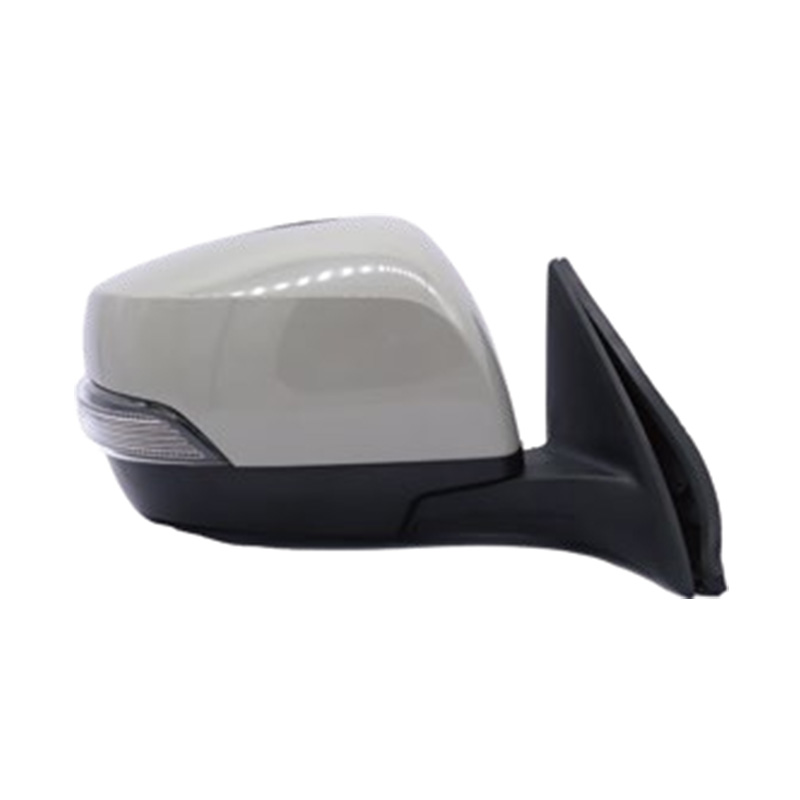
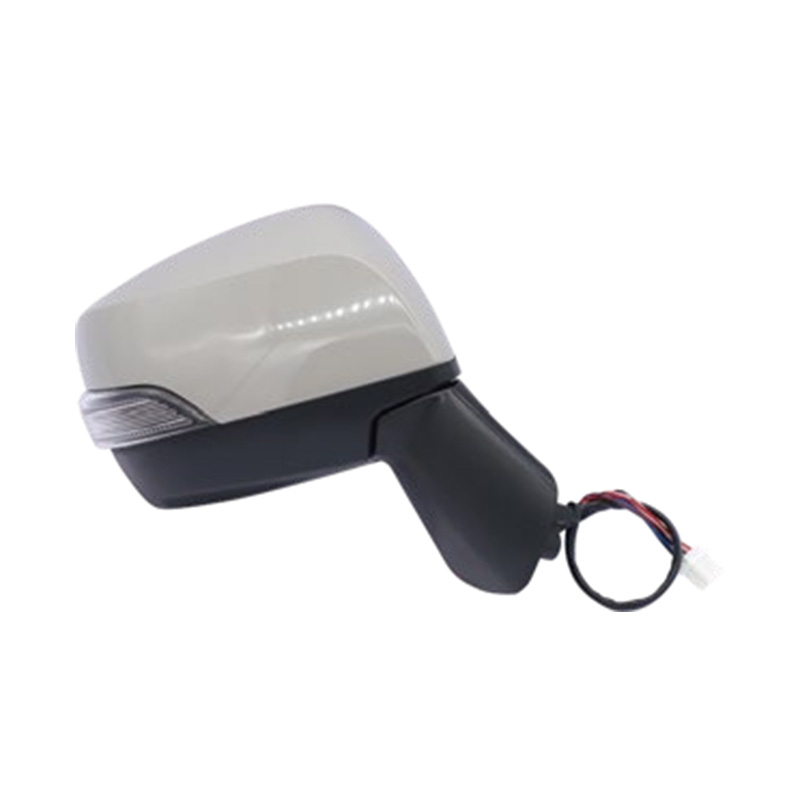
Third is structural failure of the mirror mount. Most rearview mirrors are bonded to the windshield with a specialized adhesive button rated for the weight of the mirror assembly alone. Adding continuous extra weight — especially heavy items — gradually stresses this bond. A sudden detachment while driving creates a startle response that can cause the driver to lose vehicle control, in addition to leaving the car without a functioning rearview mirror. For guidance on how auto side mirror safety features integrate with overall vehicle visibility systems, it is worth understanding how manufacturers design mirrors as a coordinated safety network rather than isolated components.
Legislation across the United States does not uniformly ban hanging items from the rearview mirror, but it does consistently prohibit anything that obstructs the driver's forward view — and the line between decoration and obstruction is drawn differently from state to state.
California is among the most specific. Vehicle Code 26708(a)(2) prohibits any object placed or affixed to the vehicle that obstructs or reduces the driver's clear view through the windshield or side windows. Officers have discretion to determine whether a given item crosses that threshold, which means even a small charm can technically trigger a citation if an officer judges it to be obstructing.
Colorado takes a similar approach through Title 42 of its statutes, requiring that driver vision through required glass equipment remain normal and unobstructed. An air freshener alone is not an automatic violation, but the moment it meaningfully reduces the field of view, it becomes one.
Florida prohibits signs or other material affixed to the front windshield and bars drivers from hanging material that obstructs view from the rearview mirror, rear, or side mirrors. Drivers cited for obstructed view face a traffic offense that, in accident situations, can shift fault determination against them.
Texas currently has no statute that specifically names hanging items from the mirror, but its general obstruction-of-view provisions apply equally. South Dakota, by contrast, has interpreted its laws to make even small decorative items technically non-compliant when the vehicle is in motion.
The practical takeaway across all jurisdictions is consistent: if an item can be argued to obstruct the driver's view, it creates legal exposure. Keeping hangings small, lightweight, and positioned toward the top of the mirror rather than dangling at eye level is the safest approach under virtually any state framework.
Understanding the engineering behind rearview mirror attachment helps explain why weight is such a meaningful concern. The mirror is typically secured to the windshield via a metal or plastic button bonded with a high-strength, temperature-resistant adhesive. This system is engineered to hold the mirror assembly through vibration, temperature cycles ranging from extreme cold to intense summer heat, and the occasional minor impact — but it is calibrated for the mirror's own mass, not for additional hanging loads.
The adhesive bond is particularly vulnerable to cumulative stress from weight combined with vibration. Every road imperfection transmits a small shock through the windshield to the bond point. A heavier hanging amplifies the effective force at that point with each vibration cycle. Over time, the bond fatigues and the likelihood of sudden detachment increases — a failure mode that manufacturers warn against but that is rarely visible to the driver before it happens.
The materials used in mirror construction also inform this risk. As detailed research into auto side mirror materials shows, automotive mirror systems are precision-engineered assemblies where every element — glass thickness, housing polymer, mounting bracket — is specified to tight tolerances. Rearview mirrors follow the same principle: they are designed to perform within a defined load envelope, and decorative additions fall entirely outside that envelope.
Completely avoiding rearview mirror decoration is the safest course, but for drivers who prefer to personalize their cabin, several practical guidelines significantly reduce both safety risk and legal exposure.
The rearview mirror is, first and foremost, a safety device. Its purpose is to give the driver a clear, unobstructed view of what is behind and beside the vehicle. Decoration that enhances the driving experience without compromising that function is entirely reasonable — decoration that compromises it, even slightly, represents a risk that no charm or keepsake is worth taking.


[Auto Accessories][email protected]
[Auto Parts][email protected]

+86-0571-26238568

Kangxin Road, Tangqi Town, Linping District, Hangzhou , Zhejiang , China