English
 中文简体
中文简体
 русский
 Español
[Auto Accessories][email protected]
2026-08-03
Content
"What should your side mirrors look like" actually asks two separate things, and most articles only answer one of them. The first question is about the image: what should appear in the glass when you glance over during a lane change. The second question is about the mirror itself: what should the housing, glass, and hardware look like when everything is functioning the way it's supposed to.
Both matter, and they're connected. A correctly adjusted mirror on a cracked or clouded housing still leaves you with poor visibility, just for a different reason. This guide covers the image briefly, then spends more time on the second question, since that's the one drivers tend to overlook until something goes visibly wrong.
In a correctly adjusted side mirror, your own vehicle should barely be visible, if at all, along the inner edge of the glass. The rest of the mirror should show the adjacent lane and the road behind it, positioned so that a vehicle disappearing from your rearview mirror reappears in the side mirror almost immediately, with little to no gap between the two fields of view.
This is the SAE-recommended method, and it's a deliberate departure from the older habit of centering your own car in the frame. The NHTSA's guidance on minimizing blind spots reinforces the same principle: mirror settings that maximize outward coverage reduce the areas where a vehicle can hide from view. For the complete step-by-step adjustment process, the full evidence-backed adjustment method for eliminating blind spots walks through it in detail.
A side mirror in good condition has a few consistent traits regardless of make or model. The glass should be clear and evenly reflective across its entire surface, with no dark patches, cloudiness, or silvering loss. The housing should sit flush against its mounting point, without visible gaps, and should hold its position firmly once adjusted rather than drifting or vibrating loose while driving.
On mirrors with folding mechanisms, the fold and unfold action should be smooth and consistent on both sides, and power-adjusted mirrors should move promptly and quietly when controlled from inside the cabin. Any hesitation, grinding, or uneven movement between the two mirrors is usually the first sign that something inside the housing is wearing out.
A handful of visible signs separate a mirror that just needs cleaning from one that needs attention. Cloudy or foggy patches that don't wipe away are usually moisture that's gotten behind the reflective coating, which will typically spread over time rather than resolve on its own. Dark spots or a spider-web pattern in the glass point to a cracked reflective backing, often from an impact that didn't shatter the glass but damaged the coating underneath.
Beyond the glass itself, a loose or wobbling housing, visible gaps at the mounting base, or a mirror that no longer holds its adjusted position after closing and reopening the door are all mechanical warning signs. None of these make the mirror unsafe to use immediately, but they do mean the mirror's actual field of view no longer matches what you think you're seeing.
Mirrors with added features introduce their own baseline appearance that's easy to mistake for a fault. Auto-dimming mirrors will genuinely darken under bright headlights at night, which is expected behavior, not damage. Heated mirrors may show a faint grid pattern in the glass under certain lighting, which is the heating element itself and not a defect. Integrated turn signal indicators should illuminate evenly across the full strip, not in patches.
Knowing what's a built-in feature versus an actual problem matters, since these mirrors are more complex than a simple reflective surface. For more on how these systems work day to day, how automatic features like heating and auto-dimming function on modern side mirrors covers the mechanics in more depth.
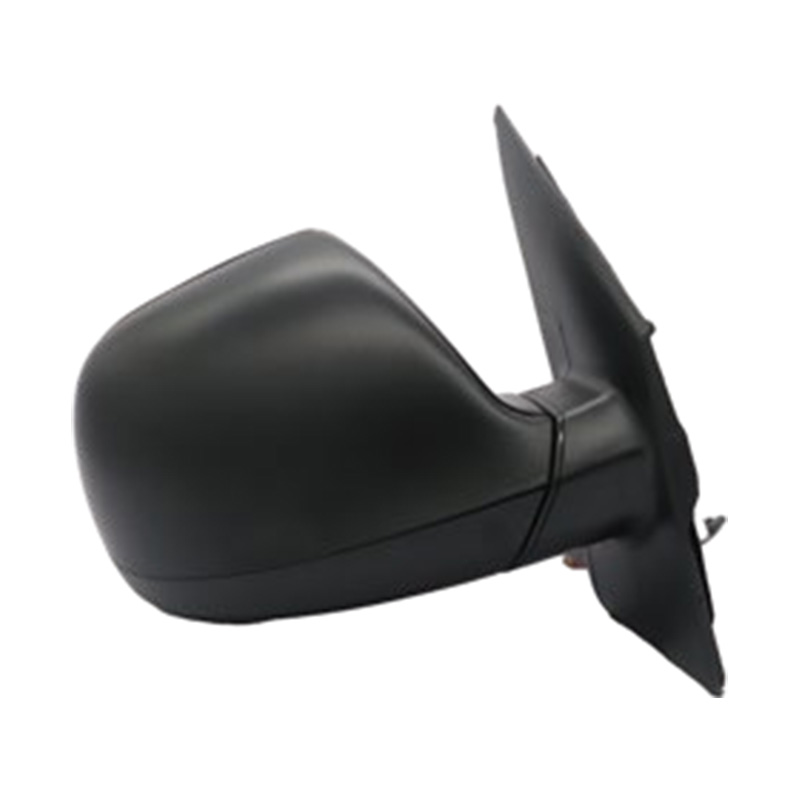
Cloudy glass, cracked reflective backing, a housing that won't stay adjusted, or signal lighting that's failed in sections are all signs pointing toward replacement rather than a fix. Trying to compensate for a degraded mirror by adjusting around its flaws usually reintroduces the exact blind spots proper adjustment is meant to eliminate.
Matching a replacement to your specific vehicle matters for both fit and factory-level performance, since mirror housings, glass curvature, and integrated features vary significantly across makes and models. For drivers ready to compare options, a wide range of OEM-matched replacement side mirrors by vehicle brand makes it easier to find the correct match rather than settling for a generic fit.


[Auto Accessories][email protected]
[Auto Parts][email protected]

+86-0571-26238568

Kangxin Road, Tangqi Town, Linping District, Hangzhou , Zhejiang , China