English
 中文简体
中文简体
 русский
 Español
[Auto Accessories][email protected]
2026-01-06
Content
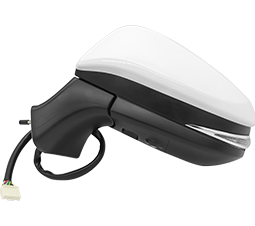
Automatic side mirrors, also known as power side mirrors or auto-folding mirrors, are advanced components of modern vehicles that enhance safety and convenience. Unlike manual mirrors, these mirrors can adjust, fold, and react to driving conditions automatically, reducing driver effort and minimizing blind spots.
The primary functions of an automatic side mirror go beyond simple rearward visibility. They include:
Automatic side mirrors can adjust their angle based on driver settings or vehicle memory profiles. This feature allows multiple drivers to use the same car without manually reconfiguring the mirrors. Some advanced systems even adjust the mirror angle based on vehicle speed, ensuring optimal rearward visibility while reducing blind spots.
Power folding mirrors automatically fold inward when the vehicle is parked or when triggered remotely. This reduces the risk of damage from passing vehicles or pedestrians. In congested urban areas, this feature can prevent costly repairs caused by collisions with stationary objects.
Many automatic mirrors include integrated heating elements that remove frost, ice, and fog. Heated mirrors improve visibility in cold or humid conditions, reducing the need for drivers to manually clear obstructions and improving overall driving safety.
Modern automatic side mirrors are increasingly integrated with electronic safety systems to prevent accidents and enhance driver awareness.
Sensors installed within automatic side mirrors can detect vehicles in adjacent lanes. When a car enters the blind spot, the mirror provides visual or audible alerts, allowing the driver to make safer lane changes.
Some automatic mirrors feature integrated turn signal lights, improving vehicle visibility to other drivers. These signals reduce the likelihood of collisions when turning or changing lanes, particularly in low-visibility conditions.
Memory recall allows mirrors to return to preset positions automatically when different drivers use the car. This feature ensures each driver has optimal visibility immediately, reducing time spent adjusting mirrors manually.
Automatic side mirrors provide practical advantages that improve both safety and convenience for drivers.
Automatic adjustment, folding, and heating functions save drivers time. In busy environments or extreme weather conditions, these features allow for quick preparation before driving without manual intervention.
By reducing physical damage risks through power folding and alert systems, automatic mirrors help maintain vehicle aesthetics and functionality. This lowers repair costs and preserves resale value over time.
Automatic side mirrors contribute to safer driving by minimizing blind spots, improving visibility in adverse weather, and integrating with safety sensors. These features collectively reduce the likelihood of accidents during lane changes, parking, and urban driving.
Automatic side mirrors rely on several mechanical and electronic components to function effectively.
High-precision motors and actuators adjust the mirror angle and folding position. These components are engineered for durability and smooth operation, even under frequent use.
Proximity sensors, temperature sensors, and blind spot detectors provide real-time data to the mirror’s control unit. These sensors enable functions like collision avoidance alerts, automatic heating, and smart folding.
Integrated electronic control modules manage all automated functions of the mirror. They process inputs from sensors, driver settings, and vehicle systems to optimize performance and ensure safety.
The table below highlights key differences between manual and automatic side mirrors, emphasizing why automatic mirrors are increasingly standard in modern vehicles:
| Feature | Manual Mirror | Automatic Mirror |
|---|---|---|
| Adjustment | Manual | Automatic, memory recall |
| Folding | Manual | Power folding |
| Heating | Optional or not available | Integrated heating for frost removal |
| Safety Integration | Limited | Blind spot detection, turn signal integration |
| Convenience | Low | High |
Automatic side mirrors are more than just a convenience feature; they significantly enhance vehicle safety, driver comfort, and operational efficiency. Through automatic adjustment, power folding, heating, and integration with safety systems, these mirrors address blind spots, reduce accidents, and save driver effort. As automotive technology continues to evolve, automatic side mirrors will remain a key element in vehicle design and safety standards.


[Auto Accessories][email protected]
[Auto Parts][email protected]

+86-0571-26238568

Kangxin Road, Tangqi Town, Linping District, Hangzhou , Zhejiang , China