English
 中文简体
中文简体
 русский
 Español
[Auto Accessories][email protected]
2026-09-01
After a windshield replacement, a minor collision, or a suspension repair, many drivers simply drive away without ever thinking about the vehicle's advanced driver assistance systems. That is a mistake. ADAS calibration is not an optional extra; it is a required procedure for restoring the precise alignment that cameras, radar, and other sensors need to work correctly. If you skip it, features like automatic emergency braking, lane keeping assist, and adaptive cruise control may stop functioning or could even trigger false alerts. The good news is that calibration is predictable and documented for each vehicle model once you understand the basics.
Content
Advanced Driver Assistance Systems, or ADAS, is an umbrella term for electronic features that help the driver sense and respond to the road environment. Common features include automatic emergency braking, blind spot monitoring, lane departure warning, adaptive cruise control, and cross traffic assist. Each of these features relies on one or more sensors: a front-facing camera, a radar module, a steering angle sensor, or a camera embedded in the side mirror. These sensors are mounted at very specific positions and orientations. The factory defines a precise reference for each sensor, and the system uses that reference to interpret what the sensor sees.
ADAS calibration is the process of measuring whether the sensor is still aligned to that reference and, if necessary, adjusting or resetting it. The procedure is defined by each vehicle manufacturer, and it often requires special diagnostic equipment. There is no one-size-fits-all calibration. The correct method depends on the vehicle make, model, year, and the specific sensor being calibrated.
Two primary methods exist: static and dynamic calibration. Static calibration is performed in a controlled workshop space. The technician places a target board in front of the vehicle at a defined distance and height, then uses a diagnostic tool to command the system to relearn the sensor's position. Dynamic calibration, on the other hand, is performed while driving. The vehicle is driven under specific road conditions, often with a factory-recommended path and speed, while the system computes calibration from real-world reference points.
| Method | Setup | Typical Scenario | Advantages |
|---|---|---|---|
| Static Calibration | Target board in a controlled workshop, vehicle parked on a level surface | After windshield replacement, camera repairs, or when workshop space is available | Repeatable, no road time, controlled lighting |
| Dynamic Calibration | Vehicle driven on a specified route at a specified speed | After sensor faults, when no target board is available, or when OEM procedure requires it | Uses real road data, can detect subtle alignment issues |
Both methods are valid, but they are not interchangeable. The manufacturer's service procedure determines which method must be used for a given vehicle. Attempting to use a dynamic method when a static method is required can produce inaccurate results, which is why following the exact OEM procedure is so important.
Calibration is not a routine service with a fixed interval. It becomes necessary in specific situations, and many of them involve simple repairs that might seem unrelated.
The front camera often mounts to the windshield or the area just behind it. Replacing the glass changes the optical path. If the camera sees through a new layer of glass, even a slight variation in thickness or angle can shift the detection zone. For this reason, most OEM procedures require calibration after any windshield replacement, even if the camera unit itself was not touched.
Even a low-speed impact can bend a mounting bracket, push a bumper slightly out of position, or alter the geometry around a radar module. Radar sensors in the grille and front bumper are especially sensitive to subtle changes in their mount angle. After any collision that affects the front or rear of the vehicle, the sensors should be inspected and recalibrated.
Some ADAS functions use wheel speed and ride height data. Changing the suspension height, replacing control arms, or performing a wheel alignment can affect the steering angle sensor and roll and pitch readings. If the alignment is not within the vehicle's specified settings, lane keeping and stability systems may misbehave.
When a sensor is replaced, the new unit must be taught its position in the vehicle. This is not a simple plug-and-play operation. After replacing a side mirror with a camera for blind spot detection, the camera must be calibrated or the system will not recognize the new perspective.
If an ADAS-related warning light appears on the dashboard, the system is telling you that it cannot trust its own sensor data. A diagnostic scan will often indicate a calibration fault. In many cases, the fix is recalibration, not replacement.
Skipping calibration can have consequences that are not immediately obvious. The system may not physically fail, but the data it processes becomes less reliable. An improperly aligned front camera might fail to detect a stopped vehicle in time, reducing the effectiveness of automatic emergency braking. A misaligned radar sensor could produce false alerts for objects that are not actually in the lane. A steering angle sensor that is not reset after a wheel alignment may cause lane keeping assist to pull the vehicle toward one side.
An incorrectly calibrated system is also a liability. The driver may trust that the feature is working when it is not, and there is no dashboard warning until the fault becomes severe. In a fleet or rental situation, this can lead to additional vehicle damage, downtime, and operational risk. The time and cost of a proper calibration are small compared with the potential risk of driving a vehicle with what is effectively a blind safety system.
For static calibration, the environment matters as much as the equipment. The vehicle must be parked on a level, clean surface. Uneven flooring can change the vehicle's pitch and roll, which directly affects the sensor angles. Lighting should be even and controlled. Strong direct sunlight or harsh shadows can confuse the camera-based target recognition systems. Metal racks, columns, and other reflective objects in the workshop can interfere with radar calibration. A dedicated area away from heavy metallic structures is the best practice.
The recommended floor type is usually flat, non-glossy concrete or a similar homogeneous surface. The calibration distance from the target board must match the OEM specification exactly. Dynamic calibration also requires a specific setup: a clear road, a valid diagnostic tool, and the right vehicle load condition. Given these requirements, a shop that performs ADAS calibration needs to plan its work area carefully. This is one reason why many service centers are adding dedicated calibration bays rather than attempting to squeeze the procedure into a standard stall.
One area that often gets overlooked is the side mirror. Many modern vehicles now place a camera inside the mirror housing or just below the mirror glass. This camera feeds the lane change assist and blind spot monitor. If the mirror is damaged or replaced, the camera's optical center shifts. Replacing the mirror with a verified factory-style unit is important, but the calibration must still be performed after installation.
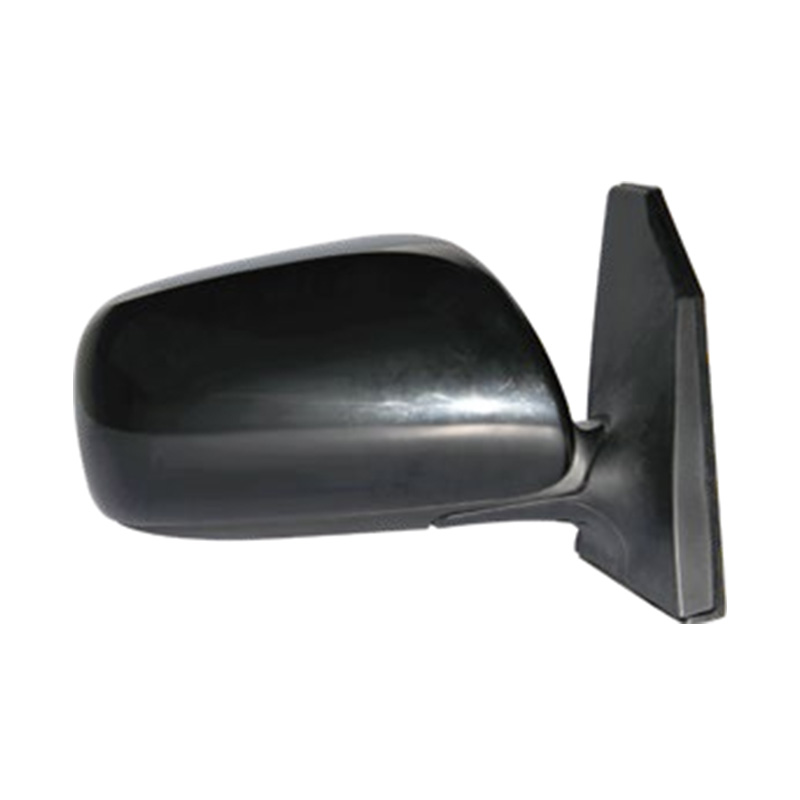 Toyota Corolla and Levin Side Mirrors for Various Model YearsThis manufacturer offers Toyota side mirrors for Corolla and Levin models from 2000 to 2020, with region-specific versions. Proper fitment helps maintain camera alignment and simplifies calibration, reducing the need for trim modifications.View Product →
Different vehicle brands have different mounting and connector configurations. A mirror that fits the correct model, with the right electrical connector and bracket, makes the calibration process more predictable. For example, a properly fitted Honda side mirror can reduce the need for trim modifications and maintain the original geometric relationship between the camera and the vehicle body.
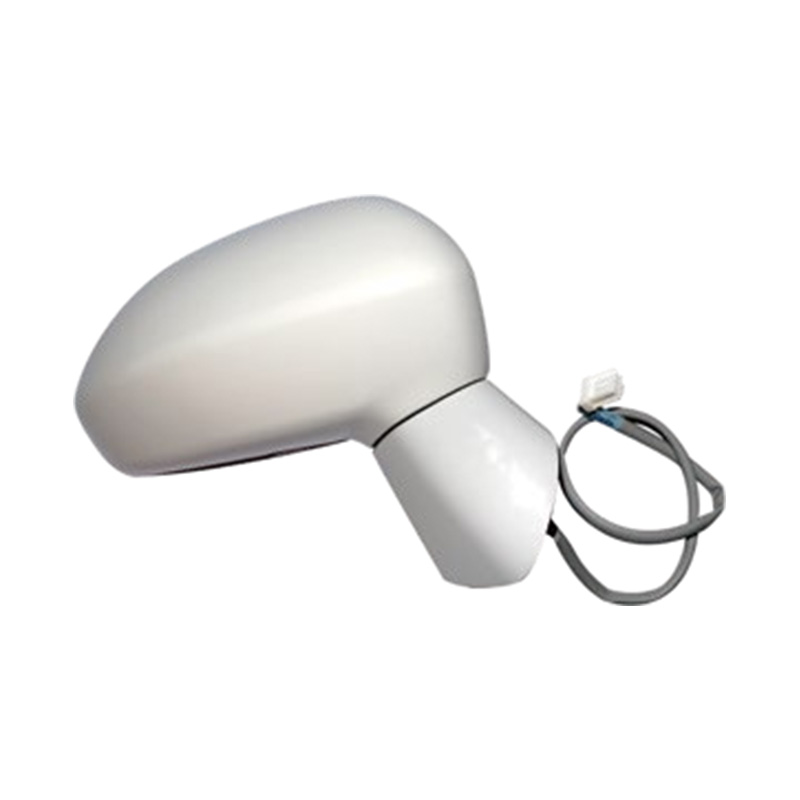 Honda Fit, Jazz, City, and Civic Side Mirrors by Model YearThese Honda side mirrors cover Fit, Jazz, City, and Civic models across multiple generations. A factory-style fit with correct connectors ensures predictable calibration and preserves the geometric relationship essential for ADAS accuracy.View Product →
An improperly installed or adjusted side mirror can create hazards that affect both the driver's visibility and the ADAS sensor's accuracy. Understanding the safety hazards that can arise from incorrect mirror installation or adjustment is essential for anyone working on modern vehicles.
ADAS calibration is a precise, documented and non-negotiable step after windshield replacement, collision repair, suspension work, or sensor replacement. It is not a matter of convenience; it is a matter of whether the safety system can be trusted. Choosing quality replacement parts, like a properly matched side mirror, supports the calibration process by keeping the sensor in the same structural relationship that the manufacturer designed. When you work on a modern vehicle, always follow the OEM calibration procedure. That is the only way to bring the vehicle back to the condition where its safety features perform as intended.


[Auto Accessories][email protected]
[Auto Parts][email protected]

+86-0571-26238568

Kangxin Road, Tangqi Town, Linping District, Hangzhou , Zhejiang , China