English
 中文简体
中文简体
 русский
 Español
[Auto Accessories][email protected]
2026-09-28
You are merging onto a busy interstate. The signal is on, you have checked the center mirror and the left side mirror, and the lane looks clear. You begin to move. A horn sounds. A sedan that was invisible a second ago is now beside your rear wheel, swerving to avoid you. This sequence plays out thousands of times every day, and it is the reason stick-on blind spot mirrors remain one of the most affordable safety accessories on the market. But their performance rests entirely on one detail that many drivers get wrong: placement.
The rule is straightforward, and it is consistent across driving instructor advice and automotive community consensus: mount the blind spot mirror on the outer edge of the side mirror, as far from the vehicle body as possible. Both outer corners are acceptable. The inner half of the mirror, by contrast, shows mostly your own car and adds almost nothing to your awareness of the adjacent lane.
Content
A stick-on blind spot mirror uses a convex curve to compress a wide angle of the road into a small glass surface. That wide angle is useful only if it aims sideways and rearward into the neighboring lane. On the outer edge, the convex lens points diagonally backward, capturing the zone where a car disappears just before it enters the main mirror's view. On the inner edge, the lens points along the side of your own vehicle, duplicating what the factory mirror already shows and leaving the actual blind spot uncovered.
The effect is measurable. Outer-edge placement typically adds 10 to 20 degrees of horizontal coverage, depending on the curvature of the stick-on mirror. That extra margin is often exactly what separates a comfortable lane change from a close call. Inner-edge placement adds only a few degrees of redundant view, and in some cases it creates a confusing secondary image that forces an extra glance at the wrong moment.
Once you accept the outer-edge rule, the remaining question is vertical position. Both the top and bottom outer corners work, and the right choice depends on your vehicle, your seat height, and the conditions you drive in.
Top outer placement keeps the blind spot mirror near your natural eye line. For most car drivers, that means a minimal head shift when checking the mirror. It also sits above the main splash line, so it stays cleaner in rain and on wet roads.
Bottom outer placement is favored by many truck and SUV owners. The lower part of a mirror housing is often flatter, which lets the adhesive seat more evenly. Some drivers also find that a lower mirror interferes less with their view of the rear fender while parking. The drawback is exposure: the bottom corner collects more road spray, mud, and frost, and in cold weather it may be the first part of the glass to ice over.
| Position | View Covered | Ideal For | Main Drawback |
|---|---|---|---|
| Top outer corner | Adjacent lane, rearward zone | Cars, hatchbacks, daily commuting | May be shadowed by the mirror housing rim on some models |
| Bottom outer corner | Adjacent lane, lower side zone | SUVs, pickups, towing setups | Collects road spray, mud, and frost more easily |
| Inner edge | Mostly your own vehicle side | Not recommended | Duplicates the factory mirror view and leaves the blind spot uncovered |
Follow this sequence and you will avoid most installation failures.
Not every vehicle has the same mirror geometry, and placement should follow the housing you actually have. Many cars have relatively flat mirror faces, so either outer corner works well. Tall SUVs and pickups often have large mirrors with a distinctive lower blind zone, which is why many owners choose the bottom outer position for those vehicles.
Towing changes the picture further. A trailer extends the blind zone and shifts it with the trailer width. In that case, place the blind spot mirror on the outer edge of the mirror on the trailer side, and check it with a helper before you rely on it.
A related point: if the mirror glass is pitted, hazy, or loose, a stick-on auxiliary mirror will not correct the problem. Replacing the side mirror assembly first gives the auxiliary mirror a proper surface and restores the original field of view.
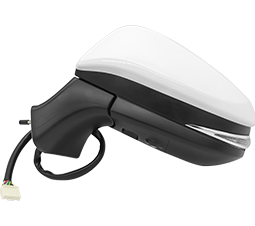 QXP Auto Side Mirror for Japanese and German CarsThis QXP side mirror replacement is designed for models from Lexus, Toyota, Honda, Nissan, Mazda, Audi, and more, ensuring a proper surface for adding an auxiliary blind-spot mirror after replacing a worn original.View Product →
The last step is a test with a helper or a parked car. Pull into an empty parking lot and position a second vehicle in the blind spot of the side you want to check, roughly one lane width away. Sit in the driver's seat and look at the blind spot mirror. You should see the front half of the helper vehicle from the B-pillar forward. Then ask the helper to accelerate slowly past you while you follow the transition: the blind spot mirror should hand the image to the main mirror without a gap.
If you see a gap, move the blind spot mirror outward or change its vertical tilt rather than accepting it. A few millimeters of adjustment usually makes the difference between a hidden vehicle and a visible one.
Blind spot mirror placement is a matter of geometry, not preference. The outer edge of the side mirror is the only position that extends your vision into the adjacent lane, and the choice between the top and bottom corner comes down to your own driving environment. Installed correctly, a stick-on blind spot mirror costs little and removes a danger that every driver faces, regardless of experience.
Used together with correctly adjusted main mirrors, it gives you a visibility system that works without guesswork. When the factory mirror itself is worn or damaged, replace it before adding an auxiliary lens, and match the replacement to your specific model to keep the original curvature and adjustment range.
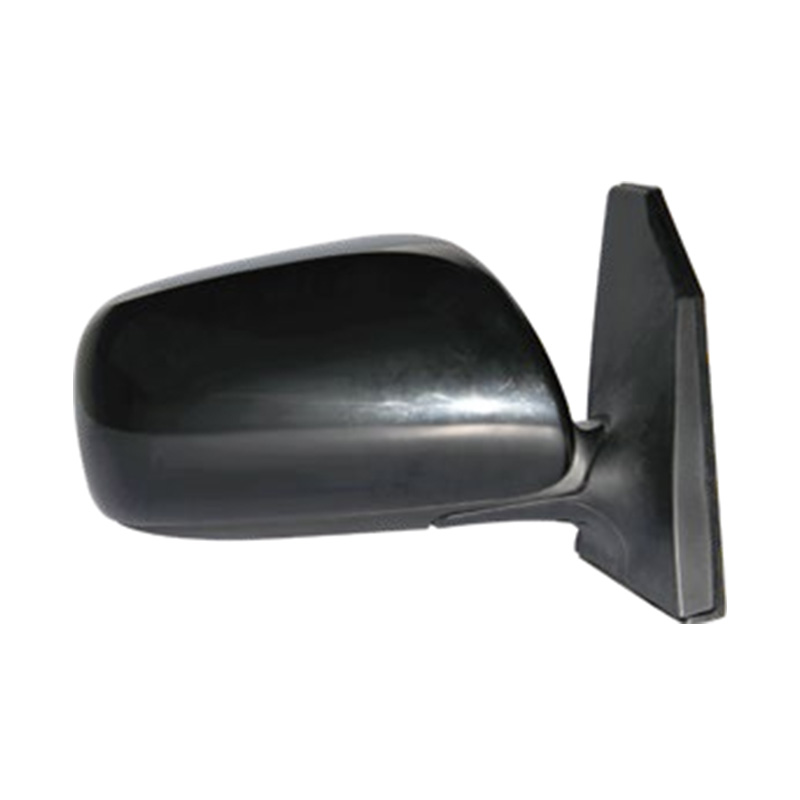 Toyota Corolla and Altis QXP Side Mirror OptionsSelect the correct QXP mirror for your Corolla or Altis model year from 2000 to 2020, preserving the original curvature and adjustment range before installing a blind-spot mirror.View Product →

[Auto Accessories][email protected]
[Auto Parts][email protected]

+86-0571-26238568

Kangxin Road, Tangqi Town, Linping District, Hangzhou , Zhejiang , China