English
 中文简体
中文简体
 русский
 Español
[Auto Accessories][email protected]
2026-08-17
When a MINI Cooper R56 clips a garage post and cracks the driver-side mirror housing, the glass often survives. On an F56, the same impact can shatter the glass while leaving the housing intact. The interior rearview mirror fails in a third way: after years of heat and sunlight, the auto-dimming layer develops dark blotches that never clear. These three scenarios are distinct repair situations with different part requirements, and the right purchase decision starts with understanding which mirror system is actually failing. This guide explains the two mirror systems on a MINI Cooper, the failure signs that matter, and the checks that prevent a wasted purchase.
Content
Drivers use "rear mirror" for both the interior rearview mirror and the exterior door mirrors. On a MINI Cooper, these two systems share almost nothing when it comes to mounting, wiring, or failure behavior.
The interior rearview mirror mounts at the center of the windshield, just below the headliner. First-generation R50/R53 models typically use a manual flip lever for day and night positions, with auto-dimming offered on selected option packages. Second-generation R56/R57 and third-generation F56/F57 models more commonly include auto-dimming, which darkens the mirror automatically when headlights glare from behind. On higher trims, the interior mirror also carries the garage door opener transceiver, and the area behind the mirror houses the rain sensor and, on later models, camera modules.
The exterior side mirrors are door-mounted assemblies with a heating element behind the glass, a two-axis adjustment motor, and, depending on trim, integrated turn signals, power folding, and memory positions. These mirrors are not decorative; they are a core part of how auto side mirrors improve driving safety, and a failed adjuster or heater compromises that function. Because the glass, the housing, and the internal mechanism can be replaced independently, the correct part list starts with identifying the failed component.
The auto-dimming mirror uses two light sensors. The forward-facing sensor measures ambient light through the windshield; the rear-facing sensor detects headlight glare from behind. When the rear sensor sees strong glare and the front sensor confirms that ambient light is low, the mirror control board applies a small voltage across an electrochromic gel sandwiched between two glass panes. The gel darkens gradually, usually over five to ten seconds, cutting reflected glare without losing the reflected image. When the glare disappears, the voltage is removed and the gel returns to its clear state.
Heat and age take a slow toll on electrochromic mirrors. The gel can separate, producing dark spots, streaks, or a permanent bronze tint. A pinched harness near the mirror base can leave the mirror permanently dark or make it flicker. These symptoms usually mean the mirror head must be replaced. Repairing the electrochromic element itself is rarely cost-effective on a compact car.
Matching the symptom to the correct part is the fastest way to avoid overbuying. The table below lists the mirror failures most often reported on MINI Cooper models and the usual corrective action.
| Symptom | Likely cause | Corrective action |
|---|---|---|
| Dark streaks or spots in the interior mirror | Electrochromic gel separation | Replace the interior mirror head |
| Interior mirror stays dark in daylight | Shorted sensor or control board, or pinched harness | Check the harness first, then replace the mirror |
| Side mirror glass vibrates at speed | Worn retaining springs or loose detent | Replace the glass or the complete assembly |
| Heated mirror clears slowly or not at all | Failed heating element or corroded terminal | Replace the mirror glass |
| Power adjustment works in one direction only | Worn motor or broken tilt gear | Replace the side mirror assembly |
| Turn signal in the mirror housing stays dark | Failed LED module or damaged wiring | Replace the mirror housing or the LED module |
Replacement mirrors for a MINI Cooper are not interchangeable across generations, and listings that look identical in photos can differ in the connector, the mounting base, and the integrated features. These checks prevent the most common purchasing mistakes.
Genuine MINI mirror assemblies carry a clear price premium, and the gap widens when the mirror includes wiring for heating, memory, turn signals, and folding. A properly built OE-style aftermarket mirror matches the original mounting and electrical specifications at a lower cost. The risk is not the aftermarket in general; the risk is a supplier that skips connector quality, glass edge sealing, or corrosion protection.
Once the replacement mirror is fitted, adjustment decides how much safety it actually provides. The interior mirror should frame the rear window with the horizon near the vertical center, and the side mirrors should extend the driver's field of view rather than duplicate it. Following the correct way to adjust auto side mirrors for optimal visibility closes most of the traditional blind spot. A mirror aimed too far inward can hide a bicycle or motorcycle in the adjacent lane, one of the safety hazards that arise when auto side mirrors are not installed or adjusted according to regulations. The physical work is usually minor: most side mirror glass swaps on MINI models take under an hour with basic trim tools, and an interior mirror replacement is often a ten-minute slide-off and clip-on job. The hard part is diagnosing the right part, not the fitment.
MINI Cooper drivers are not the only ones dealing with mirror failures. Vibration at speed, fogged glass, seized adjustment gears, and corroded heating elements appear across nearly every vehicle brand. The reason one replacement mirror lasts for years while another fails within months has little to do with the name on the box. It comes down to housing tolerance, glass retention, coating adhesion, and connector sealing.
Hangzhou Golden Sun AutoParts applies those same standards across its qxp mirror product line. The OE-style auto side mirror product range covers a broad set of Asian, American, and European nameplates, and every unit goes through the same housing tolerance and connector sealing checks.
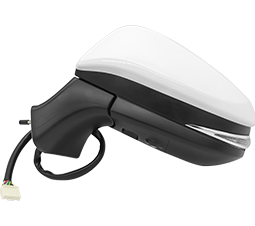 Wholesale Auto Side Mirror Suppliers, QXP MirrorProfessional Auto Side Mirror supplier and exporter in China, Hangzhou Golden Sun Autoparts Co., Ltd offer wholesale QXP Mirror and other...View Product →
The same construction logic applies to premium European platforms. The Audi OE-style mirror range, for example, demonstrates how precise housing fit and sealed electronics prevent the vibration and moisture failures that plague low-grade replacements.
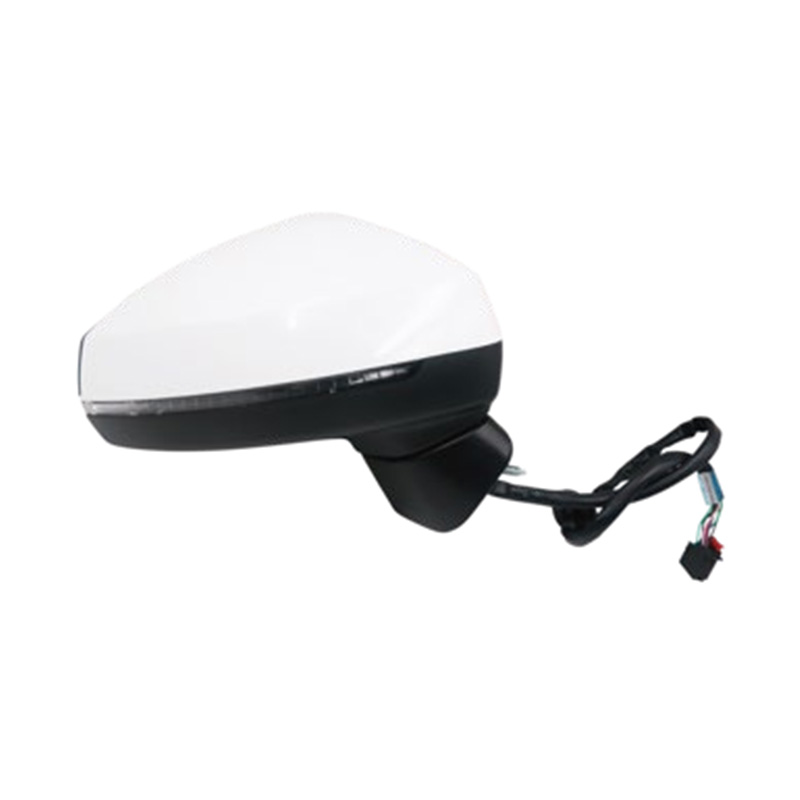 Custom AUDI qxp Auto Side Mirror Manufacturer, FactoryHangzhou Golden Sun Autoparts Co., Ltd is well known AUDI qxp Auto Side Mirror Manufacturer and factory in China, we offer custom qxp Aut...View Product →
Even when the MINI-specific mirror you need comes from another source, apply the same questions. Is it glass-only or a complete assembly? Does the connector match your build year? Are the electronic components sealed against moisture? A mirror is a safety component. It deserves the same scrutiny as a brake pad or a set of tires.


[Auto Accessories][email protected]
[Auto Parts][email protected]

+86-0571-26238568

Kangxin Road, Tangqi Town, Linping District, Hangzhou , Zhejiang , China