English
 中文简体
中文简体
 русский
 Español
[Auto Accessories][email protected]
2026-06-15
The small cardboard pine tree swinging from a rearview mirror has become one of the most recognizable images in automotive culture. For most drivers, it barely registers as a decision — you buy a car air freshener, you hang it from the mirror, done. What most drivers do not know is that in a significant number of U.S. states, that same dangling freshener can be the legal basis for a traffic stop, a citation, or both. The answer to whether you can hang an air freshener from your rearview mirror is not yes or no — it is a question of where you are driving and exactly how the freshener is positioned.
Content
Hanging an air freshener inside your vehicle is not illegal. The legal issue arises specifically when that freshener is attached to the rearview mirror in a way that obstructs the driver's forward view through the windshield. That distinction — object versus obstructed view — is the line most state laws draw, and it is a line that a dangling mirror ornament crosses easily depending on its size, placement, and how much it swings during driving.
The core legal principle across virtually every regulated state is the same: drivers must maintain an unobstructed view of the road ahead. Air fresheners hanging from the rearview mirror are not singled out by name in most statutes, but they consistently fall within the category of "objects suspended between the driver and the windshield" that these laws are designed to address. The object does not have to fully block vision to trigger a violation — partial obstruction, particularly in the driver's primary forward sightline, is typically sufficient.
Because no federal law governs this specific issue, the rules vary by state. The table below summarizes the regulatory position in the states most commonly cited in traffic stop litigation and enforcement involving rearview mirror hangings.
| State | Legal Standard | Enforcement Note |
|---|---|---|
| California | Prohibited if object obstructs driver's clear view of road or intersecting highway | Fines up to $25 first offense, $50 subsequent; actively enforced |
| Minnesota | Broadly prohibits any object suspended between driver and windshield with limited exceptions | One of the strictest standards; has been basis for high-profile traffic stops |
| Pennsylvania | Prohibits any object or material hung from the inside rearview mirror | Specific language; upheld as probable cause for stops in court rulings |
| Texas | Prohibited if object obstructs driver's clear view | Enforcement varies by jurisdiction; officer discretion plays a role |
| Illinois | Prohibited if object materially obstructs driver's view | Enforced; "material" obstruction standard gives officers some discretion |
| Arizona | Prohibited if object obstructs or reduces driver's clear view | Similar enforcement pattern to California and Texas |
| Virginia | Illegal if view is obstructed, but no longer a primary stop offense | Police must have another reason to initiate a stop; secondary enforcement only |
| Florida | Prohibited if object materially obstructs driver's view | Enforcement discretionary; size and placement of object considered |
California's law is among the most precisely written. California Vehicle Code § 26708 prohibits drivers from attaching, placing, or installing objects that obstruct or reduce the driver's clear view through the windshield or side windows — language broad enough to cover any hanging item regardless of its stated purpose. Most other regulated states follow a similar obstruction-based framework rather than naming specific object types.
The legal restrictions exist because the safety risk is real, even if drivers rarely think about it in those terms. The rearview mirror sits almost exactly in the center of the driver's primary forward sightline — the visual path the eyes travel most frequently while scanning the road ahead. An object hanging directly below or in front of the mirror occupies a portion of that zone even when the driver's gaze is not consciously directed at it.
Two distinct hazard mechanisms are at work:
The combination of these two effects is why enforcement focuses on hanging items rather than, say, a sticker in the corner of the windshield. Movement amplifies the risk of a static object significantly.
The legal landscape around enforcement is not uniform, and understanding the difference between primary and secondary traffic offenses matters here. In states where a rearview mirror obstruction is a primary offense — California, Minnesota, Pennsylvania, Texas, and Illinois among them — a police officer can legally initiate a traffic stop based solely on the observation that an object is hanging from the mirror. No other violation needs to be present. The air freshener alone is sufficient legal justification for the stop.
In states where the obstruction is a secondary offense — Virginia being the most prominent recent example after legislative reform — officers must have an independent primary reason to stop the vehicle first. The hanging object can then be noted and cited as an additional violation, but it cannot be the sole trigger for the stop.
This distinction matters in practice. In primary-offense states, a hanging air freshener has been the documented initiating reason for traffic stops that subsequently revealed other offenses, leading to arrests and legal challenges. The small size of a typical air freshener does not immunize it from this enforcement dynamic — officers in these states have legal authority to stop a vehicle for any object they can articulate as obstructing the driver's view, and courts have generally upheld that authority when challenged.
Keeping a car smelling fresh does not require hanging anything from the mirror. Several product formats deliver the same scent effect without creating a legal or safety issue:
For drivers who prefer traditional hanging fresheners, removing the item from the mirror before driving and replacing it when parked keeps the scent effect while eliminating the legal exposure entirely. A freshener on the mirror while the car sits in a parking spot is not a violation in any state reviewed above. Pairing scent solutions with quality auto accessories for a cleaner and safer vehicle interior — including floor mats and organizers that reduce interior clutter — addresses the overall cabin environment more comprehensively than a single hanging item can.
The legal discussion around rearview mirror hangings ultimately connects to a broader principle: mirrors exist to give drivers visibility, and anything that compromises that visibility compromises safety. The same logic applies to the condition of all the mirrors on a vehicle, not just what is hanging from the interior one.
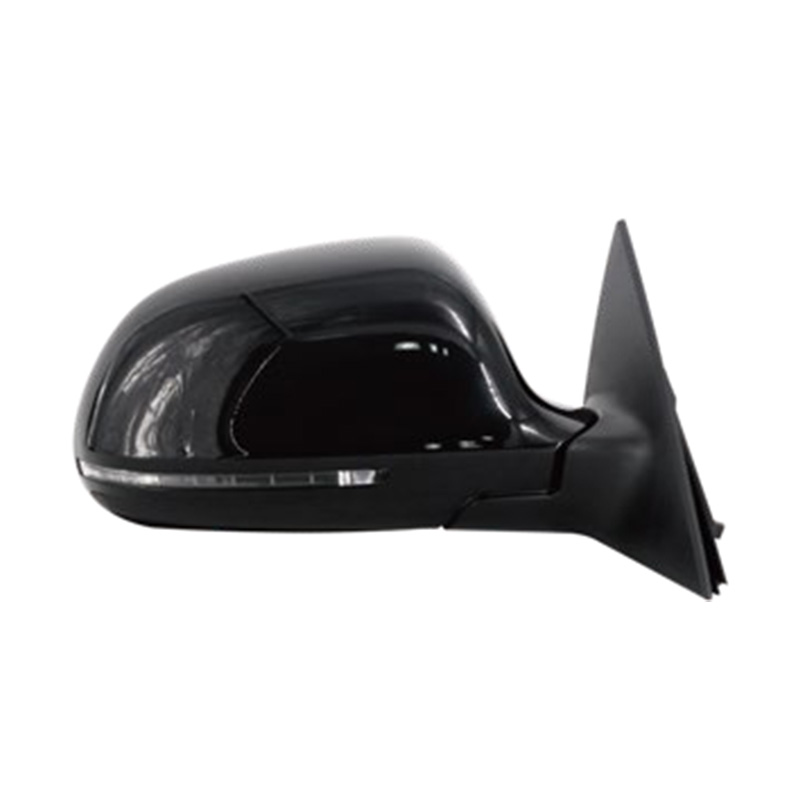
A cracked, misaligned, or damaged side mirror creates a blind spot that no amount of careful driving technique fully compensates for. Side mirrors provide the lateral field of view that the rearview mirror cannot — coverage of the areas beside and slightly behind the vehicle where lane-change conflicts and intersection hazards originate. A vehicle with its interior mirror clear of obstructions but with a damaged or poorly adjusted side mirror has traded one visibility problem for another.
Maintaining complete mirror coverage means keeping all three mirrors — interior rearview, driver-side exterior, and passenger-side exterior — in functional condition and correctly adjusted at all times. Replacing a damaged side mirror with a properly fitted unit restores the full visibility geometry the vehicle was designed to provide. Options including auto side mirror replacement for unobstructed road visibility cover a wide range of vehicle makes, with model-specific fitments such as Toyota-compatible side mirrors for clear driving sight lines and Honda replacement side mirrors for full lateral visibility ensuring the replacement unit integrates correctly with the vehicle's existing adjustment and signal systems.
The question of whether to hang an air freshener from the rearview mirror turns out to be a small but useful prompt to think about vehicle visibility more broadly. Clear mirrors, properly adjusted, with nothing interrupting the sightlines they are designed to provide — that is the standard to maintain, and it applies to every piece of glass and every reflective surface on the vehicle.


[Auto Accessories][email protected]
[Auto Parts][email protected]

+86-0571-26238568

Kangxin Road, Tangqi Town, Linping District, Hangzhou , Zhejiang , China