English
 中文简体
 русский
 Español
[Auto Accessories][email protected]
2026-10-20
Two minutes into a cold morning commute the inside of the windshield turns milky, and wiping it with your sleeve only smears the haze into streaks that catch every oncoming headlight. The fastest way to get rid of that fog is not heat. Switch the air conditioning on, select the front defrost vent, move the system from recirculated air to fresh outside air, and raise the blower speed. In most cars the glass starts clearing within 20 to 60 seconds. The heater matters for comfort and for keeping the glass warm once it is clear, but it is the dehumidified air, not the temperature, that removes the water film in the first place.
Content
Windshield fog is condensation, and condensation needs one condition: a surface cooler than the dew point of the air touching it. In a car that surface is almost always the glass. Cabin air collects water vapor from the people breathing in it, from damp coats, from snow or rain tracked in on shoes, and from the ventilation system itself. Glass sheds heat to the outside air quickly, so on a cold morning the inner surface can drop several degrees below the surrounding cabin air within minutes. The vapor then condenses into microscopic droplets, and those droplets scatter light in every direction. That scattering is the white haze you see.
Fog appears inside rather than outside because the cabin is the humid side of the glass. A dirty windshield fogs faster and holds fog longer, because a film of dust, plasticizer, and skin oil gives water something to cling to. On greasy glass, droplets bead up into a dense, light-scattering layer. On a properly cleaned surface, water tends to spread into a thin, almost invisible sheet.
Order matters more than any single setting. Work through these steps in sequence:
If the windshield is still hazy after five minutes of this routine, the settings are not the problem. Something in the cabin is releasing water faster than the system can remove it.
The defroster is a combination of functions, and each one does something different. The table below separates the settings that remove water from the ones that only redistribute air.
| Setting | What it actually does | Best used when |
|---|---|---|
| AC on with defrost mode | Condenses water out of the air before it reaches the glass | Every time the glass fogs, including winter |
| Fresh air intake | Replaces humid cabin air with drier outside air | Heavy fog, or three or more people in the car |
| Recirculation | Traps exhaled moisture inside the cabin | Only briefly, in traffic fumes or dust |
| Heat | Raises glass temperature above the dew point | After the first minute, to keep glass clear |
| High blower speed | Increases air volume across the glass surface | First minute, then lower it to reduce noise |
| Cracked window | Vents humid air quickly, admits road noise | Very heavy fog, or after soaked passengers get in |
Water does not disappear when the glass clears. It moves. If the cabin holds a reservoir of moisture in carpet, padding, or mats, that water keeps evaporating into the air and eventually lands back on the coldest surface available. Common reservoirs include meltwater in floor mats, a blocked AC condensate drain that lets water pool in the HVAC housing, a leaking sunroof or door seal, and soaked carpet padding under a footwell.
Floor mats are the easiest reservoir to control. Deep-tray or rubber-backed mats shaped to the footwell catch meltwater instead of letting it soak into the jute padding beneath, and lifting them out to shake dry once a week during winter removes a meaningful amount of water from the cabin.
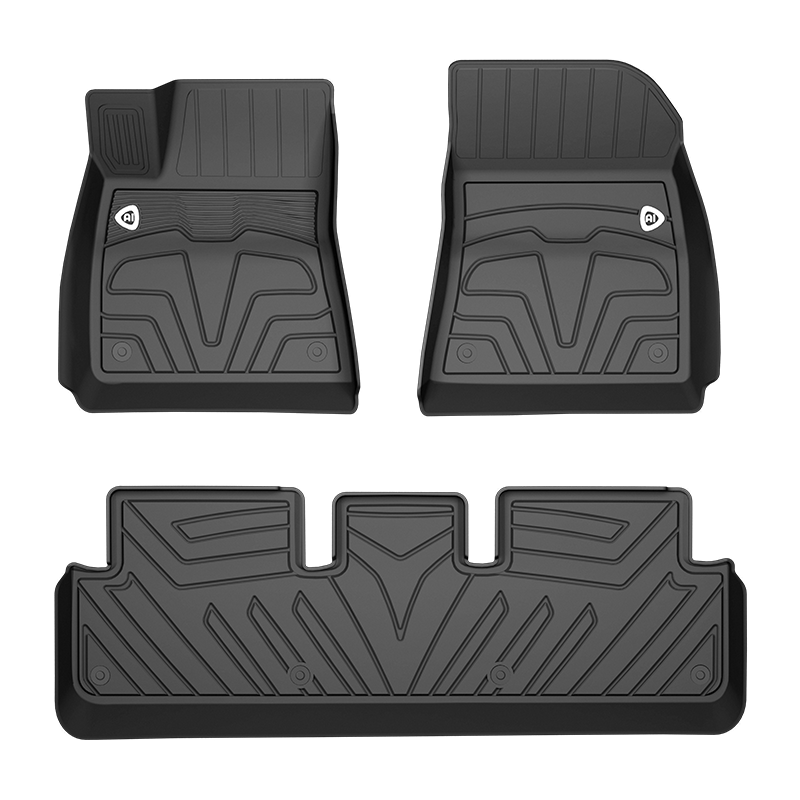 Custom TPE Car Floor Mats with 1:1 FitThese custom-fit TPE floor mats are shaped to the footwell and can be lifted out to remove trapped meltwater during winter.View Product →
A damp, musty smell that returns every time the heater runs points the same direction. That smell usually means water sitting where it should not be, and the fog on the glass is that same moisture showing up a second time.
Once the routine above is followed correctly, the remaining causes are mechanical. Two areas are worth checking, and they fail in different ways.
Hold your hand over the defrost vent with the blower on high. If you can barely feel air movement, no combination of buttons will help. A blower motor that only works on the highest speed, squeals on start-up, or smells hot is usually a worn motor or a failed resistor pack. Reduced airflow also comes from a clogged cabin air filter, which is the cheapest part to check first.
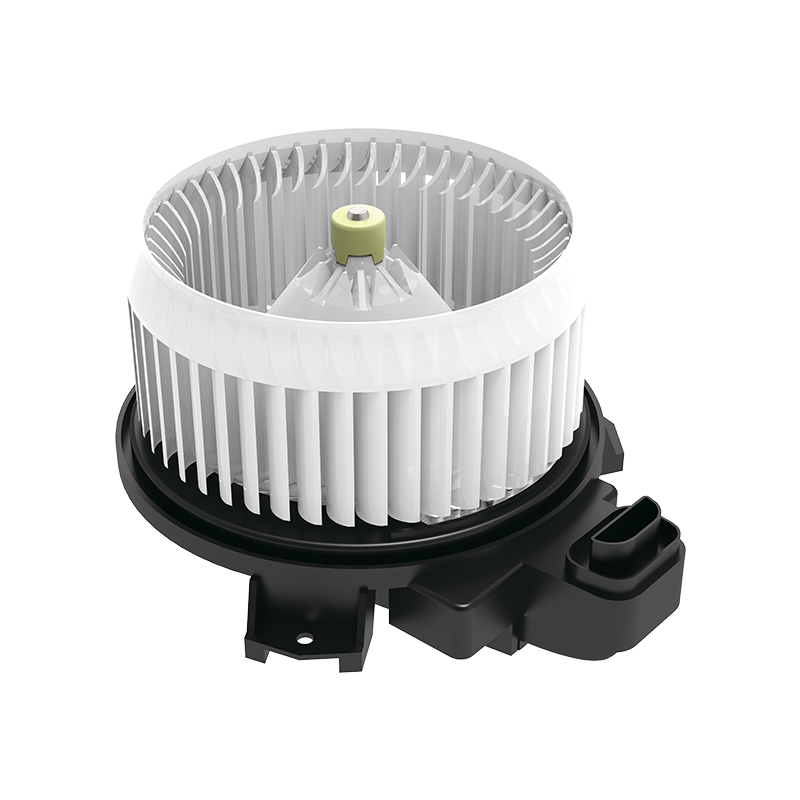 Custom HVAC Heater Blower Motor for Cabin AirflowThis variable-speed blower motor moves air through the heater core and evaporator to support cabin heating, cooling, and ventilation.View Product →
Dehumidification depends on the air conditioning circuit working properly. A condenser with bent or clogged fins, a slow refrigerant leak, or a compressor that cycles too briefly all reduce the amount of water the system can pull out of the cabin air. The practical symptom is a windshield that fogs up even with the AC button lit. Understanding how HVAC systems manage cabin temperature and humidity explains why a tired compressor shows up first as fogged glass, long before it shows up as an uncomfortable cabin in summer.
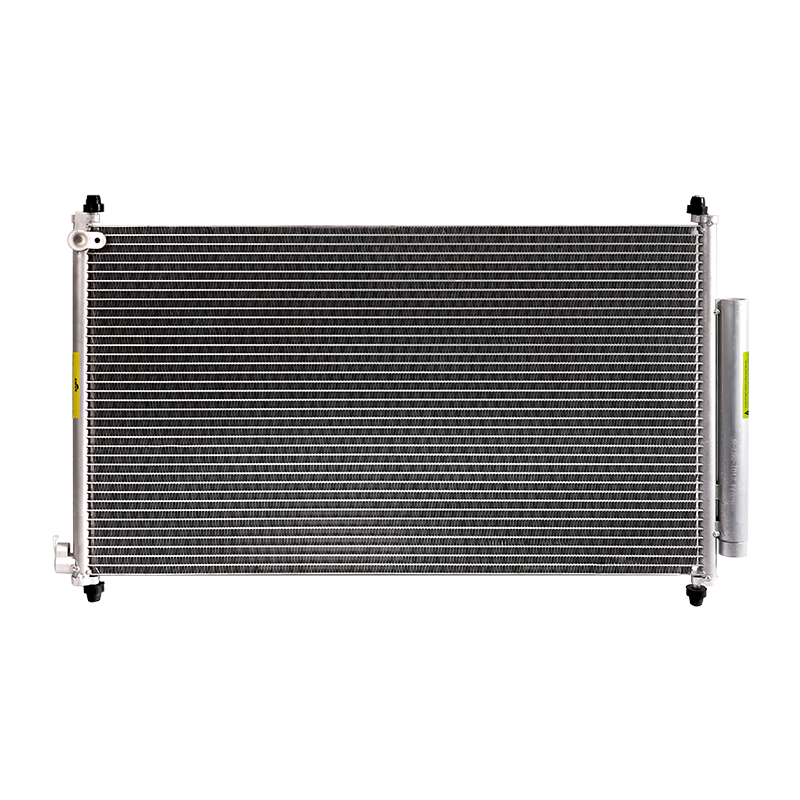 Custom HVAC Auto Condenser for Vehicle Air ConditioningThis front-mounted condenser cools refrigerant vapor into liquid, a key part of the AC circuit that manages cabin humidity and defogging.View Product →
Anti-fog products work on the same principle: they leave a surfactant film that lowers surface tension, so water spreads as a transparent sheet instead of beading into scattering droplets. Purpose-made interior anti-fog sprays typically last one to four weeks, depending on the product and how aggressively you clean the glass afterward. The widely circulated shaving cream trick does work, but expect a few days of protection, occasional streaking, and a halo around lights at night if you apply too much.
Two mistakes shorten the life of any coating. The first is applying it over a dirty windshield, because the film bonds to the grease rather than the glass. The second is using a silicone-based dashboard dressing, whose volatiles deposit on interior glass and build the very film that makes fog cling. Clean the inside of the windshield with an ammonia-free glass cleaner and two microfiber cloths, one to lift the residue and one to buff it dry, before applying anything.
Fog on a windshield is a moisture problem wearing a temperature disguise, and treating it that way changes what you do. Dehumidify with the AC, move air across the glass, keep the glass warm, and keep water out of the cabin in the first place. When those basics are in place and fog still wins, the answer is usually a component that has quietly stopped doing its job: a tired blower motor moving too little air, a condenser that no longer sheds heat, or a cabin that has been storing water under the mats for weeks.


[Auto Accessories][email protected]
[Auto Parts][email protected]

+86-0571-26238568

Kangxin Road, Tangqi Town, Linping District, Hangzhou , Zhejiang , China