English
 中文简体
中文简体
 русский
 Español
[Auto Accessories][email protected]
2026-04-30
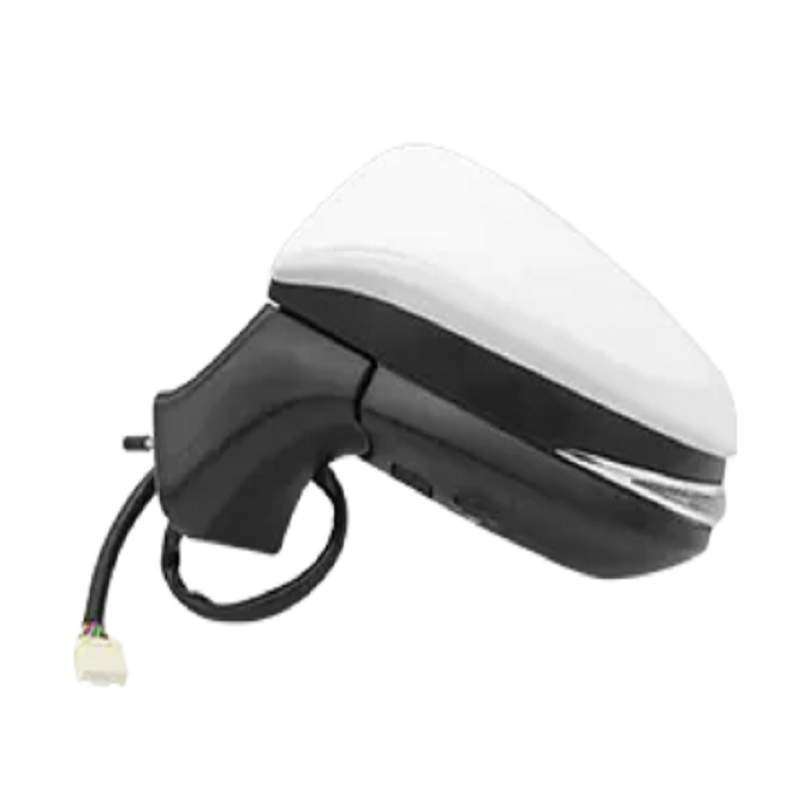
An auto side mirror is a critical safety component that provides drivers with essential visibility of the vehicle's rear and lateral surroundings. Unlike the rearview mirror, which offers a direct line of sight through the back window, side mirrors are positioned to eliminate blind spots and assist in lane changes, parking, and maneuvering in tight spaces. Modern side mirrors have evolved from simple reflective glass into complex assemblies integrating heating elements, turn signals, blind-spot monitoring systems, and power-adjustment motors. Understanding the functionality and maintenance of these units is vital for ensuring road safety and compliance with traffic regulations.
The primary purpose of an auto side mirror is to expand the driver’s field of view beyond the natural range of human vision. Properly adjusted side mirrors can reduce blind spots by up to 90%, significantly lowering the risk of side-impact collisions. For vehicle owners, knowing the differences between mirror types, glass coatings, and electronic features allows for informed decisions when replacing damaged units or upgrading for better visibility.
Content
The glass used in an auto side mirror determines the field of view and the perception of distance. There are two main types of curvature used in side mirrors: flat and convex. Each has distinct advantages and limitations regarding depth perception and coverage.
Flat mirrors provide a true representation of distance and speed, making it easier for drivers to judge how far away other vehicles are. However, they offer a narrower field of view, resulting in larger blind spots. In many countries, flat mirrors are mandatory for the driver’s side (left side in left-hand drive vehicles) to ensure accurate distance judgment during overtaking maneuvers.
Convex mirrors curve outward, providing a wider field of view and significantly reducing blind spots. The trade-off is that objects appear smaller and farther away than they actually are. This is why passenger-side mirrors often carry the warning: "Objects in mirror are closer than they appear." Convex mirrors are standard on the passenger side in most regions and are increasingly used on the driver’s side in Europe and other markets, often with a dual-curvature design to balance view width and distance accuracy.
| Feature | Flat Mirror | Convex Mirror |
|---|---|---|
| Field of View | Narrow | Wide |
| Distance Accuracy | High (True Distance) | Low (Distorted) |
| Blind Spot Coverage | Poor | Excellent |
| Common Position | Driver’s Side (US/Canada) | Passenger Side / Both (EU) |
Modern auto side mirrors are equipped with various technologies designed to enhance visibility, safety, and convenience. These features have become standard in mid-to-high-end vehicles and are increasingly available as aftermarket upgrades.
Heated mirrors contain embedded electrical heating elements behind the glass. They are essential for clearing fog, ice, and snow in adverse weather conditions. Activated via a dashboard switch, often linked to the rear defroster, these elements warm the glass surface to evaporate moisture and melt ice, ensuring clear visibility in winter climates. Without this feature, drivers may need to manually scrape ice, which can damage the mirror housing or glass.
Blind Spot Monitoring systems use radar or cameras housed within the side mirror assembly to detect vehicles in the driver’s blind spots. When a vehicle is detected, an LED indicator lights up on the mirror glass or housing. If the driver activates the turn signal while a vehicle is present, the light may flash or an audible alert may sound. This technology has been shown to reduce lane-change accidents by up to 14%, making it one of the most valuable safety additions in modern automotive design.
While auto-dimming is more common in rearview mirrors, some high-end side mirrors feature electrochromic glass to reduce glare from headlights of vehicles behind. Additionally, integrated LED turn signals on the outer housing improve visibility to other drivers, especially during the day or in bright sunlight, enhancing communication of intent during lane changes.
Proper adjustment of an auto side mirror is crucial for maximizing visibility and minimizing blind spots. Many drivers incorrectly adjust their side mirrors to see the side of their own vehicle, which creates large blind spots and overlaps significantly with the rearview mirror’s field of view.
To eliminate blind spots, follow the SAE recommended adjustment method:
This setup ensures that as a vehicle leaves your rearview mirror, it immediately enters your side mirror’s field of view, effectively eliminating traditional blind spots.
Damaged side mirrors compromise safety and may result in traffic fines. Whether replacing broken glass or the entire assembly, understanding the process helps save costs and ensure proper functionality.
If the mirror housing and motor are intact, replacing only the glass is a cost-effective solution. Most modern mirror glasses are clipped onto a backing plate. Carefully prying the old glass off and snapping the new one into place can be done at home. Ensure the new glass matches the original specifications, including heating elements and blind-spot indicators, if applicable.
If the housing is cracked, the motor is faulty, or the mounting bracket is broken, the entire assembly must be replaced. This typically involves removing the interior door panel to access the wiring harness and mounting bolts. When purchasing a replacement, verify the part number and features (e.g., heated, power-fold, memory) to ensure compatibility. After installation, test all functions, including adjustment, heating, and signal lights, before reassembling the door panel.


[Auto Accessories][email protected]
[Auto Parts][email protected]

+86-0571-26238568

Kangxin Road, Tangqi Town, Linping District, Hangzhou , Zhejiang , China