English
 中文简体
中文简体
 русский
 Español
[Auto Accessories][email protected]
2025-12-04
Content
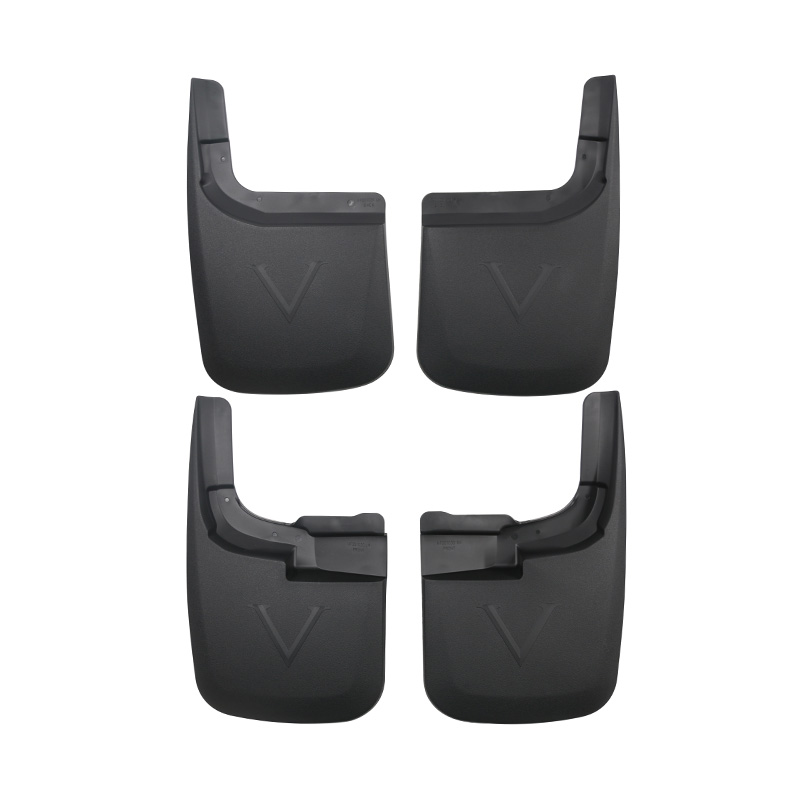
Mud flaps, also known as splash guards, play a vital role in controlling the debris, water, and mud kicked up by a vehicle’s rotating tires. While simple in appearance, their function is grounded in basic physics and practical engineering. Understanding how mud flaps reduce splashing helps drivers make better decisions about installation, materials, and performance expectations.
When tires rotate at high speeds, they pick up moisture, mud, rocks, and debris from the road surface. Centrifugal force throws these elements outward and upward, creating a spray pattern that affects vehicles behind and around the car. Mud flaps interrupt this trajectory by acting as a flexible physical barrier, absorbing the force of incoming debris and redirecting it downward toward the ground.
The spray from tires is influenced by tread design, road conditions, driving speed, and moisture levels. Without an external barrier, tire spray tends to disperse in a wide fan-shaped pattern. Mud flaps narrow this spread, helping maintain clearer visibility for trailing drivers and reducing the accumulation of dirt along the sides of the vehicle.
High-quality mud flaps are designed to minimize splash by directing debris downward rather than outward. Their flexible material helps absorb impact energy and slow the debris before releasing it at a lower angle. This improves safety particularly in high-speed highway travel or wet environments where spray can significantly impair visibility.
Different types of mud flaps offer varying degrees of splash protection depending on size, material, and intended vehicle use. Selecting the right one can greatly enhance performance in harsh weather or off-road environments.
| Material | Characteristics | Effectiveness |
| Rubber | Flexible, durable, excellent impact absorption | High |
| Plastic | Lightweight, rigid, affordable | Moderate |
| Polyurethane | High flexibility, resistant to cracking | High |
| Metal-Reinforced | Suitable for heavy-duty trucks and towing | Very High |
Full-width mud flaps are commonly used on commercial trucks and trailers, extending across the entire vehicle width for maximum splash control. Individual flaps behind each wheel are typical for cars, SUVs, and pickup trucks. Full-width options offer superior protection but are unnecessary for most passenger vehicles unless towing or driving in heavy mud conditions.
Beyond reducing road splashing, mud flaps offer several practical benefits that improve driving comfort and prolong vehicle longevity. Their protective function expands beyond mud, helping limit wear and damage from road elements.
Mud flaps significantly reduce the amount of dirt and grime thrown onto the lower panels of the vehicle. This minimizes the frequency of washing and helps preserve paint quality. In winter climates, they also help reduce salt splash, which can accelerate corrosion.
Spray reduction is especially important for vehicles traveling at high speeds or in rainy conditions. By limiting the spray that obscures visibility for drivers behind the vehicle, mud flaps contribute to safer driving conditions. For commercial fleets, splash reduction can drastically improve road safety metrics.
Tires often pick up small rocks that can chip paint or crack windshields of trailing vehicles. Properly installed mud flaps deflect these rocks downward before they gain enough velocity to cause damage. For off-road vehicles, reinforced mud flaps are essential to avoid damage caused by gravel and debris.
To ensure mud flaps perform effectively, proper installation, sizing, and maintenance are crucial. Incorrect positioning can reduce their ability to control splash or cause them to wear prematurely.
Mud flaps should be installed close enough to the ground to block debris but high enough to avoid dragging. Typically, a ground clearance of 3–5 inches is recommended for passenger vehicles, while commercial trucks may require specific measurements to meet local regulations.
Wider and longer flaps provide better splash control, especially for trucks with large tires. However, excessively large flaps can catch wind, increasing drag or causing noise. Manufacturers often design vehicle-specific mud flaps to match wheel arch geometry for optimized performance.
Over time, mud flaps may crack, warp, or loosen due to weather exposure and road impact. Regular inspection ensures they remain effective and safe. Drivers should check for debris buildup behind the flap and ensure mounting hardware remains tight to prevent detachment.
Mud flaps are highly effective at reducing road splashing and minimizing the amount of mud, water, and debris thrown by tires. Their performance depends on material quality, proper installation, and suitability for the vehicle’s specific driving conditions. For anyone driving in wet, muddy, or gravel-filled environments, mud flaps provide a practical and reliable layer of protection that improves vehicle safety, cleanliness, and longevity.


[Auto Accessories][email protected]
[Auto Parts][email protected]

+86-0571-26238568

Kangxin Road, Tangqi Town, Linping District, Hangzhou , Zhejiang , China